New Testament
1 Corinthians 14:23
Read the Bible in clear, modern English—easy to understand, faithful to the meaning, and written for everyday readers.
If the whole church gathers together and everyone speaks in tongues, and outsiders or those who don't understand come in, won't they say that you are mad?
Compare translations
If therefore the whole church be come together into one place, and all speak with tongues, and there come in those that are unlearned, or unbelievers, will they not say that ye are mad?
What 1 Corinthians 14:23 means
Plain-English insight for readers
In this verse, Paul addresses a situation where a church gathers and everyone speaks in tongues, which is a spiritual language. He raises a concern about how outsiders or those unfamiliar with this practice might perceive the scene. If they walk in and hear everyone speaking in tongues, they might think the congregation is out of their minds. This highlights the importance of communication in worship. Paul emphasizes that worship should be understandable to everyone present, especially those who are new or seeking. The goal is to create an environment where people can connect with God and each other, rather than leaving them confused or alienated. The message is clear: our expressions of faith should invite others in, not push them away. This verse serves as a reminder to prioritize clarity and understanding in our gatherings, ensuring that everyone feels welcome and included in the experience of faith. Ultimately, it’s about fostering a community where love and understanding thrive, making faith accessible to all.
How to apply 1 Corinthians 14:23 to your life
When participating in church activities, consider how your actions and words affect others, especially newcomers. Strive to create an atmosphere where everyone feels welcome and understood. This can mean explaining practices or ensuring that worship is accessible to all, fostering a sense of belonging and connection in faith communities. Remember, clarity can lead to deeper connections with God and each other.
Curated for this public verse page. 1 Corinthians Summary
Explore more of the Bible
Learn the Bible through its people and places
Get to know the people in Scripture through illustrated stories, and explore the places where they lived and traveled.
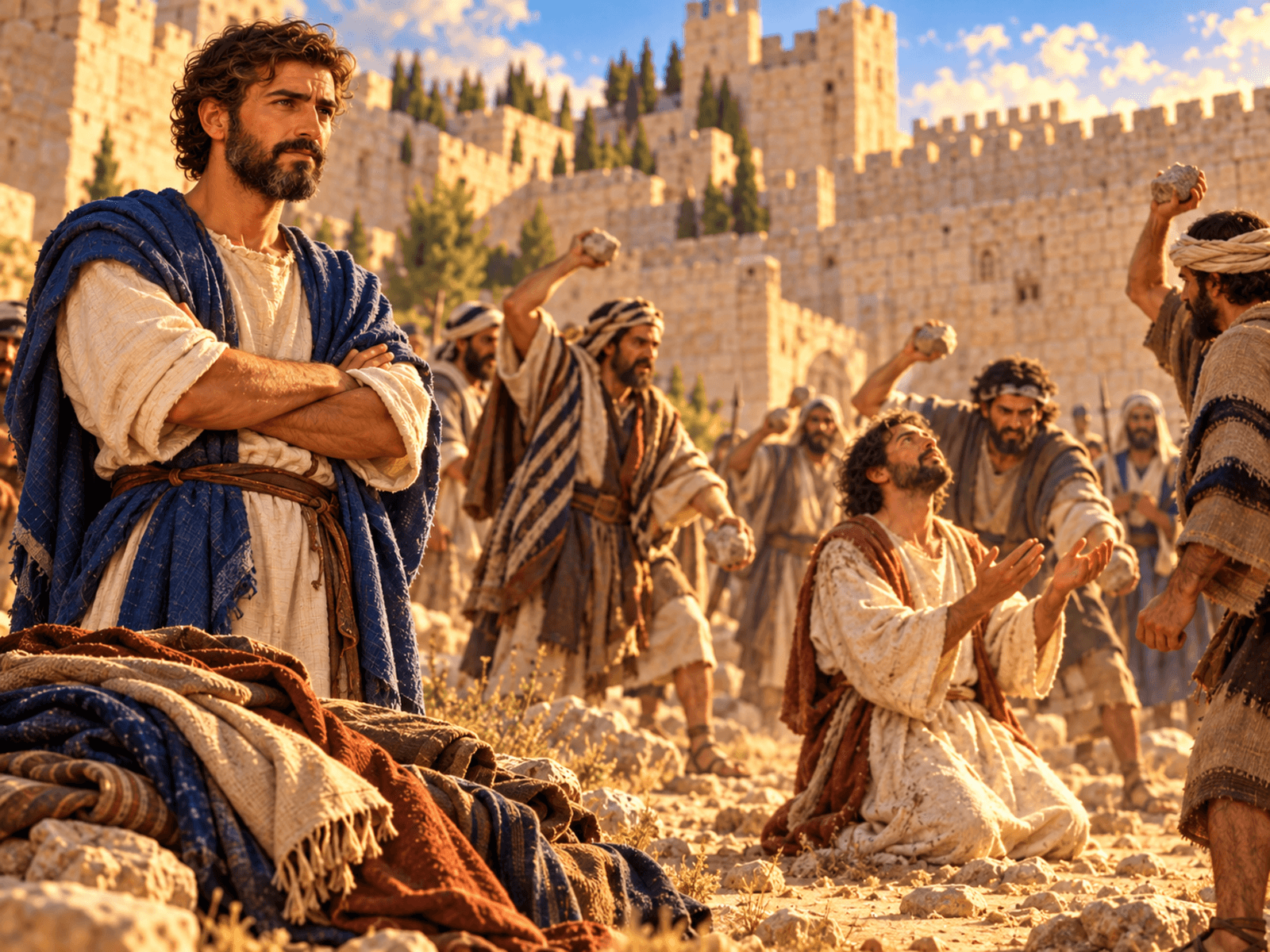
Illustrated scene from Paul's story: The Stoning of Stephen (Acts 7:57–8:2)
Meet the people of the Bible
Follow their lives in order, with illustrated scenes and Bible passages that tell their stories.
 Paul

Photo: Gary Todd (Gary Lee Todd, Ph.D.), via Wikimedia Commons. License: CC0 1.0 Universal Public Domain Dedication. Source. Location: Southern end of the Temple Mount, Jerusalem Old City. Resized for the web.
Explore the places of the Bible
See where biblical events happened, why each place matters, and what archaeology helps us understand.
Jerusalem
David's capital, the city of the temple, and the place where Jesus died and rose again.
Get full access with one subscription
Explore the people and places of the Bible. Read summaries of every book, with images and clear explanations covering every chapter. Access all these features and our Bible study tools with one subscription.
See PlansAsk AI about 1 Corinthians 14:23
Ask a question about this verse and get a clear answer, with Bible references you can read for yourself.
Every Bible book, explained chapter by chapter
Explore summaries of every book of the Bible, with images and easy-to-understand explanations covering every chapter.
Keep studying 1 Corinthians 14:23
Related Bible verses
Key themes
Related topics
At a Glance — the Book of 1 Corinthians
- Author
- Paul the apostle
- Written
- Around AD 55
- Genre
- Letter (epistle)
- Original Audience
- The church in Corinth
Frequently Asked Questions
Quick, clear answers about this verse
What does 1 Corinthians 14:23 mean about speaking in tongues?
In 1 Corinthians 14:23, Paul discusses the practice of speaking in tongues during church gatherings. He points out that if everyone speaks in tongues without interpretation, outsiders or those unfamiliar with the practice may perceive the congregation as chaotic or mad. This verse emphasizes the need for clear communication in worship, ensuring that all participants, especially newcomers, can understand and engage with the service.
Why is communication important in worship according to this verse?
This verse highlights the importance of communication in worship by showing that if the message is unclear, it can alienate or confuse those who are not familiar with the practices. Paul stresses that worship should be accessible and understandable to everyone present, fostering an environment where all can connect with God and each other. Clear communication invites participation and helps build a welcoming community.
How can churches apply the message of 1 Corinthians 14:23 today?
Churches can apply the message of 1 Corinthians 14:23 by ensuring that worship services are inclusive and understandable. This may involve providing explanations for practices like speaking in tongues, using translations, or incorporating interpretations during services. By prioritizing clarity and accessibility, churches can create a welcoming atmosphere that encourages participation from newcomers and fosters a sense of belonging.
What should I do if I feel confused during a church service?
If you feel confused during a church service, it's important to seek clarification. You can ask a church leader or a fellow attendee about the practices being observed. Many churches encourage questions and discussions to help newcomers understand their worship style. Remember, the goal of worship is to connect with God and the community, so don't hesitate to seek understanding.
Daily Verse — straight to your inbox
A verse and a 2-sentence plain-English explanation, every morning. Free. Unsubscribe anytime.