Old Testament
1 Samuel 21:5
Read the Bible in clear, modern English—easy to understand, faithful to the meaning, and written for everyday readers.
David replied, "Absolutely — women have been off-limits to us for the past 3 days, as is always the case when we go on a mission. My men kept themselves clean even for an ordinary journey, so how much more so now?"
Compare translations
And David answered the priest, and said unto him, Of a truth women have been kept from us about these three days, since I came out, and the vessels of the young men are holy, and the bread is in a manner common, yea, though it were sanctified this day in the vessel.
What 1 Samuel 21:5 means
Plain-English insight for readers
In this passage, David is speaking to a priest about the state of his men while on a mission. He emphasizes that they have been keeping themselves pure for three days, which is a customary practice for them. David highlights that even for a regular journey, his men maintain a level of cleanliness and holiness. This is especially important when they are on a mission, as it reflects their commitment and respect for their duties. David's response shows his understanding of the significance of purity in their work and the seriousness with which they approach their responsibilities. He is making it clear that they are prepared and worthy of the provisions they seek, even if the bread is considered common. This moment illustrates the importance of discipline and the lengths to which David and his men go to uphold their values, even in challenging circumstances. It serves as a reminder of the dedication required in fulfilling one's purpose and the respect for the sacredness of their mission.
How to apply 1 Samuel 21:5 to your life
Consider how you maintain your own standards and values in daily life. Just as David and his men prepared themselves for their mission, think about how you can prepare yourself for your own challenges. Upholding your principles can lead to greater fulfillment and success in your endeavors. Stay committed to your goals and values, even when faced with difficulties. This dedication can inspire others around you as well.
Curated for this public verse page. 1 Samuel Summary
Learn the Bible through its people and places
Get to know the people in Scripture through illustrated stories, and explore the places where they lived and traveled.
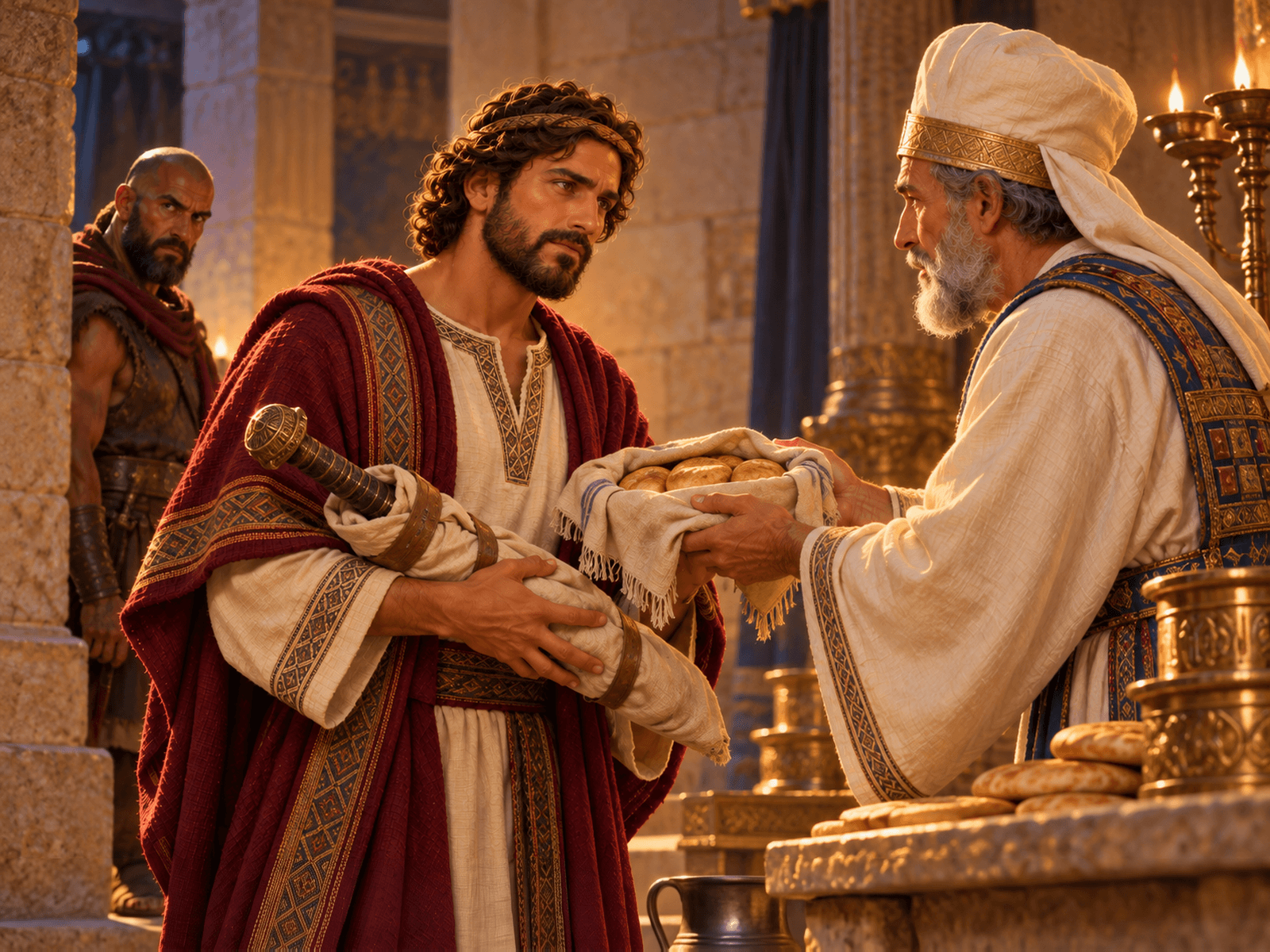
Illustrated scene from David's story: Bread and a Sword at Nob (1 Samuel 21:1–9)
Meet the people of the Bible
Follow their lives in order, with illustrated scenes and Bible passages that tell their stories.
 David

Photo: Photochrom print, Library of Congress Prints and Photographs Division (LCCN 2002724987). License: Public domain in the United States; Library of Congress states no known restrictions on publication. Source. Location: Hebron, West Bank; print preserved by the Library of Congress. Resized for the web.
Explore the places of the Bible
See where biblical events happened, why each place matters, and what archaeology helps us understand.
Hebron
Where Abraham lived and buried Sarah, and where David was first made king.
Get full access with one subscription
Explore the people and places of the Bible. Read summaries of every book, with images and clear explanations covering every chapter. Access all these features and our Bible study tools with one subscription.
See PlansAsk AI about 1 Samuel 21:5
Ask a question about this verse and get a clear answer, with Bible references you can read for yourself.
Every Bible book, explained chapter by chapter
Explore summaries of every book of the Bible, with images and easy-to-understand explanations covering every chapter.
Keep studying 1 Samuel 21:5
Related Bible verses
Key themes
Related topics
At a Glance — the Book of 1 Samuel
- Author
- Traditionally attributed to Samuel, Nathan, and Gad
- Written
- Around 930 BC
- Genre
- Historical narrative
- Original Audience
- The Israelites of the early monarchy
Frequently Asked Questions
Quick, clear answers about this verse
What does 1 Samuel 21:5 teach about purity?
1 Samuel 21:5 highlights the importance of maintaining purity, especially in the context of spiritual and physical readiness. David emphasizes that he and his men have kept themselves clean for three days, which reflects their commitment to their mission and their respect for the sacredness of their duties. This teaches us that purity is not just about physical cleanliness but also about upholding moral and spiritual standards in our lives.
Why did David mention women being off-limits?
David mentions that women have been off-limits as part of a customary practice during missions, which signifies a period of separation for the sake of purity. This practice underscores the seriousness with which David and his men approach their responsibilities. It serves as a reminder of the importance of discipline and focus when undertaking significant tasks, reinforcing the idea that certain sacrifices may be necessary to achieve one's goals.
How can I apply the lessons from this verse in my life?
You can apply the lessons from 1 Samuel 21:5 by reflecting on your own standards and values. Just as David and his men prepared themselves for their mission, consider how you can prepare for your own challenges by maintaining discipline and commitment to your principles. This might involve setting boundaries, prioritizing your goals, and ensuring that you are mentally and spiritually ready for the tasks ahead.
What does the term 'common bread' mean in this context?
In 1 Samuel 21:5, the term 'common bread' refers to bread that is not specifically consecrated or holy. David acknowledges that while the bread is in a manner common, it is still acceptable for them to eat because of their state of purity and the seriousness of their mission. This illustrates that sometimes, the context and intention behind our actions can elevate the significance of what may seem ordinary.
Daily Verse — straight to your inbox
A verse and a 2-sentence plain-English explanation, every morning. Free. Unsubscribe anytime.