Old Testament
2 Samuel 24:3
Read the Bible in clear, modern English—easy to understand, faithful to the meaning, and written for everyday readers.
Joab replied, "May the LORD your God multiply the people a hundred times over, and may you live to see it happen! But why does my lord the king want to do this?"
Compare translations
And Joab said unto the king, Now the LORD thy God add unto the people, how many soever they be, an hundredfold, and that the eyes of my lord the king may see it: but why doth my lord the king delight in this thing?
What 2 Samuel 24:3 means
Plain-English insight for readers
In this passage, Joab, the commander of King David's army, expresses concern about the king's desire to count the people of Israel. He acknowledges that God can multiply the population significantly, wishing that David would live to see such growth. However, Joab questions the king's motivation for wanting to conduct a census. This moment highlights Joab's loyalty to David while also showing his wisdom in questioning the king's intentions. Counting the people could imply a lack of trust in God's provision and protection. Joab's response serves as a reminder that leaders should be cautious about their decisions and consider the potential consequences. It emphasizes the importance of seeking God's guidance in our actions and understanding the reasons behind our choices. Joab's words reflect a deep concern for the well-being of the nation and the king, urging David to reflect on his motives before proceeding with the census. This interaction illustrates the balance between authority and accountability in leadership.
How to apply 2 Samuel 24:3 to your life
When faced with decisions, it's essential to reflect on our motivations and seek guidance. Like Joab, we should question our choices and consider their impact on others. This encourages us to lead with integrity and trust in God's plans for our lives and communities. Taking time to think can prevent unnecessary consequences and promote wise leadership. We can also seek counsel from trusted friends or mentors to gain perspective.
Curated for this public verse page. 2 Samuel Summary
Learn the Bible through its people and places
Get to know the people in Scripture through illustrated stories, and explore the places where they lived and traveled.
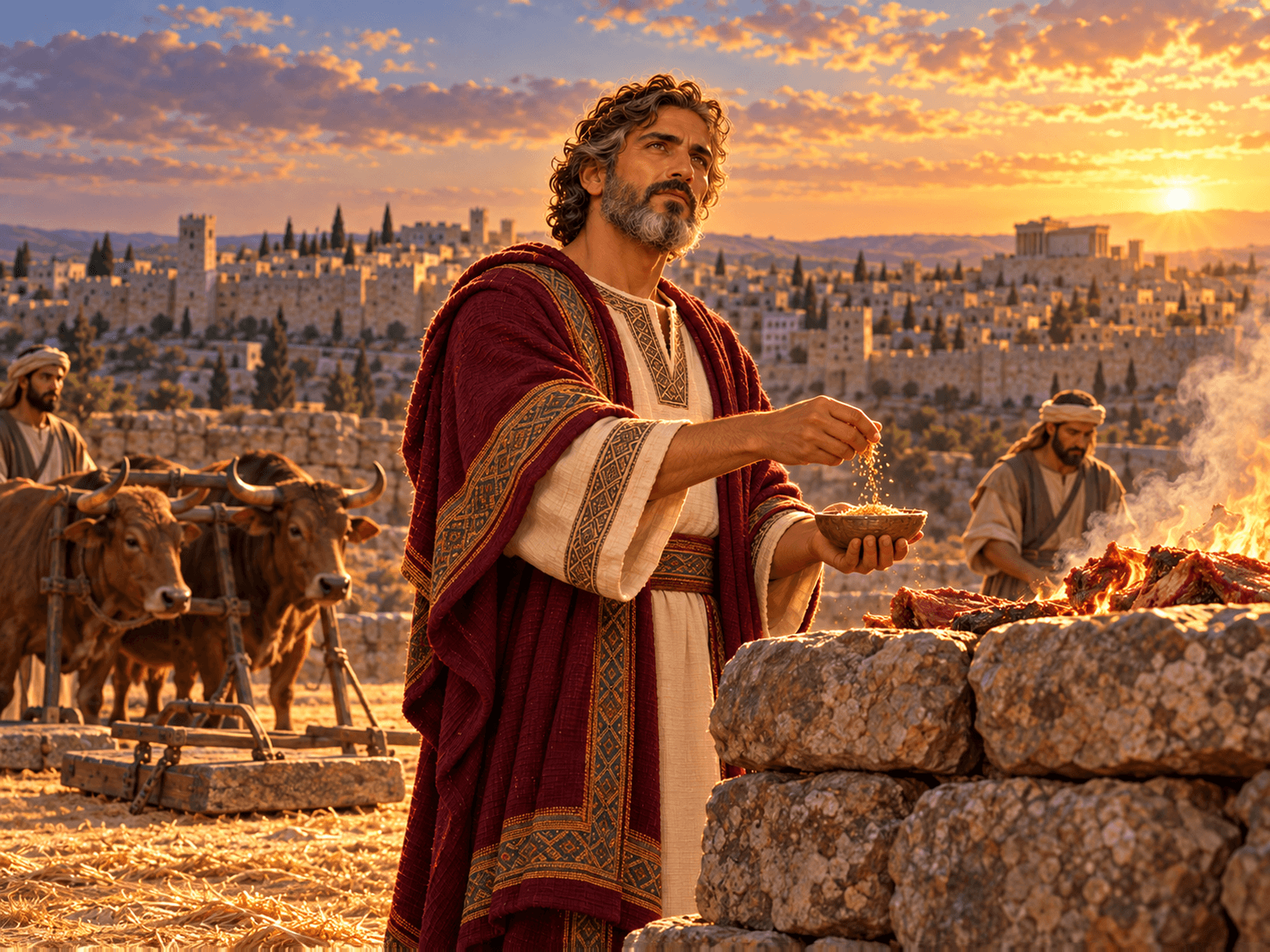
Illustrated scene from David's story: The Census and the Threshing Floor (2 Samuel 24:1–25)
Meet the people of the Bible
Follow their lives in order, with illustrated scenes and Bible passages that tell their stories.
 David

Photo: Diego Delso, via Wikimedia Commons. License: CC BY-SA 3.0. Source. Location: Tell es-Sultan, Jericho, West Bank. Resized for the web.
Explore the places of the Bible
See where biblical events happened, why each place matters, and what archaeology helps us understand.
Jericho
The city of palm trees, whose walls fell in Joshua's day.
Get full access with one subscription
Explore the people and places of the Bible. Read summaries of every book, with images and clear explanations covering every chapter. Access all these features and our Bible study tools with one subscription.
See PlansAsk AI about 2 Samuel 24:3
Ask a question about this verse and get a clear answer, with Bible references you can read for yourself.
Every Bible book, explained chapter by chapter
Explore summaries of every book of the Bible, with images and easy-to-understand explanations covering every chapter.
Keep studying 2 Samuel 24:3
Related Bible verses
Key themes
Related topics
At a Glance — the Book of 2 Samuel
- Author
- Traditionally attributed to Samuel, Nathan, and Gad
- Written
- Around 930 BC
- Genre
- Historical narrative
- Original Audience
- The Israelites of the early monarchy
Frequently Asked Questions
Quick, clear answers about this verse
What does 2 Samuel 24:3 mean?
In 2 Samuel 24:3, Joab questions King David's desire to conduct a census of Israel, expressing concern that it may reflect a lack of trust in God's provision. Joab acknowledges God's ability to multiply the people but urges David to reconsider his motivations for wanting to count them.
What is the significance of Joab's response in 2 Samuel 24:3?
Joab's response highlights his loyalty to David while also demonstrating wisdom in questioning the king's intentions. It serves as a reminder for leaders to reflect on their decisions and the potential consequences of their actions.
Why did Joab question King David in 2 Samuel 24:3?
Joab questioned King David because he was concerned that conducting a census might indicate a lack of faith in God's ability to provide and protect Israel. He wanted David to think carefully about his motivations before proceeding.
What themes are present in 2 Samuel 24:3?
Key themes in 2 Samuel 24:3 include leadership, trust in God, wisdom, motivation, and accountability. Joab's interaction with David emphasizes the importance of thoughtful decision-making in leadership.
Daily Verse — straight to your inbox
A verse and a 2-sentence plain-English explanation, every morning. Free. Unsubscribe anytime.