Old Testament
2 Samuel 24:7
Read the Bible in clear, modern English—easy to understand, faithful to the meaning, and written for everyday readers.
They reached the fortress of Tyre and passed through all the cities of the Hivites and the Canaanites. Finally, they headed south through Judah all the way to Beersheba.
Compare translations
And came to the strong hold of Tyre, and to all the cities of the Hivites, and of the Canaanites: and they went out to the south of Judah, even to Beersheba.
What 2 Samuel 24:7 means
Plain-English insight for readers
In this passage, we see a journey through significant territories. The travelers first arrive at the fortress of Tyre, a stronghold known for its defenses. They then move through the cities inhabited by the Hivites and Canaanites, two groups that were part of the land's history. This journey symbolizes a thorough exploration of the region, highlighting the diverse cultures and peoples that existed there. Finally, they head south into Judah, reaching Beersheba, a city with deep historical roots. This movement through various locations illustrates the importance of understanding one's surroundings and the history that shapes them. Each place visited carries its own story and significance, reminding us of the rich tapestry of life that surrounds us. The journey is not just physical; it represents a quest for knowledge and connection to the past, urging us to appreciate the places we inhabit and their histories. It encourages us to reflect on our own journeys and the places that have shaped who we are.
How to apply 2 Samuel 24:7 to your life
Consider the places that have influenced your life. Reflect on how your surroundings shape your identity and experiences. Just as the travelers explored various cities, take time to appreciate the history and stories behind the places you visit. This awareness can deepen your connection to your community and heritage. Embrace the journey of discovery in your own life as well as in the world around you.
Curated for this public verse page. 2 Samuel Summary
Learn the Bible through its people and places
Get to know the people in Scripture through illustrated stories, and explore the places where they lived and traveled.
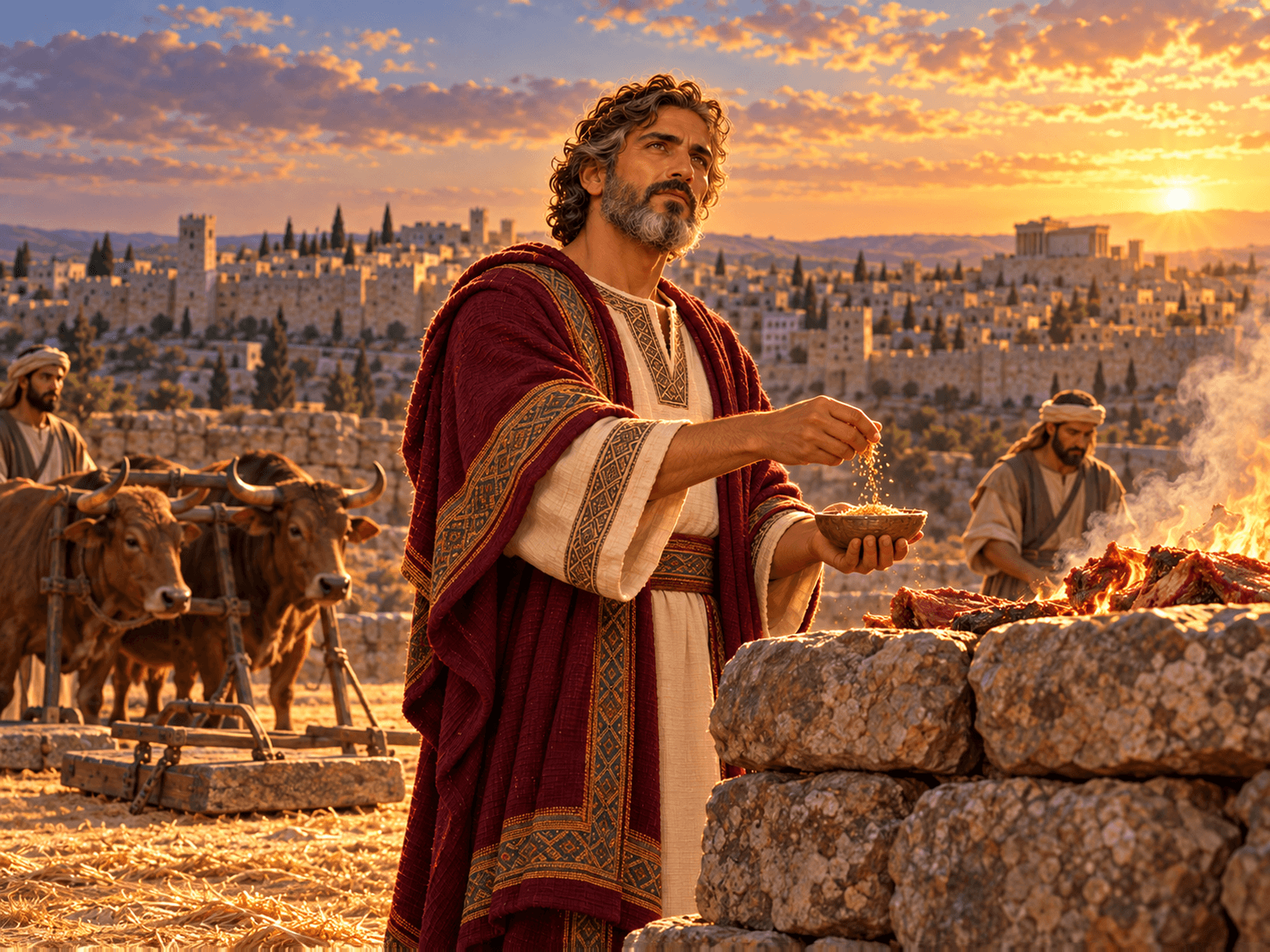
Illustrated scene from David's story: The Census and the Threshing Floor (2 Samuel 24:1–25)
Meet the people of the Bible
Follow their lives in order, with illustrated scenes and Bible passages that tell their stories.
 David

Photo: Diego Delso, via Wikimedia Commons. License: CC BY-SA 3.0. Source. Location: Tell es-Sultan, Jericho, West Bank. Resized for the web.
Explore the places of the Bible
See where biblical events happened, why each place matters, and what archaeology helps us understand.
Jericho
The city of palm trees, whose walls fell in Joshua's day.
Get full access with one subscription
Explore the people and places of the Bible. Read summaries of every book, with images and clear explanations covering every chapter. Access all these features and our Bible study tools with one subscription.
See PlansAsk AI about 2 Samuel 24:7
Ask a question about this verse and get a clear answer, with Bible references you can read for yourself.
Every Bible book, explained chapter by chapter
Explore summaries of every book of the Bible, with images and easy-to-understand explanations covering every chapter.
Keep studying 2 Samuel 24:7
Related Bible verses
At a Glance — the Book of 2 Samuel
- Author
- Traditionally attributed to Samuel, Nathan, and Gad
- Written
- Around 930 BC
- Genre
- Historical narrative
- Original Audience
- The Israelites of the early monarchy
Frequently Asked Questions
Quick, clear answers about this verse
What is the significance of Tyre in 2 Samuel 24:7?
Tyre is mentioned as a stronghold, indicating its strategic importance in ancient times. It was known for its fortified defenses and played a crucial role in trade and military activities. The mention of Tyre highlights the travelers' journey through significant territories and the historical context of the region.
Who were the Hivites and Canaanites mentioned in this verse?
The Hivites and Canaanites were ancient peoples who inhabited the land of Canaan before the Israelites settled there. The Hivites are often associated with specific cities, while the Canaanites represent a broader group of various tribes and cultures. Their mention in this verse emphasizes the diverse cultural landscape of the area during biblical times.
What does the journey to Beersheba symbolize in this passage?
The journey to Beersheba symbolizes exploration and the quest for understanding one's heritage. Beersheba is a city with deep historical roots, often associated with significant biblical events. This movement through various locations illustrates the importance of recognizing and appreciating the history and stories that shape our identities.
How can I apply the lessons from 2 Samuel 24:7 to my life?
You can apply the lessons by reflecting on the places that have influenced your life and understanding their historical significance. Just as the travelers explored different cities, take time to appreciate the stories behind the places you visit. This awareness can deepen your connection to your community and encourage a journey of personal discovery.
Daily Verse — straight to your inbox
A verse and a 2-sentence plain-English explanation, every morning. Free. Unsubscribe anytime.