New Testament
Acts 22:26
Read the Bible in clear, modern English—easy to understand, faithful to the meaning, and written for everyday readers.
When the centurion heard this, he went to the commanding officer and reported, "Watch what you are about to do, for this man is a Roman citizen."
Compare translations
When the centurion heard that, he went and told the chief captain, saying, Take heed what thou doest: for this man is a Roman.
What Acts 22:26 means
Plain-English insight for readers
In this moment, the centurion, a Roman officer, realizes the gravity of the situation. He understands that the man being questioned, Paul, has a significant status as a Roman citizen. This status grants Paul certain rights and protections under Roman law. The centurion rushes to inform the commanding officer, warning him to be cautious in how he proceeds. The implication is clear: mistreating a Roman citizen could lead to serious consequences for the officer and his men. This incident highlights the importance of recognizing and respecting individual rights, regardless of the circumstances. It also shows how knowledge of one’s rights can change the course of events dramatically. Paul’s citizenship not only protects him but also serves as a reminder of the value of justice and fairness in society. The centurion’s actions demonstrate a commitment to upholding these principles, even in a tense situation. This moment serves as a powerful reminder of the impact that one person’s status can have on the lives of others.
How to apply Acts 22:26 to your life
In our daily lives, we should be aware of our rights and the rights of others. Standing up for justice can make a significant difference. Just like the centurion, we can choose to act responsibly and protect those who may be vulnerable. Awareness can lead to positive change in our communities and relationships. Let’s strive to be advocates for fairness and respect in all situations we encounter.
Curated for this public verse page. Acts Summary
Learn the Bible through its people and places
Get to know the people in Scripture through illustrated stories, and explore the places where they lived and traveled.
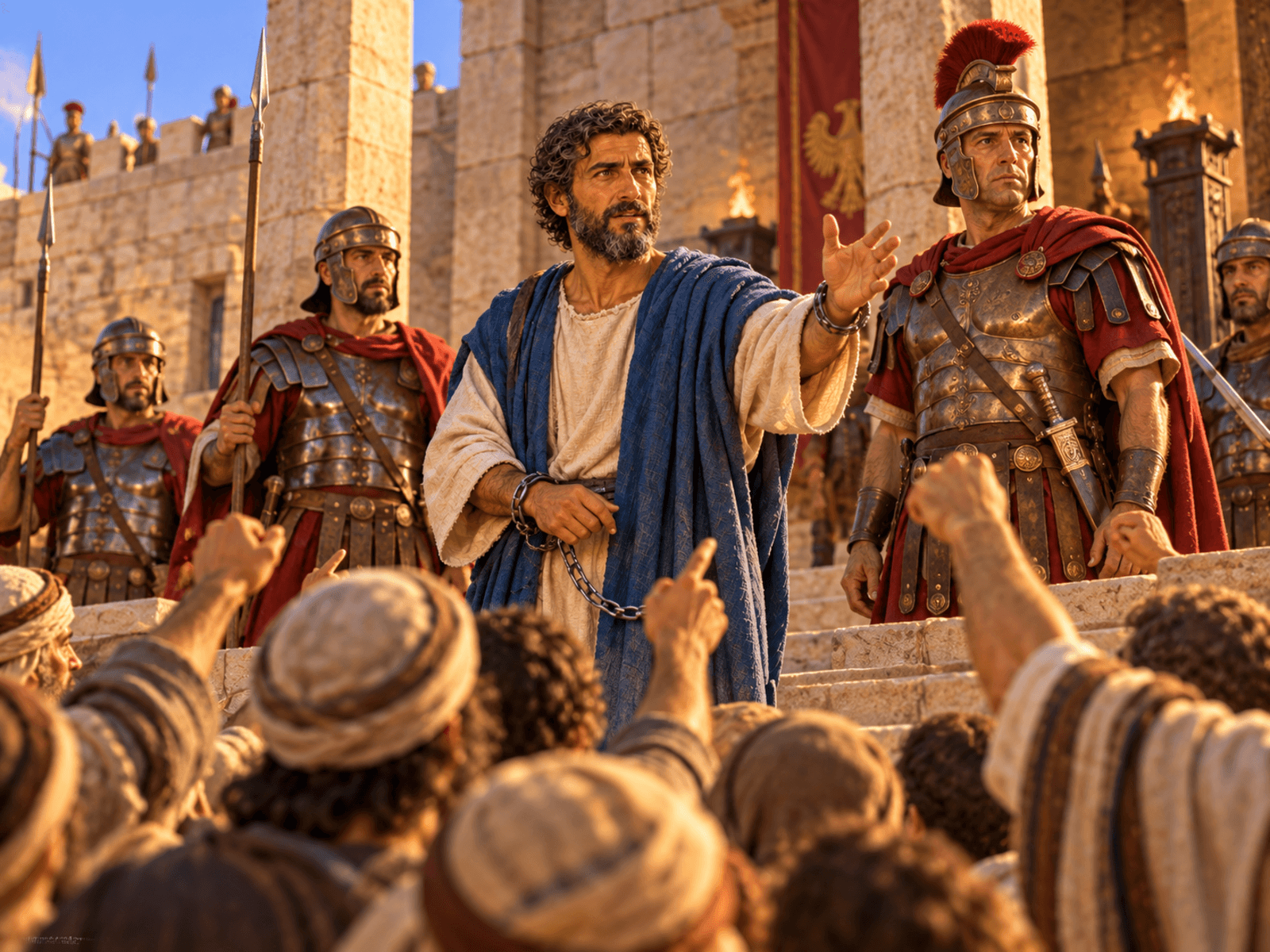
Illustrated scene from Paul's story: Paul Speaks from the Steps (Acts 21:37–22:29)
Meet the people of the Bible
Follow their lives in order, with illustrated scenes and Bible passages that tell their stories.
 Paul

Photo: Photochrom print, Library of Congress Prints and Photographs Division (LCCN 2002725045). License: Public domain in the United States; Library of Congress states no known restrictions on publication. Source. Location: Nazareth, Israel; print preserved by the Library of Congress. Resized for the web.
Explore the places of the Bible
See where biblical events happened, why each place matters, and what archaeology helps us understand.
Nazareth
The small town in Galilee where Jesus grew up.
Get full access with one subscription
Explore the people and places of the Bible. Read summaries of every book, with images and clear explanations covering every chapter. Access all these features and our Bible study tools with one subscription.
See PlansAsk AI about Acts 22:26
Ask a question about this verse and get a clear answer, with Bible references you can read for yourself.
Every Bible book, explained chapter by chapter
Explore summaries of every book of the Bible, with images and easy-to-understand explanations covering every chapter.
Keep studying Acts 22:26
Related Bible verses
Key themes
Related topics
At a Glance — the Book of Acts
- Author
- Luke the physician
- Written
- Around AD 62
- Genre
- Historical narrative
- Original Audience
- Gentile Christians (addressed to Theophilus)
Frequently Asked Questions
Quick, clear answers about this verse
What does Acts 22:26 teach about Roman citizenship?
Acts 22:26 highlights the importance of Roman citizenship and the rights it confers. In this verse, the centurion realizes that Paul is a Roman citizen, which means he is entitled to legal protections and fair treatment under Roman law. This moment underscores how citizenship can influence the treatment of individuals and emphasizes the need for respect and adherence to legal rights.
Why did the centurion warn the commanding officer in Acts 22:26?
The centurion warned the commanding officer because he understood the serious implications of mistreating a Roman citizen. By informing the officer of Paul's citizenship, he aimed to prevent potential legal repercussions for the officer and his men. This act reflects a commitment to justice and the protection of individual rights, showcasing the responsibilities that come with authority.
How can Acts 22:26 be applied to modern issues of justice?
Acts 22:26 serves as a reminder of the importance of recognizing and respecting individual rights in contemporary society. It encourages us to be aware of our own rights and those of others, advocating for justice and fairness. In situations where individuals may be vulnerable or at risk, we can take inspiration from the centurion's actions and choose to stand up for what is right, promoting positive change in our communities.
What lessons about responsibility can we learn from Acts 22:26?
Acts 22:26 teaches us about the responsibility that comes with authority and the importance of acting justly. The centurion's decision to inform the commanding officer about Paul's citizenship illustrates the need to protect the rights of others, especially in tense situations. This encourages us to be vigilant and proactive in defending justice and fairness, reminding us that our actions can significantly impact the lives of those around us.
Daily Verse — straight to your inbox
A verse and a 2-sentence plain-English explanation, every morning. Free. Unsubscribe anytime.