Old Testament
Daniel 8:2
Read the Bible in clear, modern English—easy to understand, faithful to the meaning, and written for everyday readers.
In this vision, I found myself at the citadel of Shushan in the province of Elam, standing beside the river Ulai.
Compare translations
And I saw in a vision; and it came to pass, when I saw, that I was at Shushan in the palace, which is in the province of Elam; and I saw in a vision, and I was by the river of Ulai.
What Daniel 8:2 means
Plain-English insight for readers
In this moment, Daniel shares a vivid experience where he finds himself in Shushan, a significant city in the province of Elam. He stands by the river Ulai, a place that symbolizes clarity and revelation. This vision is not just a random occurrence; it is a profound moment that sets the stage for understanding future events. The imagery of the citadel and the river suggests a connection between the earthly realm and divine insights. Daniel's location is important, as it highlights the intersection of history and prophecy. By placing himself in this specific setting, he invites us to consider the weight of what he is about to reveal. This vision serves as a reminder that significant truths can emerge from unexpected places, urging us to remain open to insights that may come our way. It encourages us to seek understanding in our own lives, just as Daniel sought clarity in his vision. The river Ulai represents a flow of knowledge, urging us to dive deeper into our own journeys of discovery.
How to apply Daniel 8:2 to your life
When faced with uncertainty, remember that clarity can come from unexpected places. Just as Daniel stood by the river seeking understanding, take time to reflect in your own life. Create moments of stillness to listen for insights that may guide you forward. Embrace the journey of discovery with an open heart and mind. You never know what revelations await you on your path to understanding your purpose and direction in life.
Curated for this public verse page. Daniel Summary
Learn the Bible through its people and places
Get to know the people in Scripture through illustrated stories, and explore the places where they lived and traveled.
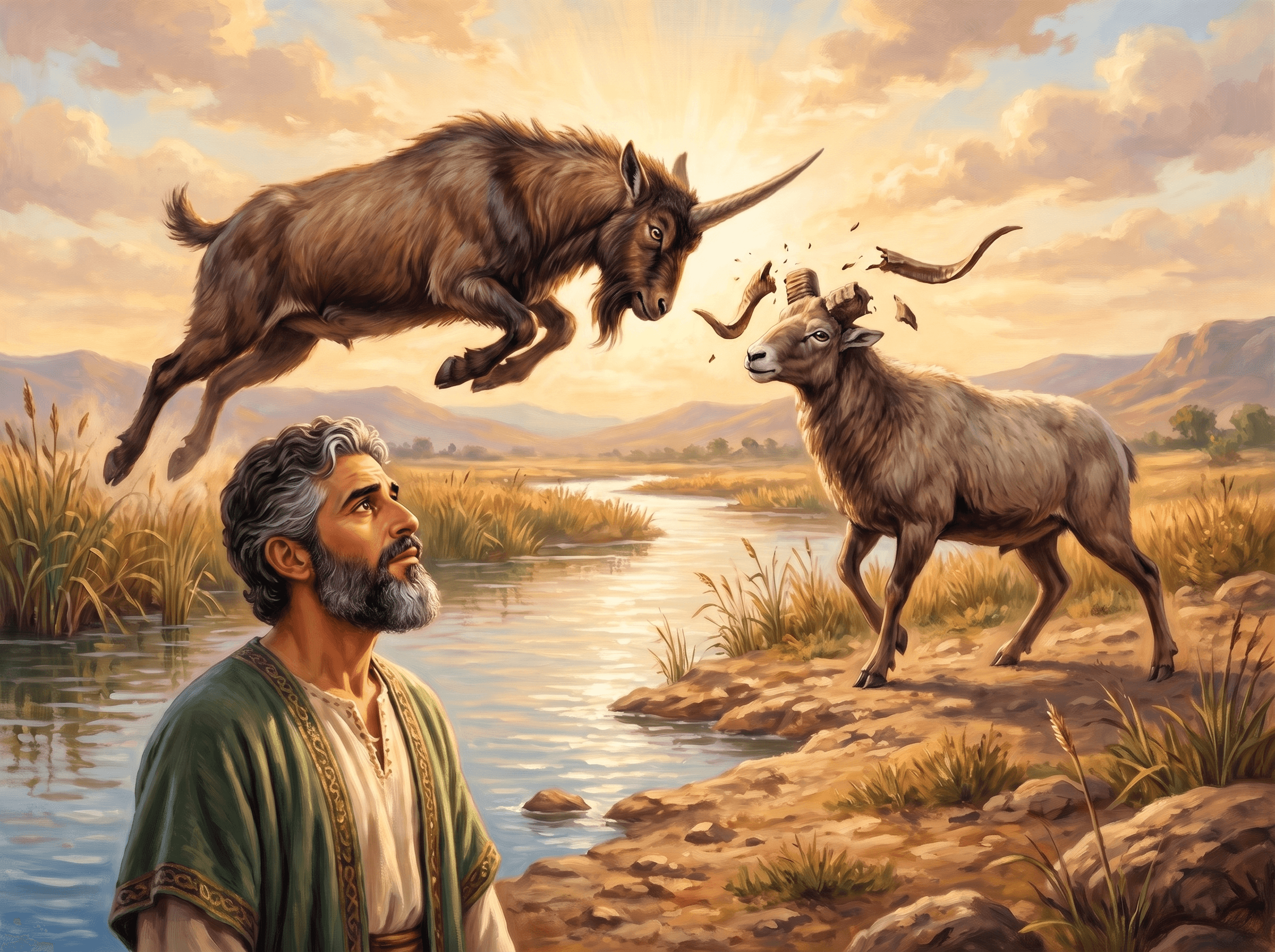
Illustrated scene from Daniel's story: The Ram and the Goat (Daniel 8:1–27)
Meet the people of the Bible
Follow their lives in order, with illustrated scenes and Bible passages that tell their stories.
 Daniel

Photo: Photochrom print, Library of Congress Prints and Photographs Division (LCCN 2002725043). License: Public domain in the United States; Library of Congress states no known restrictions on publication. Source. Location: Nablus and Mount Gerizim, West Bank; print preserved by the Library of Congress. Resized for the web.
Explore the places of the Bible
See where biblical events happened, why each place matters, and what archaeology helps us understand.
Shechem
Where God promised the land to Abram, and where Joshua led Israel to renew the covenant.
Get full access with one subscription
Explore the people and places of the Bible. Read summaries of every book, with images and clear explanations covering every chapter. Access all these features and our Bible study tools with one subscription.
See PlansAsk AI about Daniel 8:2
Ask a question about this verse and get a clear answer, with Bible references you can read for yourself.
Every Bible book, explained chapter by chapter
Explore summaries of every book of the Bible, with images and easy-to-understand explanations covering every chapter.
Keep studying Daniel 8:2
Related Bible verses
Key themes
Related topics
At a Glance — the Book of Daniel
- Author
- Daniel the prophet
- Written
- Around 530 BC
- Genre
- Prophecy and apocalyptic
- Original Audience
- Exiled Jews and future generations
Frequently Asked Questions
Quick, clear answers about this verse
What does Daniel 8:2 mean in context?
Daniel 8:2 describes a vision where Daniel finds himself in Shushan, a city of significance in the province of Elam, standing by the river Ulai. This setting is crucial as it symbolizes a moment of divine revelation, where Daniel is about to receive insights about future events. The imagery of the citadel and river suggests a connection between earthly experiences and heavenly truths, emphasizing the importance of being attentive to divine messages.
Why is the river Ulai important in Daniel 8:2?
The river Ulai in Daniel 8:2 serves as a symbol of clarity and revelation. It represents a flow of knowledge and understanding, indicating that significant insights can emerge from moments of stillness and reflection. By placing himself by this river, Daniel highlights the importance of seeking wisdom and being open to divine guidance, encouraging readers to engage in their own journeys of discovery.
How can I apply the lessons from Daniel 8:2 to my life?
To apply the lessons from Daniel 8:2, create moments of stillness in your life to reflect and seek understanding, just as Daniel did by the river Ulai. Embrace uncertainty as an opportunity for growth and revelation. Stay open to insights that may come from unexpected places, and trust that clarity can emerge when you are willing to listen and reflect on your experiences.
What is the significance of Shushan in the Bible?
Shushan, mentioned in Daniel 8:2, is significant as it was the capital of the Persian Empire and a center of political power during Daniel's time. Its mention in prophetic visions underscores the intersection of history and divine revelation, highlighting how God communicates important truths through specific historical contexts. Shushan represents a place where earthly events align with God's plans, making it a focal point for understanding biblical prophecy.
Daily Verse — straight to your inbox
A verse and a 2-sentence plain-English explanation, every morning. Free. Unsubscribe anytime.