Old Testament
Daniel 8:6
Read the Bible in clear, modern English—easy to understand, faithful to the meaning, and written for everyday readers.
The goat charged straight at the 2-horned ram I had seen standing by the river, rushing at it with furious power.
Compare translations
And he came to the ram that had two horns, which I had seen standing before the river, and ran unto him in the fury of his power.
What Daniel 8:6 means
Plain-English insight for readers
In this verse, we see a powerful goat charging directly at a ram with two horns. The goat is filled with intense energy and determination as it rushes toward the ram. This imagery represents a fierce confrontation, highlighting the goat's aggressive nature. The ram, which symbolizes strength and stability, stands firm by the river, unaware of the impending attack. The goat's furious power suggests a significant conflict is about to unfold. This scene captures the essence of struggle and competition, illustrating how forces can clash in unexpected ways. The vivid description invites us to consider the dynamics of power and ambition in our own lives, reminding us that challenges often arise suddenly and require us to respond with courage and resolve. The confrontation between the goat and the ram serves as a metaphor for the battles we face, urging us to be prepared for the unexpected and to stand strong in the face of adversity. Ultimately, this verse encourages us to reflect on our own struggles and the strength we can muster to overcome them.
How to apply Daniel 8:6 to your life
When faced with challenges, remember the intensity of the goat's charge. Embrace your own determination to confront obstacles head-on. Just like the ram, be aware of your surroundings and prepare for unexpected events. Stand firm in your beliefs and values, and face your struggles with courage and resilience. You have the strength to overcome any challenge that comes your way.
Curated for this public verse page. Daniel Summary
Learn the Bible through its people and places
Get to know the people in Scripture through illustrated stories, and explore the places where they lived and traveled.
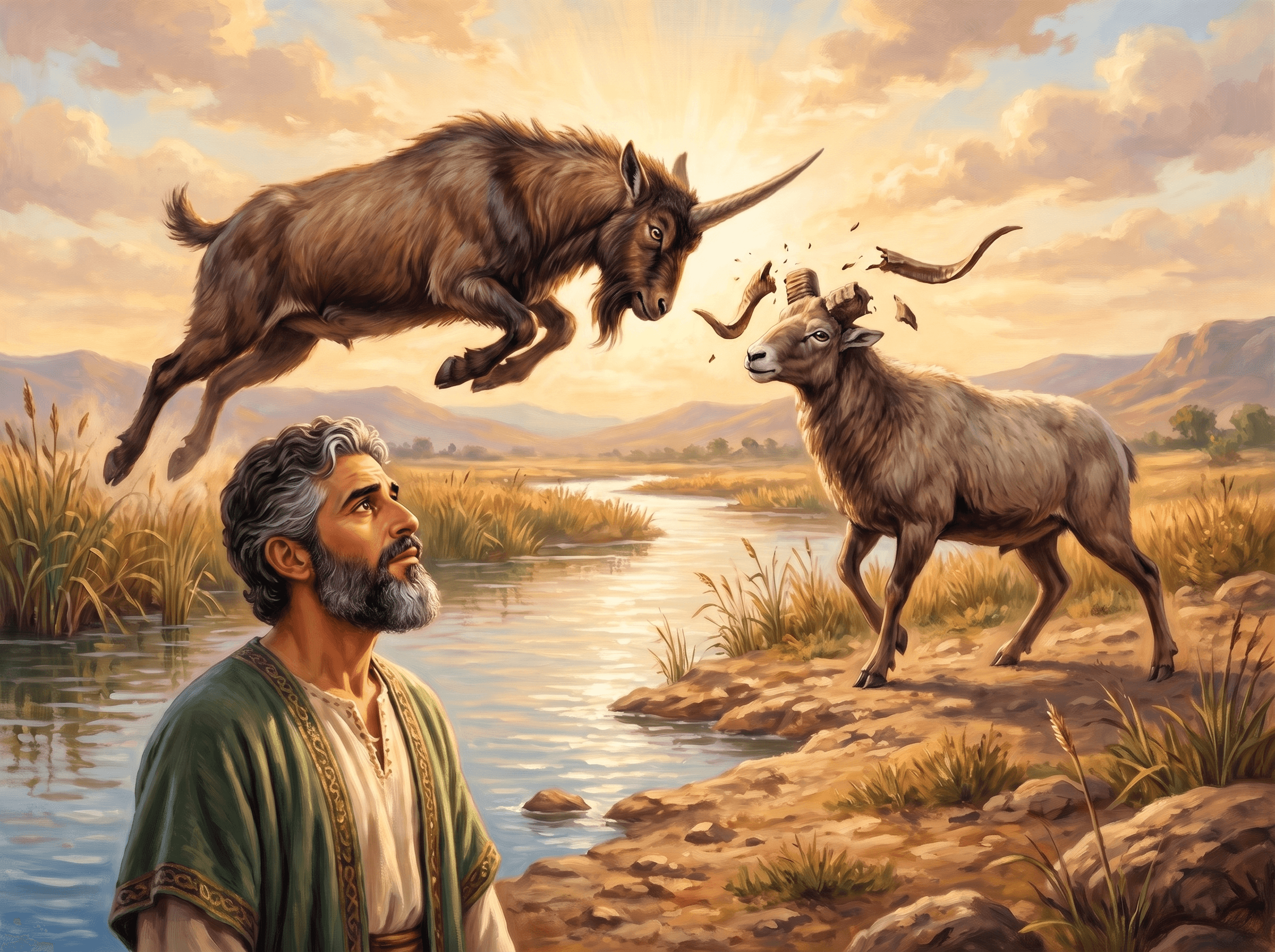
Illustrated scene from Daniel's story: The Ram and the Goat (Daniel 8:1–27)
Meet the people of the Bible
Follow their lives in order, with illustrated scenes and Bible passages that tell their stories.
 Daniel

Photo: Photochrom print, Library of Congress Prints and Photographs Division (LCCN 2002725043). License: Public domain in the United States; Library of Congress states no known restrictions on publication. Source. Location: Nablus and Mount Gerizim, West Bank; print preserved by the Library of Congress. Resized for the web.
Explore the places of the Bible
See where biblical events happened, why each place matters, and what archaeology helps us understand.
Shechem
Where God promised the land to Abram, and where Joshua led Israel to renew the covenant.
Get full access with one subscription
Explore the people and places of the Bible. Read summaries of every book, with images and clear explanations covering every chapter. Access all these features and our Bible study tools with one subscription.
See PlansAsk AI about Daniel 8:6
Ask a question about this verse and get a clear answer, with Bible references you can read for yourself.
Every Bible book, explained chapter by chapter
Explore summaries of every book of the Bible, with images and easy-to-understand explanations covering every chapter.
Keep studying Daniel 8:6
Related Bible verses
Related topics
At a Glance — the Book of Daniel
- Author
- Daniel the prophet
- Written
- Around 530 BC
- Genre
- Prophecy and apocalyptic
- Original Audience
- Exiled Jews and future generations
Frequently Asked Questions
Quick, clear answers about this verse
What does the goat represent in Daniel 8:6?
In Daniel 8:6, the goat symbolizes a powerful force or kingdom that aggressively confronts its rivals. The imagery of the goat charging at the ram illustrates the dynamics of conflict and ambition, highlighting how one entity can assert its dominance over another. This representation serves as a reminder of the intense struggles that can arise in life and the determination required to face them.
What is the significance of the two-horned ram in this verse?
The two-horned ram in Daniel 8:6 represents strength and stability. It stands firm by the river, symbolizing a solid foundation and resilience. The ram's two horns may also indicate dual power or authority. This contrast with the aggressive goat emphasizes the theme of conflict, showcasing how established powers can be challenged by emerging forces.
How can I apply the lessons from Daniel 8:6 to my life?
To apply the lessons from Daniel 8:6, embrace the determination of the goat when facing challenges. Be proactive and confront obstacles with courage, just as the goat charges forward. Additionally, remain aware of your surroundings like the ram, preparing for unexpected events. This verse encourages you to stand firm in your beliefs and values, reminding you that resilience and strength are crucial in overcoming life's struggles.
What does the 'fury of his power' mean in this context?
The phrase 'fury of his power' in Daniel 8:6 conveys the intense energy and aggressive determination of the goat as it charges at the ram. This suggests that the conflict is not just a physical confrontation but also represents a clash of wills and ambitions. It highlights the passionate drive that can fuel one's actions in pursuit of goals, emphasizing the importance of harnessing that energy constructively.
Daily Verse — straight to your inbox
A verse and a 2-sentence plain-English explanation, every morning. Free. Unsubscribe anytime.