Old Testament
Exodus 13:20
Read the Bible in clear, modern English—easy to understand, faithful to the meaning, and written for everyday readers.
They left Succoth and set up camp at Etham, on the edge of the wilderness.
Compare translations
And they took their journey from Succoth, and encamped in Etham, in the edge of the wilderness.
What Exodus 13:20 means
Plain-English insight for readers
In this passage, the Israelites are on a journey, leaving a place called Succoth and moving to Etham, which is located at the edge of the wilderness. This moment marks a significant step in their escape from slavery in Egypt. The wilderness represents both a physical and spiritual transition for them. It is a place of uncertainty, but also of hope and new beginnings. By camping at Etham, they are preparing to face the challenges ahead. This journey is not just about reaching a destination; it’s about the transformation that occurs along the way. Each step they take is a step toward freedom and a new identity as a people. The wilderness will test their faith and resilience, but it is also where they will learn to trust in a higher power. Their journey is a reminder that sometimes we must leave our comfort zones to find true liberation and purpose in life. Every journey has its challenges, but it also has the potential for growth and discovery, shaping who we are meant to become.
How to apply Exodus 13:20 to your life
Consider your own life journey. Are there areas where you need to step out of your comfort zone? Embrace the challenges ahead as opportunities for growth. Trust that each step you take is leading you toward a greater purpose and freedom in your life. Remember, the wilderness can be a place of discovery and strength as well as uncertainty. Stay hopeful and resilient as you navigate your path forward.
Curated for this public verse page. Exodus Summary
Learn the Bible through its people and places
Get to know the people in Scripture through illustrated stories, and explore the places where they lived and traveled.
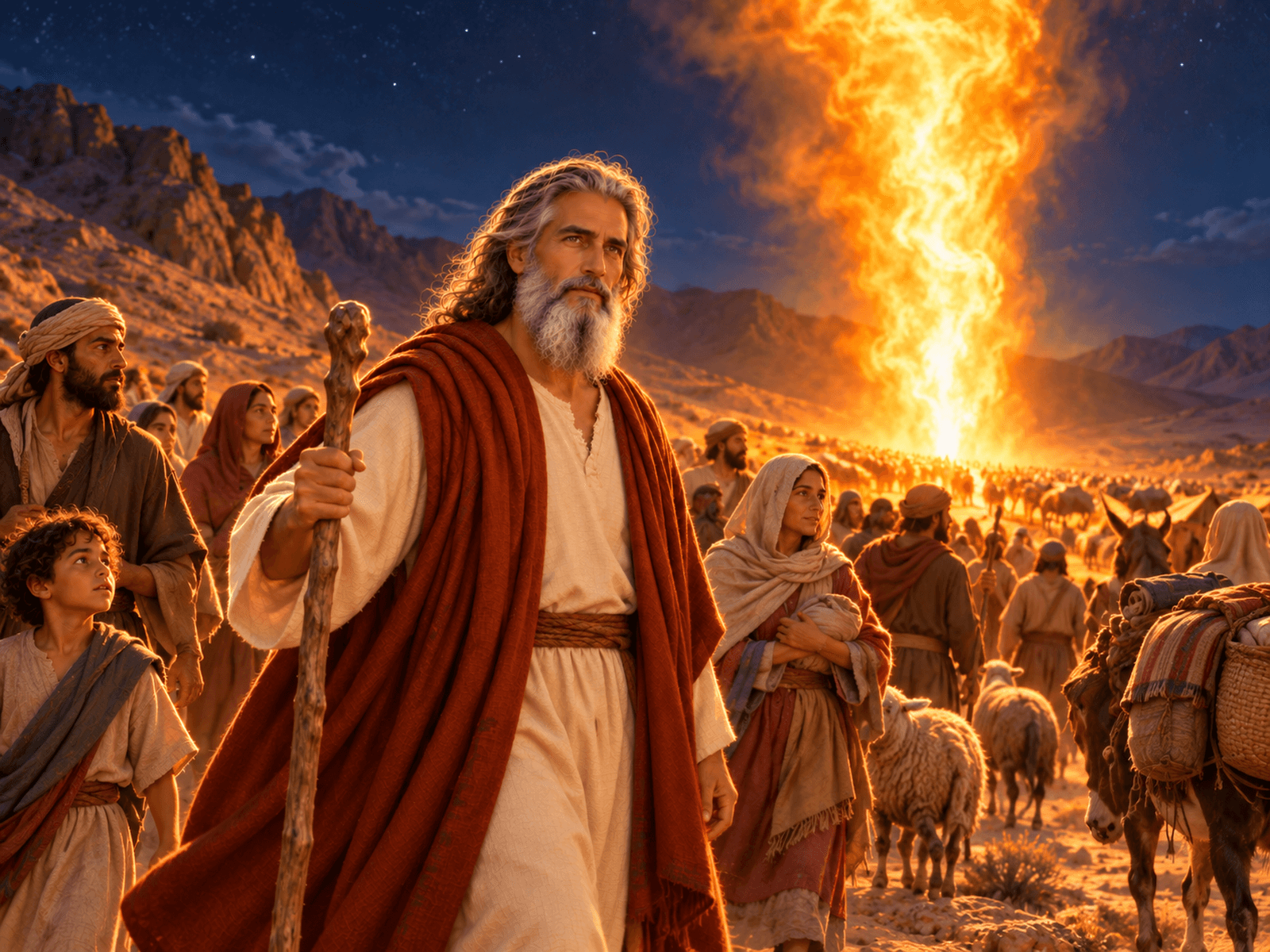
Illustrated scene from Moses's story: Led by Cloud and Fire (Exodus 13:17–22)
Meet the people of the Bible
Follow their lives in order, with illustrated scenes and Bible passages that tell their stories.
 Moses

Photo: Bukvoed, via Wikimedia Commons. License: CC BY 4.0. Source. Location: Burj Beitin, Beitin, Ramallah and al-Bireh Governorate, West Bank. Resized for the web.
Explore the places of the Bible
See where biblical events happened, why each place matters, and what archaeology helps us understand.
Bethel
Where Jacob dreamed of a stairway to heaven and met God.
Get full access with one subscription
Explore the people and places of the Bible. Read summaries of every book, with images and clear explanations covering every chapter. Access all these features and our Bible study tools with one subscription.
See PlansAsk AI about Exodus 13:20
Ask a question about this verse and get a clear answer, with Bible references you can read for yourself.
Every Bible book, explained chapter by chapter
Explore summaries of every book of the Bible, with images and easy-to-understand explanations covering every chapter.
Keep studying Exodus 13:20
Related Bible verses
Related topics
At a Glance — the Book of Exodus
- Author
- Traditionally attributed to Moses
- Written
- Around 1400 BC
- Genre
- Law (Pentateuch)
- Original Audience
- The Israelites in the wilderness
Frequently Asked Questions
Quick, clear answers about this verse
What does Exodus 13:20 mean?
Exodus 13:20 describes the Israelites leaving Succoth and camping at Etham, marking a significant moment in their journey from slavery in Egypt. This verse highlights their transition into the wilderness, symbolizing both uncertainty and the hope of freedom.
What is the significance of Etham in Exodus 13:20?
Etham is significant as it represents a stopping point for the Israelites as they begin their journey through the wilderness. It symbolizes a place of preparation before facing the challenges ahead on their path to freedom.
What does the wilderness represent in Exodus 13:20?
In Exodus 13:20, the wilderness represents a transitional space for the Israelites, filled with uncertainty but also potential for growth and transformation. It is a place where they will learn to trust in God as they move toward their promised future.
How does Exodus 13:20 relate to personal growth?
Exodus 13:20 relates to personal growth by illustrating the importance of stepping out of comfort zones, as the Israelites did. Their journey through the wilderness serves as a reminder that challenges can lead to transformation and a deeper understanding of purpose.
Daily Verse — straight to your inbox
A verse and a 2-sentence plain-English explanation, every morning. Free. Unsubscribe anytime.