Old Testament
Genesis 41:9
Read the Bible in clear, modern English—easy to understand, faithful to the meaning, and written for everyday readers.
Then the chief cupbearer spoke to Pharaoh, saying, "Today I remember my faults."
Compare translations
Then spake the chief butler unto Pharaoh, saying, I do remember my faults this day:
What Genesis 41:9 means
Plain-English insight for readers
In this verse, the chief cupbearer, who had previously forgotten Joseph's ability to interpret dreams, suddenly remembers his past mistakes. This moment of recollection is significant because it leads to Joseph being summoned to interpret Pharaoh's troubling dreams. The cupbearer's admission of his faults highlights the importance of acknowledging one's errors and the potential for redemption. It also sets the stage for Joseph's rise from prison to prominence in Egypt. This verse illustrates how moments of reflection can lead to pivotal changes in life, emphasizing the theme of divine timing and the interconnectedness of events. The chief cupbearer's memory serves as a reminder that our past actions can have lasting consequences, and recognizing them can open doors to new opportunities. It also shows that even in moments of despair, hope can emerge through the recognition of past mistakes and the willingness to seek help.
How to apply Genesis 41:9 to your life
This verse encourages us to reflect on our past mistakes and acknowledge them. By doing so, we can seek forgiveness and make amends, which can lead to personal growth and new opportunities. Remembering our faults can be a catalyst for positive change in our lives.
Curated for this public verse page. Genesis Summary
Learn the Bible through its people and places
Get to know the people in Scripture through illustrated stories, and explore the places where they lived and traveled.
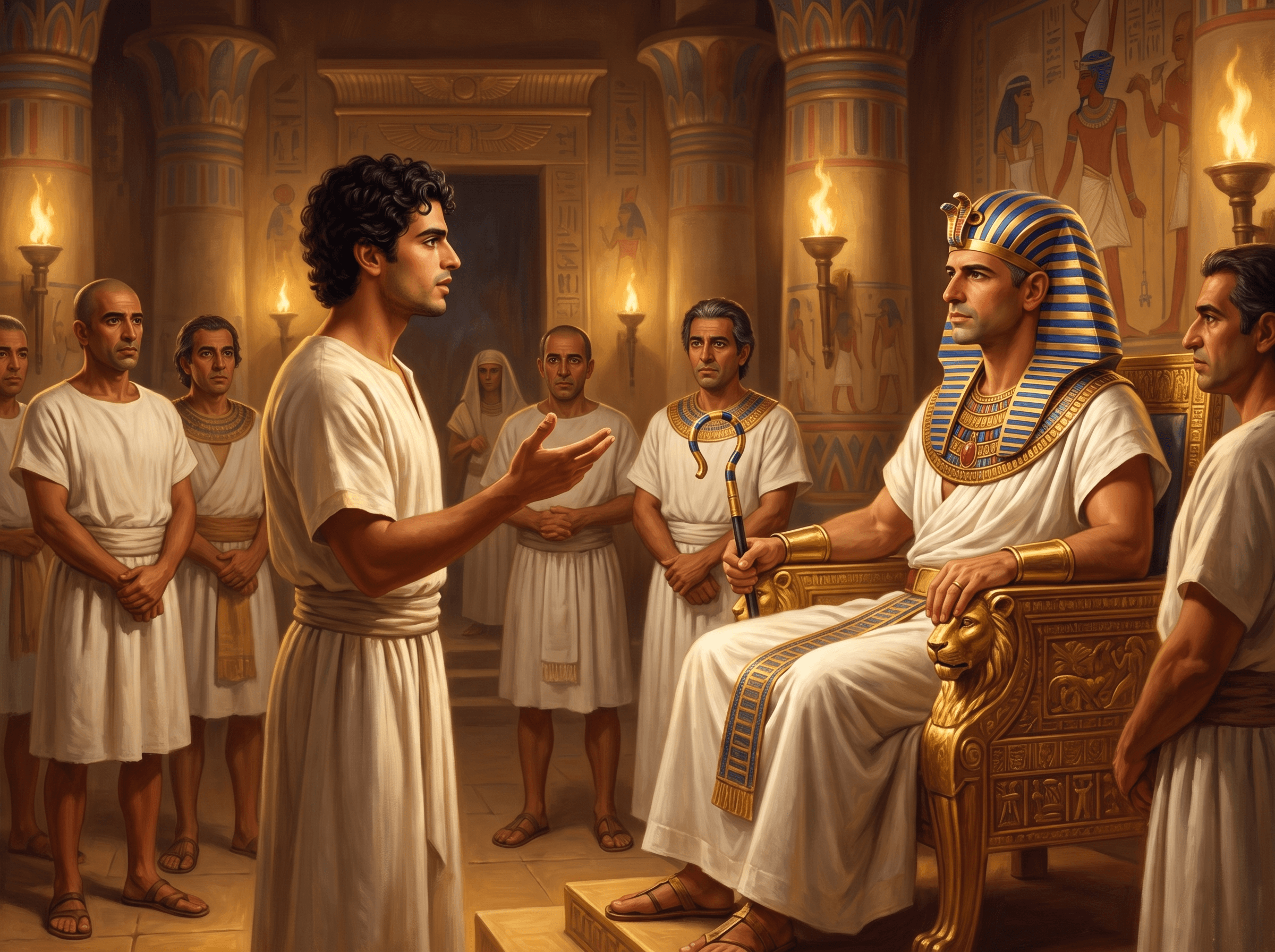
Illustrated scene from Joseph, Jacob's son's story: Pharaoh's Dreams (Genesis 41:1–36)
Meet the people of the Bible
Follow their lives in order, with illustrated scenes and Bible passages that tell their stories.
 Joseph, Jacob's son

Photo: Diego Delso, via Wikimedia Commons. License: CC BY-SA 3.0. Source. Location: Tell es-Sultan, Jericho, West Bank. Resized for the web.
Explore the places of the Bible
See where biblical events happened, why each place matters, and what archaeology helps us understand.
Jericho
The city of palm trees, whose walls fell in Joshua's day.
Get full access with one subscription
Explore the people and places of the Bible. Read summaries of every book, with images and clear explanations covering every chapter. Access all these features and our Bible study tools with one subscription.
See PlansAsk AI about Genesis 41:9
Ask a question about this verse and get a clear answer, with Bible references you can read for yourself.
Every Bible book, explained chapter by chapter
Explore summaries of every book of the Bible, with images and easy-to-understand explanations covering every chapter.
Keep studying Genesis 41:9
Related Bible verses
Key themes
Related topics
At a Glance — the Book of Genesis
- Author
- Traditionally attributed to Moses
- Written
- Around 1400 BC
- Genre
- Law (Pentateuch)
- Original Audience
- The Israelites in the wilderness
Frequently Asked Questions
Quick, clear answers about this verse
What does Genesis 41:9 mean?
Genesis 41:9 describes the chief cupbearer recalling his past mistakes after Pharaoh's troubling dreams. This moment is crucial as it leads to Joseph being called to interpret the dreams, highlighting the importance of recognizing one's faults and the potential for redemption.
What is the significance of the chief cupbearer's memory in Genesis 41:9?
The chief cupbearer's memory in Genesis 41:9 is significant because it triggers the events that lead to Joseph's rise from prison to a position of power in Egypt. It emphasizes the theme of divine timing and how acknowledging past mistakes can create new opportunities.
What does the phrase 'I remember my faults' mean in Genesis 41:9?
The phrase 'I remember my faults' in Genesis 41:9 indicates the chief cupbearer's realization of his previous neglect in mentioning Joseph's ability to interpret dreams. This acknowledgment is a turning point that leads to Joseph's involvement in Pharaoh's situation.
How does Genesis 41:9 relate to themes of forgiveness and redemption?
Genesis 41:9 relates to themes of forgiveness and redemption as the chief cupbearer's admission of his faults opens the door for Joseph to be remembered and called upon. This illustrates how recognizing and admitting mistakes can lead to personal growth and new beginnings.
Daily Verse — straight to your inbox
A verse and a 2-sentence plain-English explanation, every morning. Free. Unsubscribe anytime.