Old Testament
Genesis 49:29
Read the Bible in clear, modern English—easy to understand, faithful to the meaning, and written for everyday readers.
Then he gave them instructions, saying, "I am to be gathered to my people. Bury me with my fathers in the cave in the field of Ephron the Hittite,"
Compare translations
And he charged them, and said unto them, I am to be gathered unto my people: bury me with my fathers in the cave that is in the field of Ephron the Hittite,
What Genesis 49:29 means
Plain-English insight for readers
In this verse, Jacob is nearing the end of his life and gives his sons specific instructions about his burial. He expresses a desire to be laid to rest with his ancestors in a particular cave located in the field owned by Ephron the Hittite. This request highlights the importance of family heritage and the significance of burial places in ancient cultures. Jacob's mention of being 'gathered to my people' indicates his belief in an afterlife and a reunion with his forefathers. This moment is poignant as it reflects Jacob's deep connection to his family and his desire to honor his lineage even in death. The cave in question, known as the Cave of Machpelah, becomes a significant burial site for the patriarchs of Israel, symbolizing the continuity of God's promises to Abraham, Isaac, and Jacob's descendants. Jacob's instructions also emphasize the importance of fulfilling family obligations and respecting the wishes of loved ones, which are values that resonate throughout generations.
How to apply Genesis 49:29 to your life
This verse encourages us to honor our family's wishes and traditions, especially regarding end-of-life matters. It reminds us of the importance of maintaining connections with our heritage and the values passed down through generations. Reflecting on our own family legacies can inspire us to live in a way that honors those who came before us.
Curated for this public verse page. Genesis Summary
Learn the Bible through its people and places
Get to know the people in Scripture through illustrated stories, and explore the places where they lived and traveled.
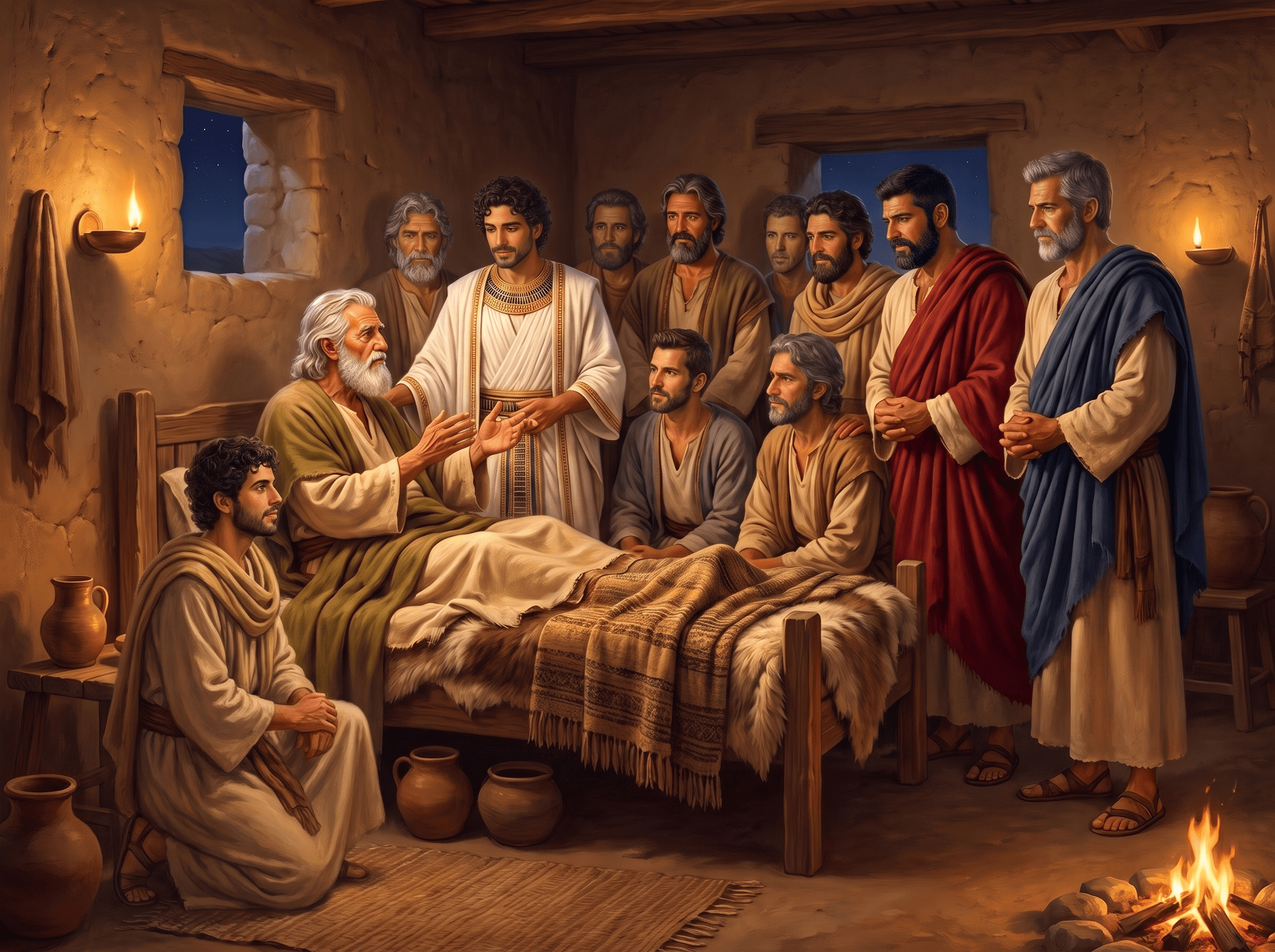
Illustrated scene from Joseph, Jacob's son's story: Jacob's Last Words (Genesis 49:1–33)
Meet the people of the Bible
Follow their lives in order, with illustrated scenes and Bible passages that tell their stories.
 Joseph, Jacob's son

Photo: Photochrom print, Library of Congress Prints and Photographs Division (LCCN 2002724987). License: Public domain in the United States; Library of Congress states no known restrictions on publication. Source. Location: Hebron, West Bank; print preserved by the Library of Congress. Resized for the web.
Explore the places of the Bible
See where biblical events happened, why each place matters, and what archaeology helps us understand.
Hebron
Where Abraham lived and buried Sarah, and where David was first made king.
Get full access with one subscription
Explore the people and places of the Bible. Read summaries of every book, with images and clear explanations covering every chapter. Access all these features and our Bible study tools with one subscription.
See PlansAsk AI about Genesis 49:29
Ask a question about this verse and get a clear answer, with Bible references you can read for yourself.
Every Bible book, explained chapter by chapter
Explore summaries of every book of the Bible, with images and easy-to-understand explanations covering every chapter.
Keep studying Genesis 49:29
Related Bible verses
Related topics
At a Glance — the Book of Genesis
- Author
- Traditionally attributed to Moses
- Written
- Around 1400 BC
- Genre
- Law (Pentateuch)
- Original Audience
- The Israelites in the wilderness
Frequently Asked Questions
Quick, clear answers about this verse
What does Jacob mean by 'gathered to my people'?
When Jacob says he is to be 'gathered to my people,' he is expressing his belief in an afterlife where he will reunite with his ancestors. This phrase signifies his hope for a continued existence beyond death, reflecting a common belief in ancient cultures about the afterlife and the importance of family connections.
Why is the Cave of Machpelah significant?
The Cave of Machpelah is significant because it serves as the burial site for several patriarchs of Israel, including Abraham, Sarah, Isaac, Rebekah, Jacob, and Leah. This cave symbolizes the fulfillment of God's promises to Abraham regarding his descendants and the land. It represents a physical connection to the heritage and faith of the Israelites.
What can we learn from Jacob's burial instructions?
Jacob's burial instructions highlight the importance of honoring family wishes and traditions, especially concerning end-of-life matters. They remind us to respect our heritage and the values passed down through generations, encouraging us to maintain connections with our ancestors and fulfill familial obligations.
How does this verse relate to family heritage?
This verse underscores the significance of family heritage by emphasizing Jacob's desire to be buried with his ancestors. It reflects the cultural importance of burial places as a way to honor lineage and maintain connections with past generations, reminding us of our roots and the legacy we carry forward.
Daily Verse — straight to your inbox
A verse and a 2-sentence plain-English explanation, every morning. Free. Unsubscribe anytime.