Old Testament
Genesis 5:12
Read the Bible in clear, modern English—easy to understand, faithful to the meaning, and written for everyday readers.
When Kenan was 70 years old, he had a son named Mahalalel.
Compare translations
And Cainan lived seventy years, and begat Mahalaleel:
What Genesis 5:12 means
Plain-English insight for readers
In this verse, we learn about Kenan, who became a father at the age of 70. This moment is significant as it marks the continuation of his family line. Kenan named his son Mahalalel, which means 'praise of God.' The act of naming a child often carries deep meaning and reflects the hopes and values of the parents. Kenan's life, like many others in this genealogy, shows the importance of family and legacy. Each generation builds upon the last, creating a rich tapestry of history. This verse reminds us that every life has a story and a purpose, and that family connections are vital. Kenan's choice to name his son reflects a desire to honor God, suggesting that faith and family are intertwined in our lives. As we reflect on this, we can appreciate the significance of our own names and the stories they tell about our heritage and beliefs. Kenan's legacy continues through Mahalalel, emphasizing the importance of passing down values and traditions through generations. This verse invites us to consider our own family stories.
How to apply Genesis 5:12 to your life
Consider the names of your family members and what they mean. Reflect on the values and traditions you want to pass down to future generations. Think about how you can honor your family's history in your daily life. Every name carries a story worth sharing and celebrating. Embrace your heritage and its impact on your identity today.
Curated for this public verse page. Genesis Summary
Explore more of the Bible
Learn the Bible through its people and places
Get to know the people in Scripture through illustrated stories, and explore the places where they lived and traveled.

Illustrated scene from Noah's story: Noah Is Born (Genesis 5:28–32)
Meet the people of the Bible
Follow their lives in order, with illustrated scenes and Bible passages that tell their stories.
 Noah
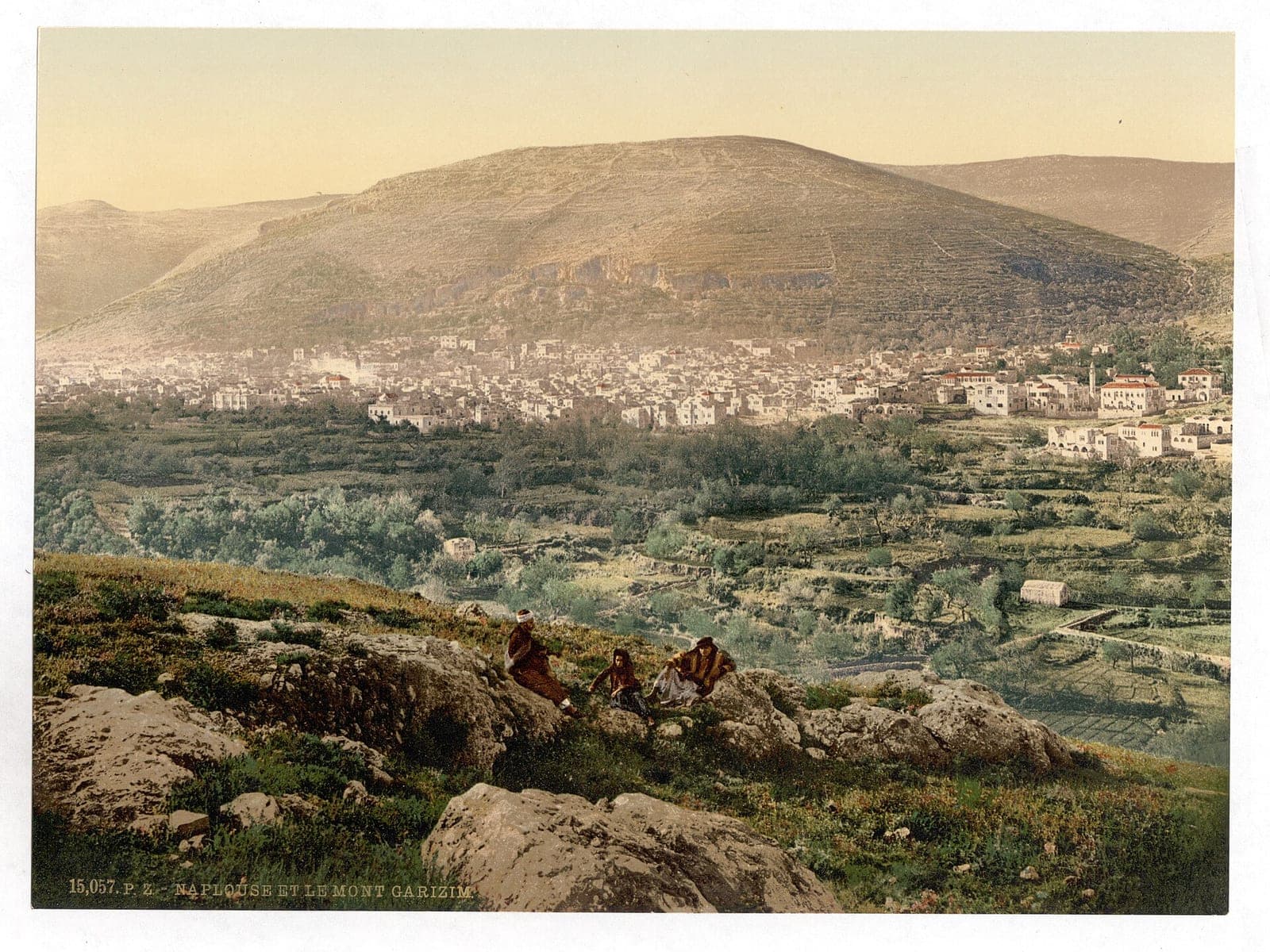
Photo: Photochrom print, Library of Congress Prints and Photographs Division (LCCN 2002725043). License: Public domain in the United States; Library of Congress states no known restrictions on publication. Source. Location: Nablus and Mount Gerizim, West Bank; print preserved by the Library of Congress. Resized for the web.
Explore the places of the Bible
See where biblical events happened, why each place matters, and what archaeology helps us understand.
Shechem
Where God promised the land to Abram, and where Joshua led Israel to renew the covenant.
Get full access with one subscription
Explore the people and places of the Bible. Read summaries of every book, with images and clear explanations covering every chapter. Access all these features and our Bible study tools with one subscription.
See PlansAsk AI about Genesis 5:12
Ask a question about this verse and get a clear answer, with Bible references you can read for yourself.
Every Bible book, explained chapter by chapter
Explore summaries of every book of the Bible, with images and easy-to-understand explanations covering every chapter.
Keep studying Genesis 5:12
Related Bible verses
Key themes
At a Glance — the Book of Genesis
- Author
- Traditionally attributed to Moses
- Written
- Around 1400 BC
- Genre
- Law (Pentateuch)
- Original Audience
- The Israelites in the wilderness
Frequently Asked Questions
Quick, clear answers about this verse
What does Genesis 5:12 mean?
Genesis 5:12 tells us that Kenan became a father at the age of 70 and named his son Mahalalel. This verse highlights the importance of family lineage and the act of naming, which often reflects the parents' values and hopes.
What is the significance of the name Mahalalel in Genesis 5:12?
The name Mahalalel means 'praise of God.' This reflects Kenan's desire to honor God through his child's name, emphasizing the connection between faith and family.
How does Genesis 5:12 relate to family legacy?
Genesis 5:12 illustrates how each generation contributes to family legacy, as Kenan names his son Mahalalel, indicating the values he wishes to pass on. It shows the continuity of family history and the significance of names.
What can we learn from Genesis 5:12 about naming children?
Genesis 5:12 teaches that naming a child can carry deep meaning and reflect the parents' hopes and beliefs. It encourages us to consider the significance of names in our own families and the stories they tell.
Daily Verse — straight to your inbox
A verse and a 2-sentence plain-English explanation, every morning. Free. Unsubscribe anytime.