New Testament
John 19:15
Read the Bible in clear, modern English—easy to understand, faithful to the meaning, and written for everyday readers.
But they shouted, "Away with him! Away with him! Crucify him!" Pilate said to them, "Should I crucify your King?" The chief priests answered, "We have no king but Caesar."
Compare translations
But they cried out, Away with him, away with him, crucify him. Pilate saith unto them, Shall I crucify your King? The chief priests answered, We have no king but Caesar.
What John 19:15 means
Plain-English insight for readers
In this verse, the crowd vehemently demands the crucifixion of Jesus, showing their rejection of Him as their King. Pilate, the Roman governor, questions them about their choice, highlighting the absurdity of rejecting their true King in favor of Caesar, a foreign ruler. The chief priests, who should have recognized Jesus as the Messiah, declare their allegiance to Caesar instead. This moment illustrates the deep conflict between earthly authority and divine kingship. The crowd's shouts reflect a collective decision to prioritize political power over spiritual truth, revealing their misunderstanding of Jesus' mission. This rejection sets the stage for the crucifixion, emphasizing the tragic irony of the situation: the very people who should have welcomed their Savior are the ones calling for His death. It serves as a powerful reminder of the consequences of choosing worldly values over God's truth.
How to apply John 19:15 to your life
This verse challenges us to examine our own allegiances. Are we prioritizing worldly values and authorities over our commitment to Christ? It encourages us to stand firm in our faith, even when it conflicts with societal pressures or expectations.
Curated for this public verse page. John Summary
Learn the Bible through its people and places
Get to know the people in Scripture through illustrated stories, and explore the places where they lived and traveled.
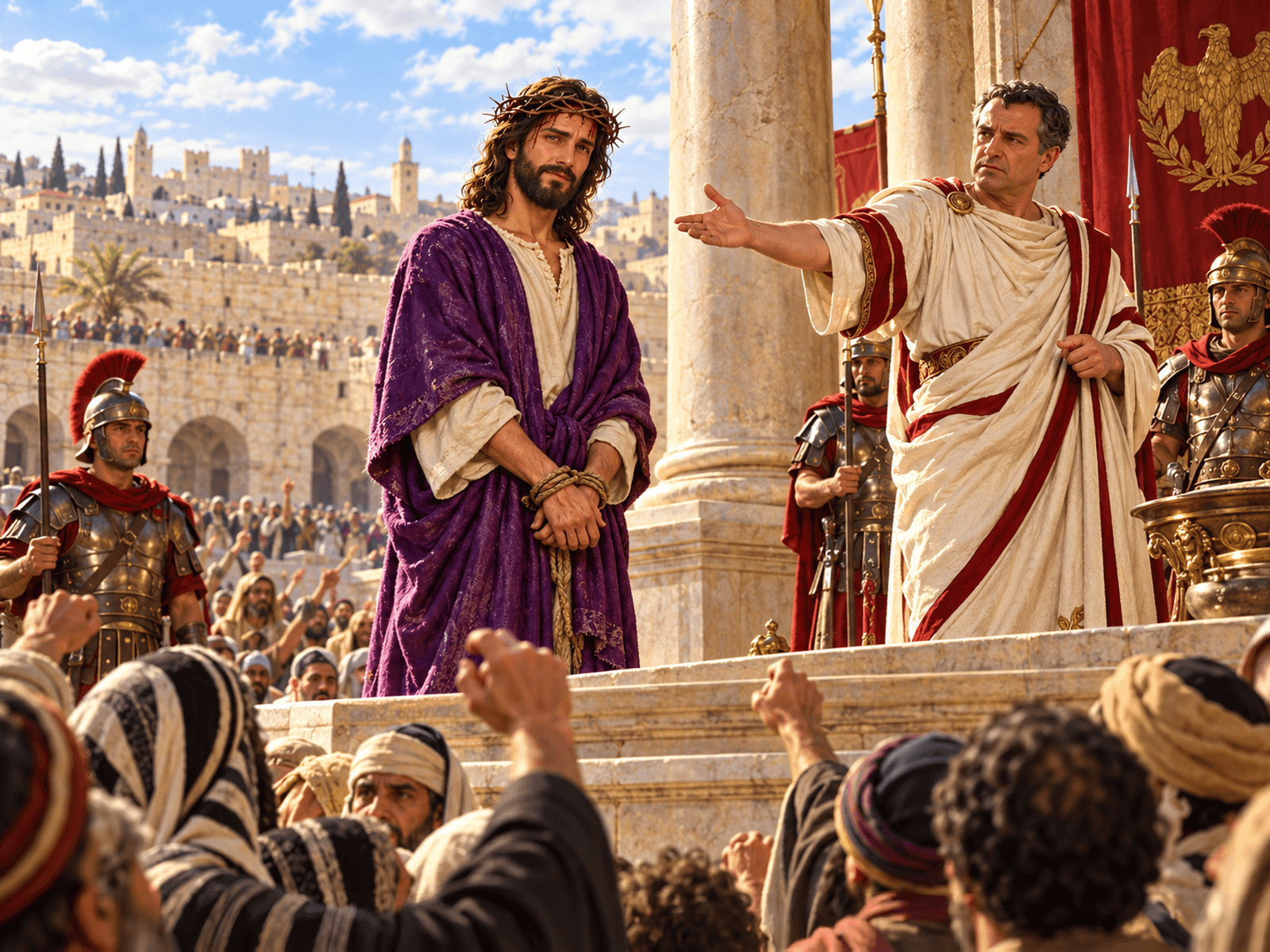
Illustrated scene from Jesus's story: On Trial Before Pilate (John 18:28–19:16)
Meet the people of the Bible
Follow their lives in order, with illustrated scenes and Bible passages that tell their stories.
 Jesus

Photo: Gary Todd (Gary Lee Todd, Ph.D.), via Wikimedia Commons. License: CC0 1.0 Universal Public Domain Dedication. Source. Location: Southern end of the Temple Mount, Jerusalem Old City. Resized for the web.
Explore the places of the Bible
See where biblical events happened, why each place matters, and what archaeology helps us understand.
Jerusalem
David's capital, the city of the temple, and the place where Jesus died and rose again.
Get full access with one subscription
Explore the people and places of the Bible. Read summaries of every book, with images and clear explanations covering every chapter. Access all these features and our Bible study tools with one subscription.
See PlansAsk AI about John 19:15
Ask a question about this verse and get a clear answer, with Bible references you can read for yourself.
Every Bible book, explained chapter by chapter
Explore summaries of every book of the Bible, with images and easy-to-understand explanations covering every chapter.
Keep studying John 19:15
Related Bible verses
At a Glance — the Book of John
- Author
- John the apostle
- Written
- Around AD 85-95
- Genre
- Gospel
- Original Audience
- All believers
Frequently Asked Questions
Quick, clear answers about this verse
What does John 19:15 reveal about the crowd's attitude towards Jesus?
John 19:15 shows the crowd's intense rejection of Jesus, as they demand His crucifixion. Their shouts of 'Away with him!' indicate a collective decision to turn against the one they should have embraced as their King. This moment highlights the tragic irony of the situation, where the people who should recognize and welcome their Messiah instead choose to align themselves with a foreign ruler, Caesar, demonstrating a profound misunderstanding of Jesus' true mission.
How does Pilate's question in John 19:15 reflect the conflict between earthly and divine authority?
Pilate's question, 'Should I crucify your King?' underscores the tension between earthly authority and divine kingship. By questioning the crowd about their choice, Pilate highlights the absurdity of rejecting Jesus, the true King, in favor of Caesar, a mere political figure. This moment illustrates the struggle between recognizing Jesus' spiritual authority and succumbing to the pressures of political power, emphasizing the choice between following God or human authority.
What is the significance of the chief priests' declaration in John 19:15?
The chief priests' declaration, 'We have no king but Caesar,' is significant as it reveals their betrayal of Jesus and their prioritization of political power over spiritual truth. As religious leaders, they should have recognized Jesus as the Messiah, but instead, they align themselves with the Roman authority, showcasing their fear of losing power and influence. This moment encapsulates the tragic irony of the situation, where those meant to lead others to God are instead leading them away from Him.
What lessons can we learn from the crowd's rejection of Jesus in John 19:15?
The crowd's rejection of Jesus in John 19:15 serves as a powerful reminder to examine our own allegiances. It challenges us to consider whether we prioritize worldly values and authorities over our commitment to Christ. This moment encourages us to stand firm in our faith, even when faced with societal pressures or expectations that conflict with our beliefs. It prompts us to reflect on how easily we can be swayed by the crowd and to remain steadfast in our devotion to God.
Daily Verse — straight to your inbox
A verse and a 2-sentence plain-English explanation, every morning. Free. Unsubscribe anytime.