New Testament
John 19:38
Read the Bible in clear, modern English—easy to understand, faithful to the meaning, and written for everyday readers.
After this, Joseph of Arimathea — who was a disciple of Jesus, but secretly for fear of the Jews — asked Pilate for permission to take away the body of Jesus. Pilate granted it, so he came and took the body.
Compare translations
And after this Joseph of Arimathaea, being a disciple of Jesus, but secretly for fear of the Jews, besought Pilate that he might take away the body of Jesus: and Pilate gave him leave. He came therefore, and took the body of Jesus.
What John 19:38 means
Plain-English insight for readers
In this verse, we learn about Joseph of Arimathea, a secret follower of Jesus who was afraid of the Jewish leaders. After Jesus' crucifixion, he courageously approached Pilate to request the body of Jesus for burial. This act shows Joseph's devotion and willingness to honor Jesus despite the risks involved. His secret discipleship highlights the fear many had during that time, yet his actions demonstrate a significant step in publicly acknowledging Jesus. By taking the body, Joseph not only fulfilled a compassionate act but also prepared for Jesus' burial, which was essential for the resurrection narrative. This moment marks a transition from Jesus' death to the hope of resurrection, emphasizing the importance of standing up for one's beliefs, even in the face of fear and societal pressure.
How to apply John 19:38 to your life
This verse encourages us to stand firm in our beliefs, even when it is difficult. Like Joseph, we may face fear or pressure from others, but we can find ways to honor our faith and support those in need. Taking action, even small steps, can make a significant difference.
Curated for this public verse page. John Summary
Learn the Bible through its people and places
Get to know the people in Scripture through illustrated stories, and explore the places where they lived and traveled.
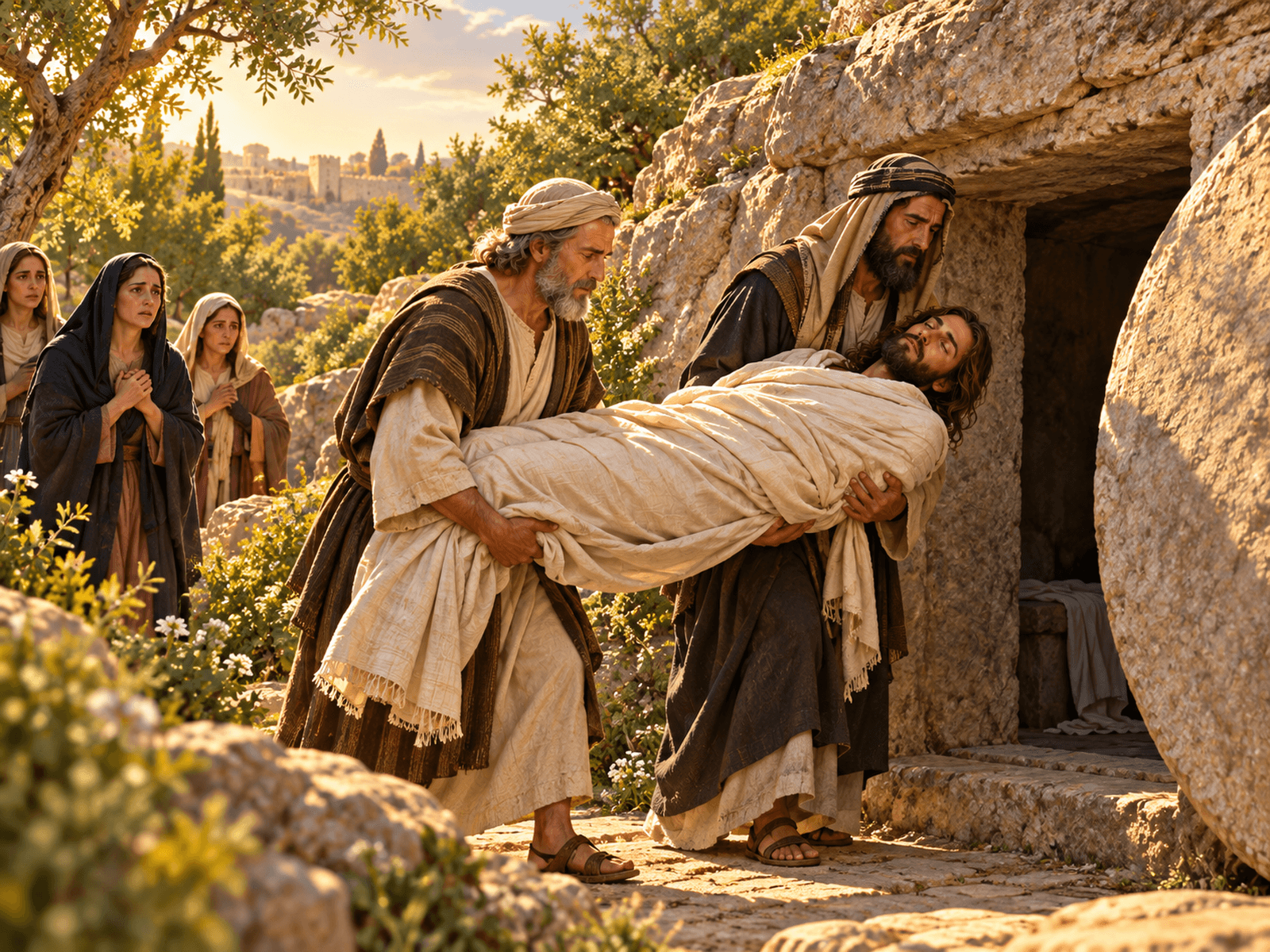
Illustrated scene from Jesus's story: The Burial (John 19:38–42)
Meet the people of the Bible
Follow their lives in order, with illustrated scenes and Bible passages that tell their stories.
 Jesus

Photo: Gary Todd (Gary Lee Todd, Ph.D.), via Wikimedia Commons. License: CC0 1.0 Universal Public Domain Dedication. Source. Location: Southern end of the Temple Mount, Jerusalem Old City. Resized for the web.
Explore the places of the Bible
See where biblical events happened, why each place matters, and what archaeology helps us understand.
Jerusalem
David's capital, the city of the temple, and the place where Jesus died and rose again.
Get full access with one subscription
Explore the people and places of the Bible. Read summaries of every book, with images and clear explanations covering every chapter. Access all these features and our Bible study tools with one subscription.
See PlansAsk AI about John 19:38
Ask a question about this verse and get a clear answer, with Bible references you can read for yourself.
Every Bible book, explained chapter by chapter
Explore summaries of every book of the Bible, with images and easy-to-understand explanations covering every chapter.
Keep studying John 19:38
Related Bible verses
Key themes
Related topics
At a Glance — the Book of John
- Author
- John the apostle
- Written
- Around AD 85-95
- Genre
- Gospel
- Original Audience
- All believers
Frequently Asked Questions
Quick, clear answers about this verse
What does John 19:38 mean?
John 19:38 describes Joseph of Arimathea, a secret disciple of Jesus, who bravely asks Pilate for Jesus' body after the crucifixion. This act signifies Joseph's commitment to Jesus and highlights the fear many had of openly following Him during that time.
Who was Joseph of Arimathea in John 19:38?
Joseph of Arimathea was a member of the Jewish council and a secret follower of Jesus. He showed courage by requesting Jesus' body for burial, despite the potential backlash from the Jewish leaders.
What themes are present in John 19:38?
John 19:38 presents themes of courage, discipleship, fear, and honor. It illustrates the tension between personal belief and societal pressure, as well as the importance of taking action in support of one's faith.
Daily Verse — straight to your inbox
A verse and a 2-sentence plain-English explanation, every morning. Free. Unsubscribe anytime.