New Testament
John 19:8
Read the Bible in clear, modern English—easy to understand, faithful to the meaning, and written for everyday readers.
When Pilate heard this, he became even more afraid.
Compare translations
When Pilate therefore heard that saying, he was the more afraid;
What John 19:8 means
Plain-English insight for readers
In this verse, we see the reaction of Pontius Pilate upon hearing a statement that heightened his fear. Pilate was already in a difficult position, caught between the demands of the Jewish leaders and his own sense of justice. The mention of Jesus' claims and the potential implications of condemning an innocent man made him anxious. This fear likely stemmed from the political and spiritual ramifications of his decision, as he was aware of the unrest surrounding Jesus' trial. Pilate's fear reflects the internal conflict he faced, knowing that he was about to make a significant decision that could lead to serious consequences for himself and the people he governed. His fear also indicates a recognition of the power and influence that Jesus held, even in his trial. This moment illustrates the struggle between authority and moral integrity, as Pilate grapples with the weight of his choices in the face of public pressure and personal conviction.
How to apply John 19:8 to your life
When faced with difficult decisions, we may feel fear or anxiety about the consequences. Like Pilate, we must weigh our choices carefully, considering both moral integrity and the impact on others. Seeking wisdom and guidance can help us navigate these challenges with courage.
Curated for this public verse page. John Summary
Learn the Bible through its people and places
Get to know the people in Scripture through illustrated stories, and explore the places where they lived and traveled.
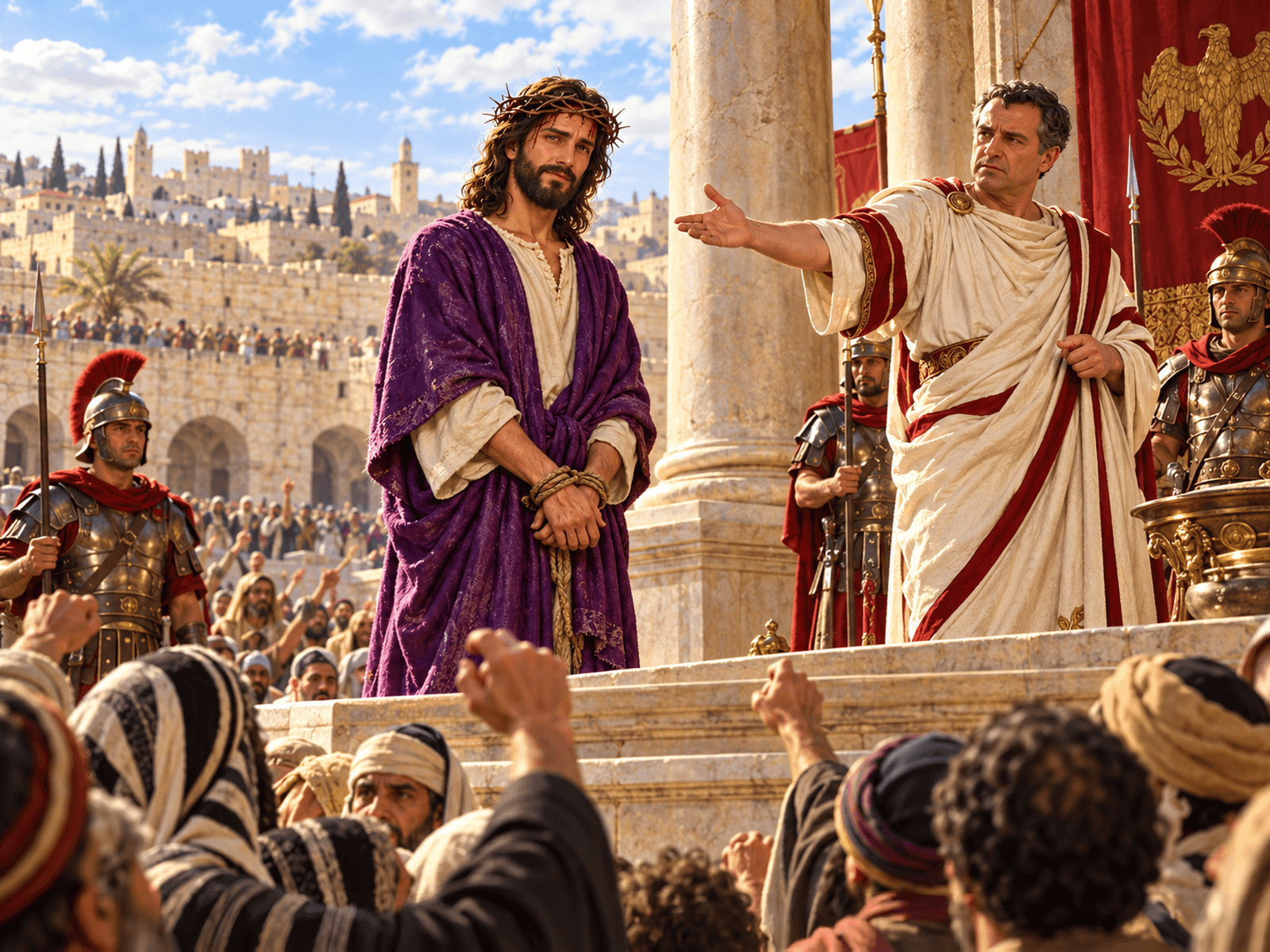
Illustrated scene from Jesus's story: On Trial Before Pilate (John 18:28–19:16)
Meet the people of the Bible
Follow their lives in order, with illustrated scenes and Bible passages that tell their stories.
 Jesus

Photo: Gary Todd (Gary Lee Todd, Ph.D.), via Wikimedia Commons. License: CC0 1.0 Universal Public Domain Dedication. Source. Location: Southern end of the Temple Mount, Jerusalem Old City. Resized for the web.
Explore the places of the Bible
See where biblical events happened, why each place matters, and what archaeology helps us understand.
Jerusalem
David's capital, the city of the temple, and the place where Jesus died and rose again.
Get full access with one subscription
Explore the people and places of the Bible. Read summaries of every book, with images and clear explanations covering every chapter. Access all these features and our Bible study tools with one subscription.
See PlansAsk AI about John 19:8
Ask a question about this verse and get a clear answer, with Bible references you can read for yourself.
Every Bible book, explained chapter by chapter
Explore summaries of every book of the Bible, with images and easy-to-understand explanations covering every chapter.
Keep studying John 19:8
At a Glance — the Book of John
- Author
- John the apostle
- Written
- Around AD 85-95
- Genre
- Gospel
- Original Audience
- All believers
Frequently Asked Questions
Quick, clear answers about this verse
What does John 19:8 mean?
John 19:8 shows Pontius Pilate's reaction to a statement that increased his fear. It highlights his internal struggle as he faced the pressure of making a decision about Jesus' fate, aware of the potential consequences for himself and the people.
Why was Pilate afraid in John 19:8?
Pilate was afraid because he was caught between the demands of the Jewish leaders and his own sense of justice. The implications of condemning an innocent man and the unrest surrounding Jesus' trial heightened his anxiety.
How does John 19:8 relate to decision-making?
John 19:8 illustrates the challenges of decision-making under pressure. It serves as a reminder to carefully consider the moral implications and potential consequences of our choices, just as Pilate had to.
What themes are present in John 19:8?
Key themes in John 19:8 include fear of authority, moral conflict, political pressure, recognition of truth, and the consequences of decisions. These themes highlight the complexities of Pilate's situation during Jesus' trial.
Daily Verse — straight to your inbox
A verse and a 2-sentence plain-English explanation, every morning. Free. Unsubscribe anytime.