New Testament
John 4:12
Read the Bible in clear, modern English—easy to understand, faithful to the meaning, and written for everyday readers.
"Are you greater than our father Jacob, who gave us this well and drank from it himself, along with his sons and his livestock?"
Compare translations
Art thou greater than our father Jacob, which gave us the well, and drank thereof himself, and his children, and his cattle?
What John 4:12 means
Plain-English insight for readers
In this verse, the Samaritan woman is speaking to Jesus and questioning His authority and significance. She refers to Jacob, a revered patriarch in Jewish history, who provided the well they are discussing. By asking if Jesus is greater than Jacob, she highlights the importance of Jacob in their culture and suggests that Jesus' claims may be overstated. This moment illustrates the tension between traditional beliefs and the new teachings Jesus brings. The woman is grappling with her understanding of spiritual matters and the identity of Jesus. Her question reflects a common human tendency to compare and measure greatness based on historical figures and tangible legacies. Jesus, however, is about to reveal a deeper truth about the living water He offers, which transcends physical wells and historical significance, pointing to a spiritual fulfillment that Jacob's well cannot provide.
How to apply John 4:12 to your life
This verse encourages us to reflect on our own understanding of Jesus. Are we limiting Him to historical figures or traditions? We should seek a personal relationship with Him that goes beyond comparisons, recognizing His unique role in our lives and the living water He offers.
Curated for this public verse page. John Summary
Learn the Bible through its people and places
Get to know the people in Scripture through illustrated stories, and explore the places where they lived and traveled.
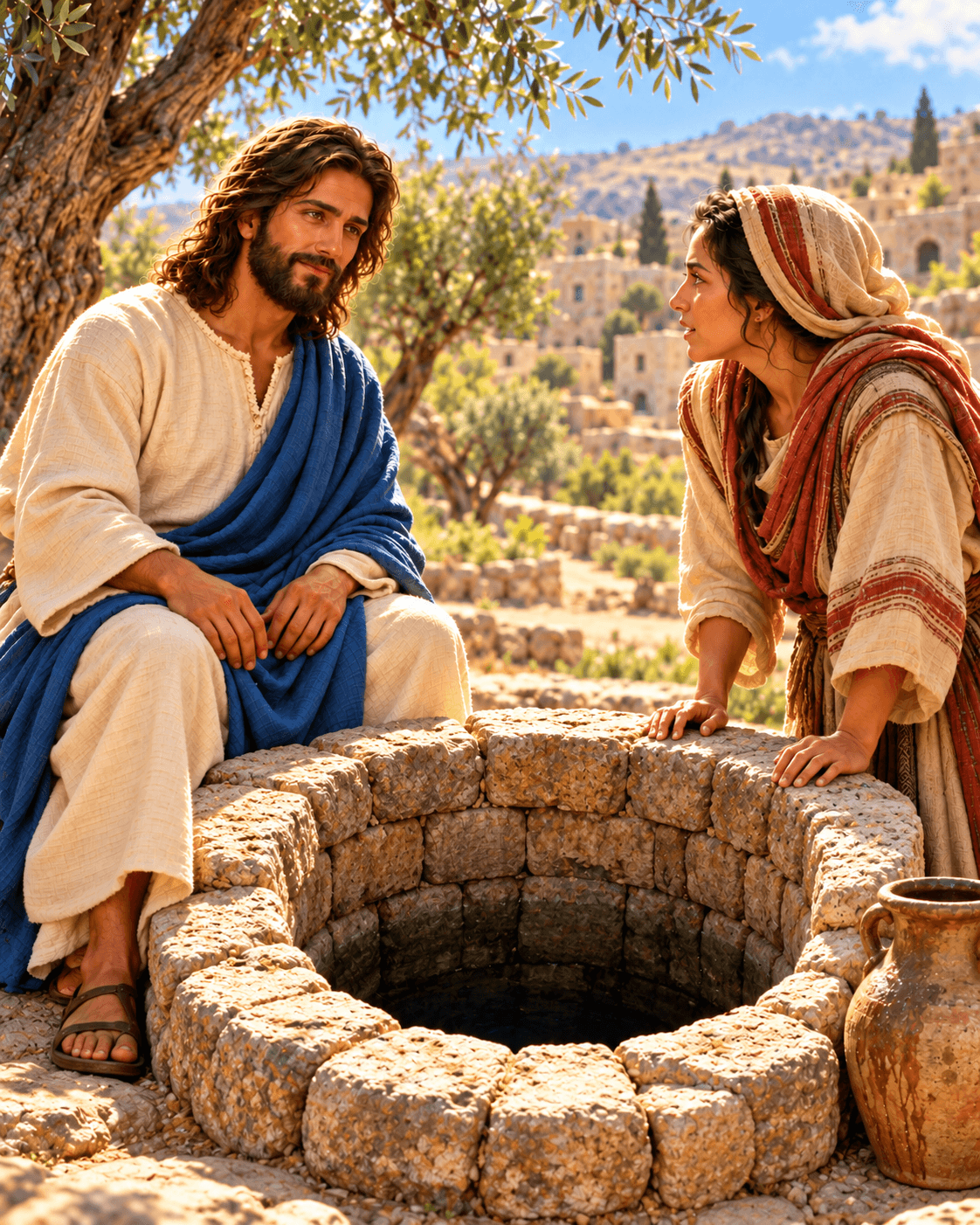
Illustrated scene from Jesus's story: The Woman at the Well (John 4:1–42)
Meet the people of the Bible
Follow their lives in order, with illustrated scenes and Bible passages that tell their stories.
 Jesus

Photo: Photochrom print, Library of Congress Prints and Photographs Division (LCCN 2002725045). License: Public domain in the United States; Library of Congress states no known restrictions on publication. Source. Location: Nazareth, Israel; print preserved by the Library of Congress. Resized for the web.
Explore the places of the Bible
See where biblical events happened, why each place matters, and what archaeology helps us understand.
Nazareth
The small town in Galilee where Jesus grew up.
Get full access with one subscription
Explore the people and places of the Bible. Read summaries of every book, with images and clear explanations covering every chapter. Access all these features and our Bible study tools with one subscription.
See PlansAsk AI about John 4:12
Ask a question about this verse and get a clear answer, with Bible references you can read for yourself.
Every Bible book, explained chapter by chapter
Explore summaries of every book of the Bible, with images and easy-to-understand explanations covering every chapter.
Keep studying John 4:12
Key themes
Related topics
At a Glance — the Book of John
- Author
- John the apostle
- Written
- Around AD 85-95
- Genre
- Gospel
- Original Audience
- All believers
Frequently Asked Questions
Quick, clear answers about this verse
What does John 4:12 mean?
In John 4:12, the Samaritan woman questions Jesus by comparing Him to Jacob, a significant figure in their history. She is highlighting Jacob's importance and expressing doubt about Jesus' claims, setting the stage for a deeper conversation about spiritual truths.
What is the significance of Jacob in John 4:12?
Jacob is a revered patriarch in Jewish tradition, known for providing the well that the Samaritan woman references. By mentioning him, she emphasizes the cultural and historical weight of their conversation, questioning whether Jesus can truly offer something greater.
How does John 4:12 relate to spiritual thirst?
In this verse, the woman's focus on Jacob's well symbolizes physical sustenance, while Jesus is about to introduce the concept of 'living water' that satisfies spiritual thirst. This contrast highlights the difference between temporary physical needs and lasting spiritual fulfillment.
What can we learn from John 4:12?
John 4:12 teaches us to examine our perceptions of Jesus and not limit Him to historical figures or traditions. It encourages seeking a personal relationship with Him that recognizes His unique role in addressing our spiritual needs.
Daily Verse — straight to your inbox
A verse and a 2-sentence plain-English explanation, every morning. Free. Unsubscribe anytime.