Old Testament
Jonah 3:9
Read the Bible in clear, modern English—easy to understand, faithful to the meaning, and written for everyday readers.
Who knows? Perhaps God will change his mind and turn from his fierce anger, so that we don't perish."
Compare translations
Who can tell if God will turn and repent, and turn away from his fierce anger, that we perish not?
What Jonah 3:9 means
Plain-English insight for readers
In Jonah 3:9, the king of Nineveh expresses hope that God might reconsider His decision to punish the city for its wickedness. The phrase 'Who knows?' reflects uncertainty and humility, acknowledging that God's mercy is possible even in dire situations. The king understands that God is capable of changing His mind, especially if the people genuinely repent. This verse highlights the importance of repentance and the belief that sincere actions can lead to divine mercy. The king's plea indicates a collective responsibility among the people to turn from their evil ways, emphasizing that their fate is not sealed and that they can seek forgiveness. This moment illustrates the power of humility and the potential for change when individuals and communities turn back to God.
How to apply Jonah 3:9 to your life
This verse encourages us to approach God with humility and hope, believing that sincere repentance can lead to forgiveness. It reminds us that no situation is beyond redemption and that we should actively seek to turn away from wrongdoing, both individually and as a community.
Curated for this public verse page. Jonah Summary
Learn the Bible through its people and places
Get to know the people in Scripture through illustrated stories, and explore the places where they lived and traveled.
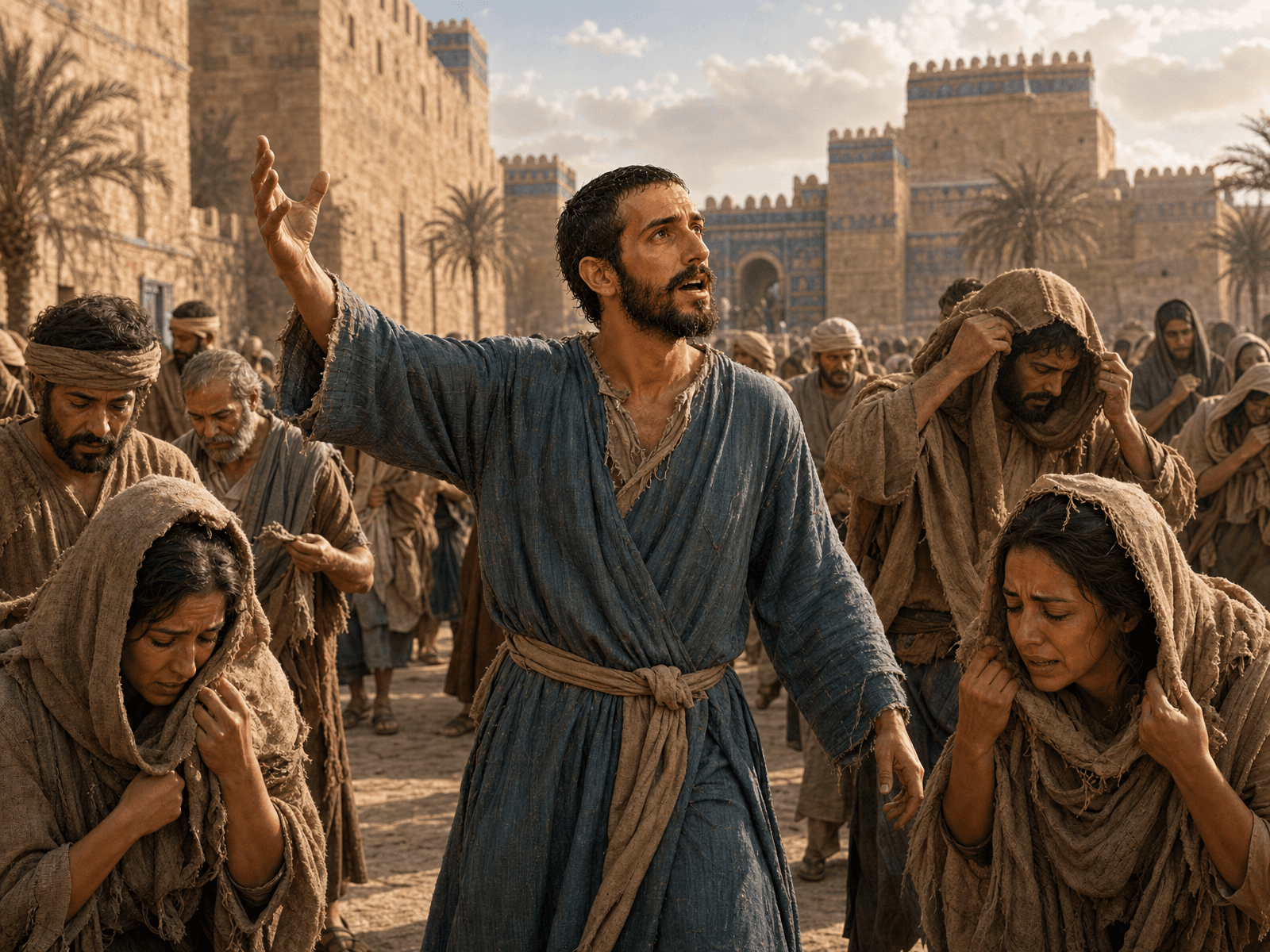
Illustrated scene from Jonah's story: Nineveh Repents (Jonah 3:1–10)
Meet the people of the Bible
Follow their lives in order, with illustrated scenes and Bible passages that tell their stories.
 Jonah

Photo: Deror Avi, via Wikimedia Commons. License: CC BY-SA 4.0. Source. Location: Tel Shiloh archaeological site, West Bank. Resized for the web.
Explore the places of the Bible
See where biblical events happened, why each place matters, and what archaeology helps us understand.
Shiloh
Where Israel set up the tabernacle, and where God called the boy Samuel.
Get full access with one subscription
Explore the people and places of the Bible. Read summaries of every book, with images and clear explanations covering every chapter. Access all these features and our Bible study tools with one subscription.
See PlansAsk AI about Jonah 3:9
Ask a question about this verse and get a clear answer, with Bible references you can read for yourself.
Every Bible book, explained chapter by chapter
Explore summaries of every book of the Bible, with images and easy-to-understand explanations covering every chapter.
Keep studying Jonah 3:9
Related Bible verses
Key themes
Related topics
At a Glance — the Book of Jonah
- Author
- Traditionally attributed to Jonah
- Written
- Around 760 BC
- Genre
- Prophetic narrative
- Original Audience
- Israelites and Gentile nations
Frequently Asked Questions
Quick, clear answers about this verse
What does Jonah 3:9 teach about God's mercy?
Jonah 3:9 illustrates that God's mercy is available even in the face of severe judgment. The king of Nineveh expresses hope that God might reconsider His decision to punish the city, highlighting the belief that genuine repentance can lead to divine forgiveness. This verse encourages us to understand that no matter how dire our situation may seem, turning back to God with sincerity can invoke His mercy.
How can we apply Jonah 3:9 in our lives?
We can apply Jonah 3:9 by approaching God with humility and a repentant heart. It teaches us that sincere repentance is crucial for seeking forgiveness and that we should actively turn away from wrongdoing. This verse encourages both individual and communal efforts to seek God's mercy, reminding us that change is possible and that we are not beyond redemption.
What does 'Who knows?' signify in Jonah 3:9?
The phrase 'Who knows?' in Jonah 3:9 signifies uncertainty and humility. It reflects the king's acknowledgment that while God's judgment seems certain, there is still hope for mercy if the people genuinely repent. This expression highlights the importance of faith in God's ability to change His mind and the belief that sincere actions can lead to a positive outcome.
Why is collective responsibility emphasized in Jonah 3:9?
Collective responsibility is emphasized in Jonah 3:9 because the king recognizes that the fate of Nineveh depends on the actions of its people. By calling for repentance, he underscores that everyone has a role in turning away from evil. This highlights the idea that communities must come together to seek forgiveness and change, reinforcing the belief that collective actions can influence divine outcomes.
Daily Verse — straight to your inbox
A verse and a 2-sentence plain-English explanation, every morning. Free. Unsubscribe anytime.