New Testament
Luke 2:30
Read the Bible in clear, modern English—easy to understand, faithful to the meaning, and written for everyday readers.
"My own eyes have seen your salvation —"
Compare translations
For mine eyes have seen thy salvation,
What Luke 2:30 means
Plain-English insight for readers
In this verse, Simeon, a devout man, expresses his joy and fulfillment upon seeing the baby Jesus. He recognizes Jesus as the promised Savior, the one who brings salvation not just to Israel but to all people. This moment signifies the culmination of God's promise to send a Messiah. Simeon's declaration highlights the importance of recognizing and accepting Jesus as the source of salvation. His words reflect a deep understanding of God's plan and the hope that Jesus represents for humanity. This encounter emphasizes the significance of faith and the joy that comes from witnessing God's promises being fulfilled. Simeon's experience serves as a reminder that salvation is a gift that can be seen and embraced by those who seek it with an open heart.
How to apply Luke 2:30 to your life
This verse encourages us to recognize and appreciate the presence of Jesus in our lives. Just as Simeon found joy in seeing the Savior, we too can find hope and fulfillment in our faith. We should actively seek to understand and embrace the salvation that Jesus offers, sharing this joy with others.
Curated for this public verse page. Luke Summary
Learn the Bible through its people and places
Get to know the people in Scripture through illustrated stories, and explore the places where they lived and traveled.
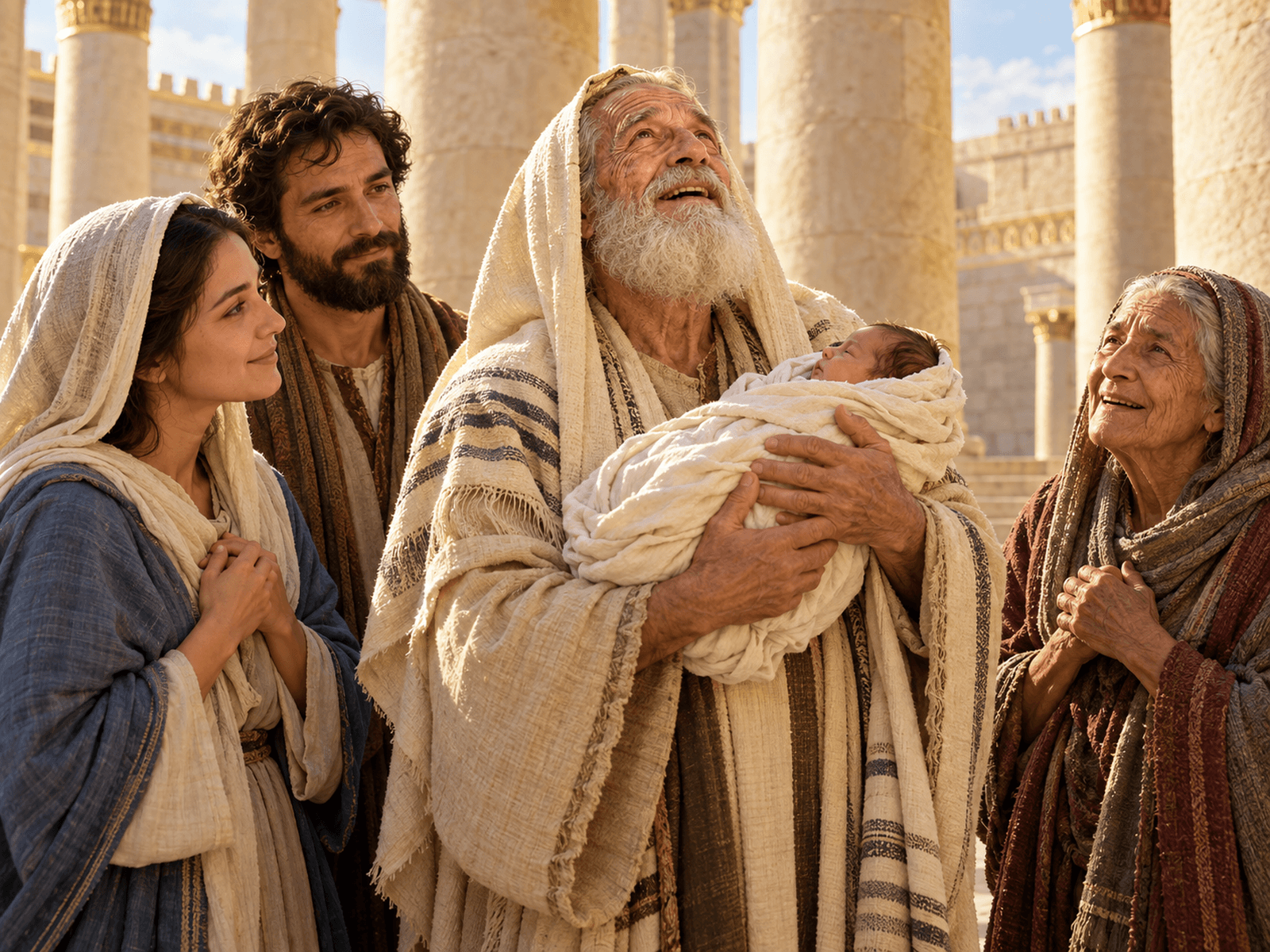
Illustrated scene from Jesus's story: Jesus Presented at the Temple (Luke 2:21–38)
Meet the people of the Bible
Follow their lives in order, with illustrated scenes and Bible passages that tell their stories.
 Jesus

Photo: Photochrom print, Library of Congress Prints and Photographs Division (LCCN 2002725045). License: Public domain in the United States; Library of Congress states no known restrictions on publication. Source. Location: Nazareth, Israel; print preserved by the Library of Congress. Resized for the web.
Explore the places of the Bible
See where biblical events happened, why each place matters, and what archaeology helps us understand.
Nazareth
The small town in Galilee where Jesus grew up.
Get full access with one subscription
Explore the people and places of the Bible. Read summaries of every book, with images and clear explanations covering every chapter. Access all these features and our Bible study tools with one subscription.
See PlansAsk AI about Luke 2:30
Ask a question about this verse and get a clear answer, with Bible references you can read for yourself.
Every Bible book, explained chapter by chapter
Explore summaries of every book of the Bible, with images and easy-to-understand explanations covering every chapter.
Keep studying Luke 2:30
Related Bible verses
Related topics
At a Glance — the Book of Luke
- Author
- Luke the physician
- Written
- Around AD 60-62
- Genre
- Gospel and history
- Original Audience
- Gentile Christians (addressed to Theophilus)
Frequently Asked Questions
Quick, clear answers about this verse
What does Luke 2:30 mean?
Luke 2:30 captures Simeon's declaration of joy upon seeing baby Jesus, whom he recognizes as the promised Savior. This moment signifies the fulfillment of God's promise to send a Messiah for all people.
What is the meaning of salvation in Luke 2:30?
In Luke 2:30, salvation refers to the deliverance and hope that Jesus brings to humanity. Simeon acknowledges Jesus as the source of this salvation, highlighting its significance for both Israel and the world.
Why is Simeon's statement important in Luke 2:30?
Simeon's statement is important because it reflects the culmination of God's promise to send a Savior. It highlights the significance of recognizing Jesus as the source of salvation and the hope He represents.
How does Luke 2:30 relate to faith?
Luke 2:30 relates to faith by showing how Simeon's belief allowed him to recognize Jesus as the Savior. His experience encourages us to have faith and seek the salvation that Jesus offers.
Daily Verse — straight to your inbox
A verse and a 2-sentence plain-English explanation, every morning. Free. Unsubscribe anytime.