New Testament
Luke 2:7
Read the Bible in clear, modern English—easy to understand, faithful to the meaning, and written for everyday readers.
She gave birth to her firstborn son, wrapped him snugly in strips of cloth, and laid him in a manger, because there was no room for them at the inn.
Compare translations
And she brought forth her firstborn son, and wrapped him in swaddling clothes, and laid him in a manger; because there was no room for them in the inn.
What Luke 2:7 means
Plain-English insight for readers
In this verse, we see the humble beginnings of Jesus' life. Mary, His mother, gave birth to Him, and instead of a comfortable bed, she wrapped Him in cloth and placed Him in a manger, which is a feeding trough for animals. This setting highlights the lowly circumstances surrounding His birth, emphasizing that the Savior of the world entered life in a very ordinary and unremarkable way. The mention of no room at the inn signifies that even from the start, Jesus faced rejection and a lack of acceptance. This moment is significant as it sets the tone for His life and ministry, which would often be characterized by humility and service to others. The imagery of swaddling clothes and a manger also evokes a sense of care and tenderness, showing that even in poverty, love and nurturing were present. This verse invites us to reflect on the nature of Jesus' mission and the importance of humility in our own lives.
How to apply Luke 2:7 to your life
This verse encourages us to embrace humility in our own lives. Just as Jesus was born in humble circumstances, we can find value in simplicity and service to others. It reminds us that greatness often comes from the most unexpected places.
Curated for this public verse page. Luke Summary
Learn the Bible through its people and places
Get to know the people in Scripture through illustrated stories, and explore the places where they lived and traveled.
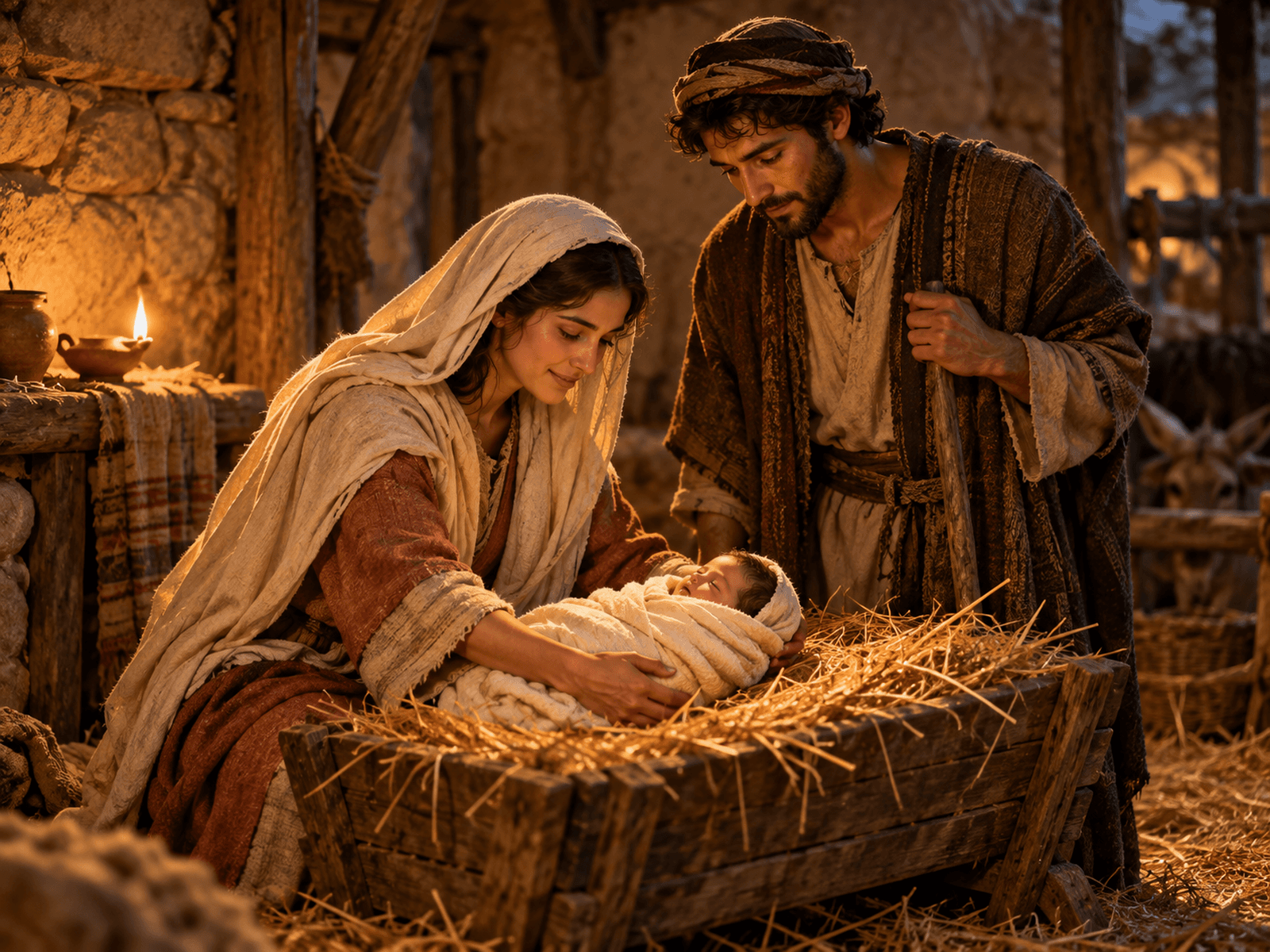
Illustrated scene from Jesus's story: The Birth of Jesus (Luke 2:1–7)
Meet the people of the Bible
Follow their lives in order, with illustrated scenes and Bible passages that tell their stories.
 Jesus
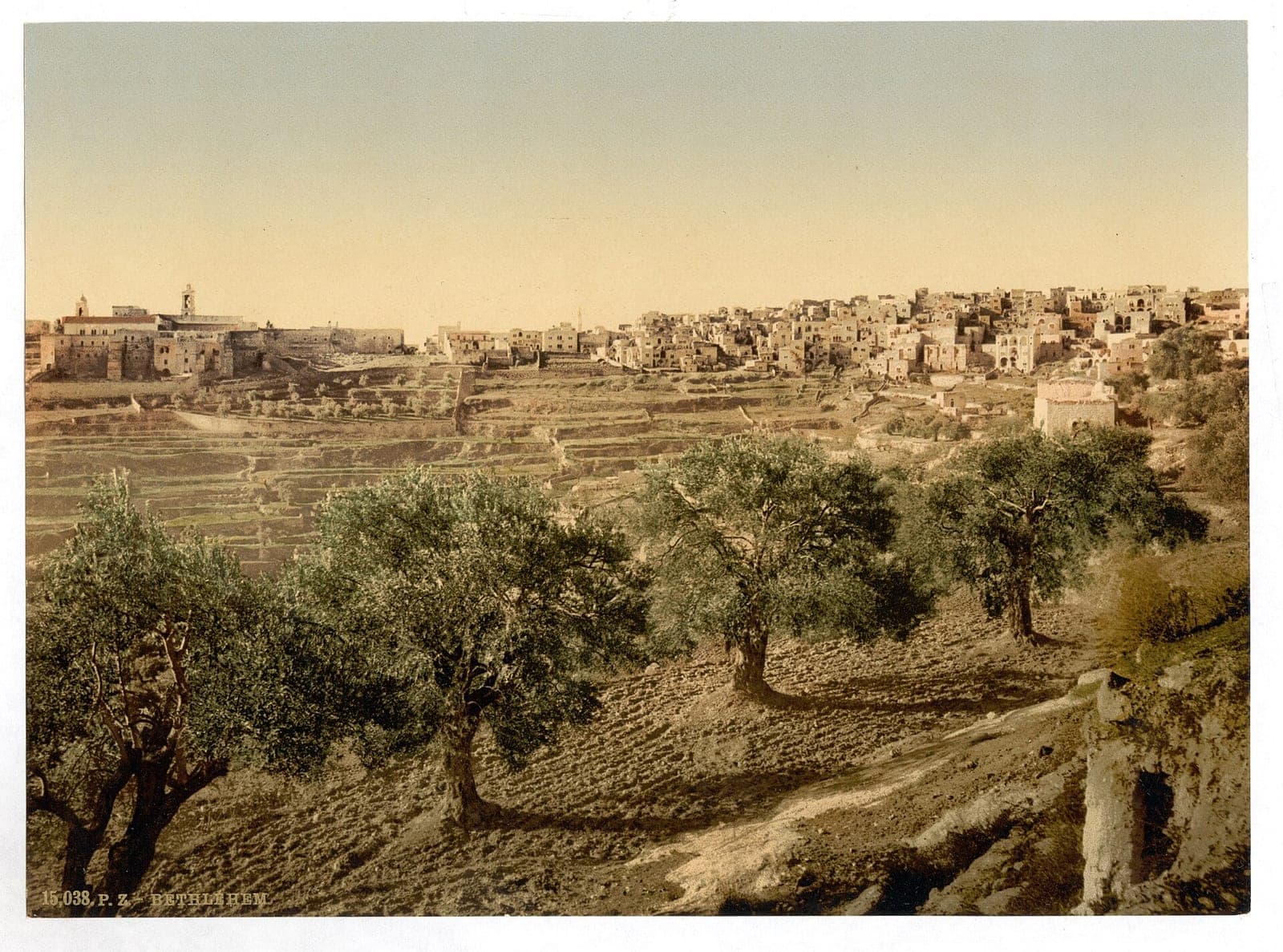
Photo: Photochrom print, Library of Congress Prints and Photographs Division (LCCN 2002724966). License: Public domain in the United States; Library of Congress states no known restrictions on publication. Source. Location: Bethlehem, West Bank; print preserved by the Library of Congress. Resized for the web.
Explore the places of the Bible
See where biblical events happened, why each place matters, and what archaeology helps us understand.
Bethlehem
David's hometown, and the town where Jesus was born.
Get full access with one subscription
Explore the people and places of the Bible. Read summaries of every book, with images and clear explanations covering every chapter. Access all these features and our Bible study tools with one subscription.
See PlansAsk AI about Luke 2:7
Ask a question about this verse and get a clear answer, with Bible references you can read for yourself.
Every Bible book, explained chapter by chapter
Explore summaries of every book of the Bible, with images and easy-to-understand explanations covering every chapter.
Keep studying Luke 2:7
Related Bible verses
Related topics
At a Glance — the Book of Luke
- Author
- Luke the physician
- Written
- Around AD 60-62
- Genre
- Gospel and history
- Original Audience
- Gentile Christians (addressed to Theophilus)
Frequently Asked Questions
Quick, clear answers about this verse
What does Luke 2:7 say about Jesus' birth?
Luke 2:7 describes the humble circumstances of Jesus' birth. Mary gave birth to her firstborn son, wrapped Him in strips of cloth, and laid Him in a manger because there was no room for them at the inn. This highlights the lowly beginnings of the Savior, emphasizing themes of humility and rejection.
Why was Jesus laid in a manger?
Jesus was laid in a manger because there was no room for Mary and Joseph at the inn. A manger is a feeding trough for animals, symbolizing the humble and ordinary conditions surrounding His birth. This setting reflects the idea that the Savior of the world entered life in a way that was accessible and relatable to all.
What is the significance of swaddling clothes in Luke 2:7?
Swaddling clothes, mentioned in Luke 2:7, signify care and tenderness in the midst of humble circumstances. Wrapping Jesus in these cloths illustrates the love and nurturing that Mary provided, even when faced with poverty. It also serves as a reminder that even in the simplest situations, love can flourish.
How does Luke 2:7 reflect on Jesus' life and ministry?
Luke 2:7 sets the tone for Jesus' life and ministry by highlighting His humble beginnings. The rejection He faced at birth foreshadows the challenges He would encounter throughout His life. This verse invites us to consider the importance of humility and service, as Jesus' mission was rooted in love and compassion for the marginalized.
Daily Verse — straight to your inbox
A verse and a 2-sentence plain-English explanation, every morning. Free. Unsubscribe anytime.