New Testament
Luke 23:12
Read the Bible in clear, modern English—easy to understand, faithful to the meaning, and written for everyday readers.
That very day, Herod and Pilate became friends — before this, they had been enemies.
Compare translations
And the same day Pilate and Herod were made friends together: for before they were at enmity between themselves.
What Luke 23:12 means
Plain-English insight for readers
In this verse, we see a significant moment in the trial of Jesus. Herod and Pilate, who were previously enemies, became friends on the same day they interacted over Jesus' trial. This unlikely alliance highlights how the events surrounding Jesus' crucifixion brought together people who normally would not associate with each other. Their friendship was forged out of a shared interest in dealing with the situation of Jesus, showing how political and personal conflicts can be set aside in the face of a greater issue. This moment also emphasizes the irony of the situation, as both leaders were involved in the decision to condemn an innocent man. It serves as a reminder of how circumstances can change relationships and how people can unite for a common purpose, even if that purpose is unjust. The friendship formed here is temporary and politically motivated, illustrating the complexities of human relationships in times of crisis.
How to apply Luke 23:12 to your life
This verse encourages us to reflect on our own relationships and conflicts. It reminds us that even those who seem to be enemies can find common ground. In our lives, we should seek to resolve differences and work together for a greater good, even in challenging situations.
Curated for this public verse page. Luke Summary
Learn the Bible through its people and places
Get to know the people in Scripture through illustrated stories, and explore the places where they lived and traveled.
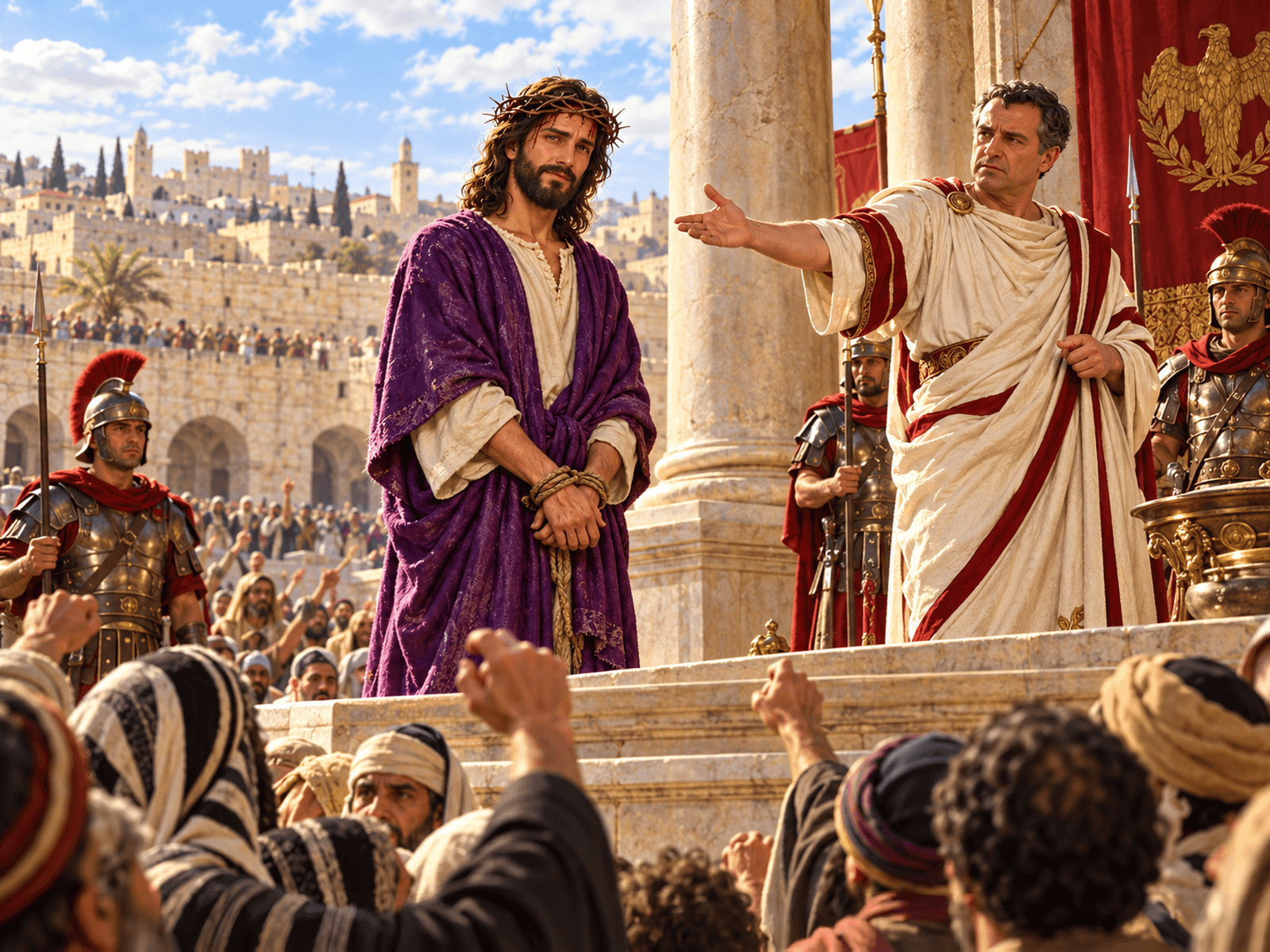
Illustrated scene from Jesus's story: On Trial Before Pilate (Luke 23:1–25)
Meet the people of the Bible
Follow their lives in order, with illustrated scenes and Bible passages that tell their stories.
 Jesus

Photo: Photochrom print, Library of Congress Prints and Photographs Division (LCCN 2002724966). License: Public domain in the United States; Library of Congress states no known restrictions on publication. Source. Location: Bethlehem, West Bank; print preserved by the Library of Congress. Resized for the web.
Explore the places of the Bible
See where biblical events happened, why each place matters, and what archaeology helps us understand.
Bethlehem
David's hometown, and the town where Jesus was born.
Get full access with one subscription
Explore the people and places of the Bible. Read summaries of every book, with images and clear explanations covering every chapter. Access all these features and our Bible study tools with one subscription.
See PlansAsk AI about Luke 23:12
Ask a question about this verse and get a clear answer, with Bible references you can read for yourself.
Every Bible book, explained chapter by chapter
Explore summaries of every book of the Bible, with images and easy-to-understand explanations covering every chapter.
Keep studying Luke 23:12
Related Bible verses
Key themes
Related topics
At a Glance — the Book of Luke
- Author
- Luke the physician
- Written
- Around AD 60-62
- Genre
- Gospel and history
- Original Audience
- Gentile Christians (addressed to Theophilus)
Frequently Asked Questions
Quick, clear answers about this verse
What does Luke 23:12 mean?
Luke 23:12 describes how Herod and Pilate, who were previously enemies, became friends on the day they interacted over Jesus' trial. This moment illustrates how political and personal conflicts can be set aside in the face of a significant issue.
How does Luke 23:12 relate to conflict resolution?
Luke 23:12 serves as a reminder that even those who are in conflict can find common ground when faced with a larger issue. It encourages us to seek resolution and collaboration, even in difficult circumstances.
What themes are present in Luke 23:12?
Key themes in Luke 23:12 include friendship, political alliances, conflict resolution, irony, injustice, and the complexities of human relationships during crises.
Daily Verse — straight to your inbox
A verse and a 2-sentence plain-English explanation, every morning. Free. Unsubscribe anytime.