New Testament
Luke 6:1
Read the Bible in clear, modern English—easy to understand, faithful to the meaning, and written for everyday readers.
On the second Sabbath after the first, Jesus was walking through the grain fields, and his disciples were picking heads of grain, rubbing them in their hands, and eating them.
Compare translations
And it came to pass on the second sabbath after the first, that he went through the corn fields; and his disciples plucked the ears of corn, and did eat, rubbing them in their hands.
What Luke 6:1 means
Plain-English insight for readers
In this verse, we see Jesus and his disciples walking through grain fields on a Sabbath day. The disciples were hungry, so they picked some heads of grain, rubbed them to separate the kernels, and ate them. This act raised questions about the Sabbath laws, as harvesting, even in small amounts, was often considered work. Jesus' actions and the disciples' behavior highlight the tension between strict adherence to religious rules and the need for compassion and understanding of human needs. This moment sets the stage for deeper discussions about the purpose of the Sabbath and the nature of true rest and worship. It emphasizes that mercy and meeting basic needs can take precedence over ritualistic observance of the law.
How to apply Luke 6:1 to your life
This verse encourages us to prioritize compassion and human needs over rigid adherence to rules. In our lives, we should be mindful of how we can help others, especially when they are in need, even if it means bending some societal norms or expectations.
Curated for this public verse page. Luke Summary
Explore more of the Bible
Learn the Bible through its people and places
Get to know the people in Scripture through illustrated stories, and explore the places where they lived and traveled.
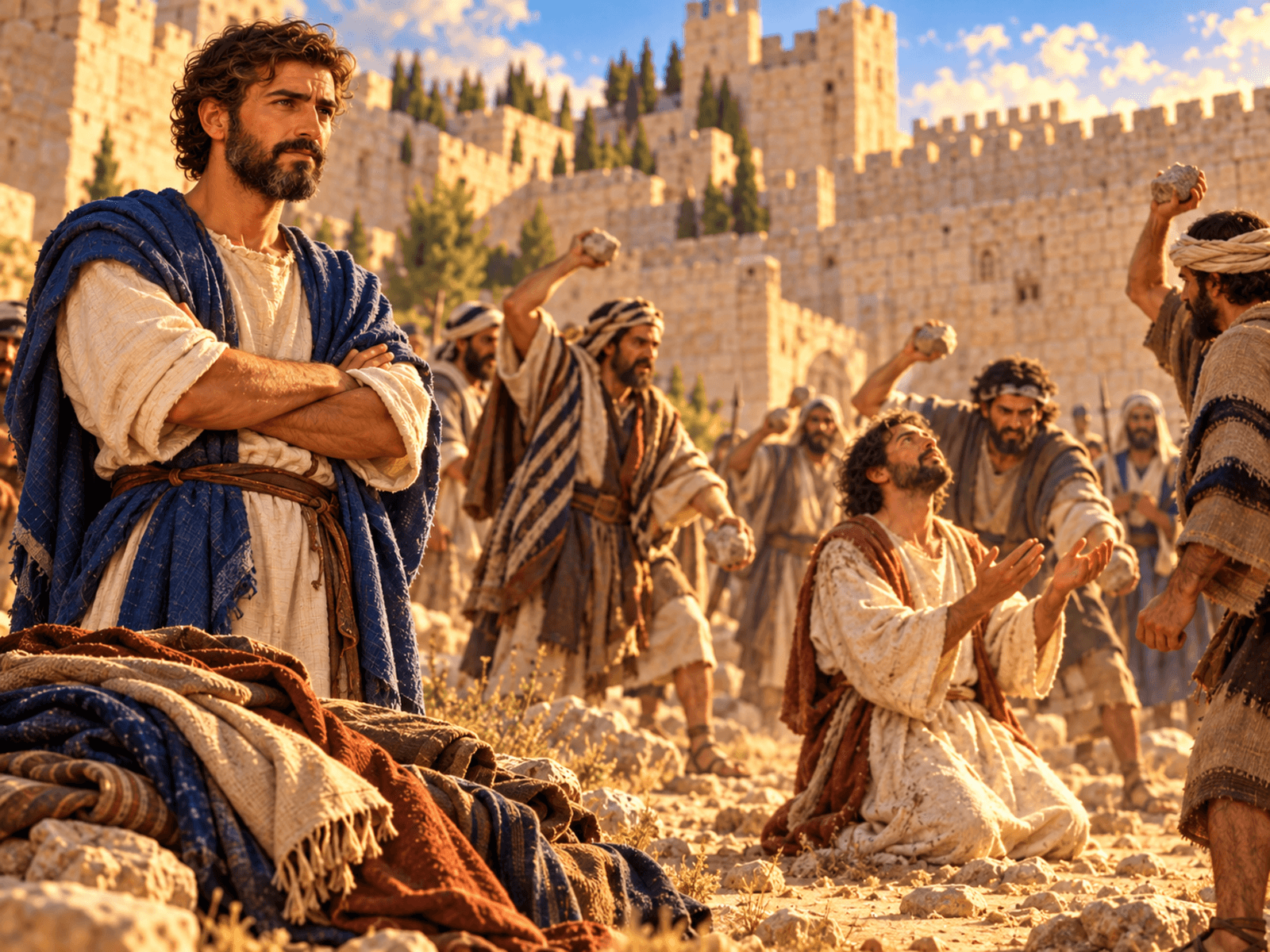
Illustrated scene from Paul's story: The Stoning of Stephen (Acts 7:57–8:2)
Meet the people of the Bible
Follow their lives in order, with illustrated scenes and Bible passages that tell their stories.
 Paul

Photo: Photochrom print, Library of Congress Prints and Photographs Division (LCCN 2002725045). License: Public domain in the United States; Library of Congress states no known restrictions on publication. Source. Location: Nazareth, Israel; print preserved by the Library of Congress. Resized for the web.
Explore the places of the Bible
See where biblical events happened, why each place matters, and what archaeology helps us understand.
Nazareth
The small town in Galilee where Jesus grew up.
Get full access with one subscription
Explore the people and places of the Bible. Read summaries of every book, with images and clear explanations covering every chapter. Access all these features and our Bible study tools with one subscription.
See PlansAsk AI about Luke 6:1
Ask a question about this verse and get a clear answer, with Bible references you can read for yourself.
Every Bible book, explained chapter by chapter
Explore summaries of every book of the Bible, with images and easy-to-understand explanations covering every chapter.
Keep studying Luke 6:1
Related Bible verses
Key themes
Related topics
At a Glance — the Book of Luke
- Author
- Luke the physician
- Written
- Around AD 60-62
- Genre
- Gospel and history
- Original Audience
- Gentile Christians (addressed to Theophilus)
Frequently Asked Questions
Quick, clear answers about this verse
What does Luke 6:1 mean?
Luke 6:1 describes an event where Jesus and his disciples walk through grain fields on the Sabbath. The disciples pick and eat grain, which raises questions about the Sabbath laws regarding work and highlights the conflict between religious rules and human needs.
What is the significance of the Sabbath in Luke 6:1?
In Luke 6:1, the Sabbath is significant because it represents a time of rest and worship. However, the actions of Jesus and his disciples challenge the strict interpretation of Sabbath laws, emphasizing that compassion and meeting basic needs are important.
How does Luke 6:1 relate to compassion and human needs?
Luke 6:1 highlights the importance of compassion by showing that Jesus prioritized the needs of his hungry disciples over strict adherence to the Sabbath laws. It suggests that meeting human needs can take precedence over ritualistic observance.
Daily Verse — straight to your inbox
A verse and a 2-sentence plain-English explanation, every morning. Free. Unsubscribe anytime.