New Testament
Matthew 11:21
Read the Bible in clear, modern English—easy to understand, faithful to the meaning, and written for everyday readers.
Woe to you, Chorazin! Woe to you, Bethsaida! For if the mighty works done in you had been done in Tyre and Sidon, they would have repented long ago in sackcloth and ashes.
Compare translations
Woe unto thee, Chorazin! woe unto thee, Bethsaida! for if the mighty works, which were done in you, had been done in Tyre and Sidon, they would have repented long ago in sackcloth and ashes.
What Matthew 11:21 means
Plain-English insight for readers
In this verse, Jesus expresses deep sorrow for the cities of Chorazin and Bethsaida because they witnessed His miracles yet did not repent. He contrasts their lack of response with the hypothetical reaction of Tyre and Sidon, two ancient cities known for their wickedness. Jesus suggests that if these cities had seen the same miracles, they would have repented sincerely, demonstrating that the people of Chorazin and Bethsaida are more accountable for their unbelief. This highlights the seriousness of rejecting divine revelation and the consequences of ignoring God's work in our lives. The mention of sackcloth and ashes symbolizes genuine repentance and mourning for sin, indicating that true change of heart is necessary when confronted with God's truth.
How to apply Matthew 11:21 to your life
This verse challenges us to reflect on our own responses to God's work in our lives. Are we recognizing and repenting of our shortcomings? It encourages us to be open to change and to respond to God's call with sincerity and humility, just as those who truly repent would.
Curated for this public verse page. Matthew Summary
Explore more of the Bible
Learn the Bible through its people and places
Get to know the people in Scripture through illustrated stories, and explore the places where they lived and traveled.
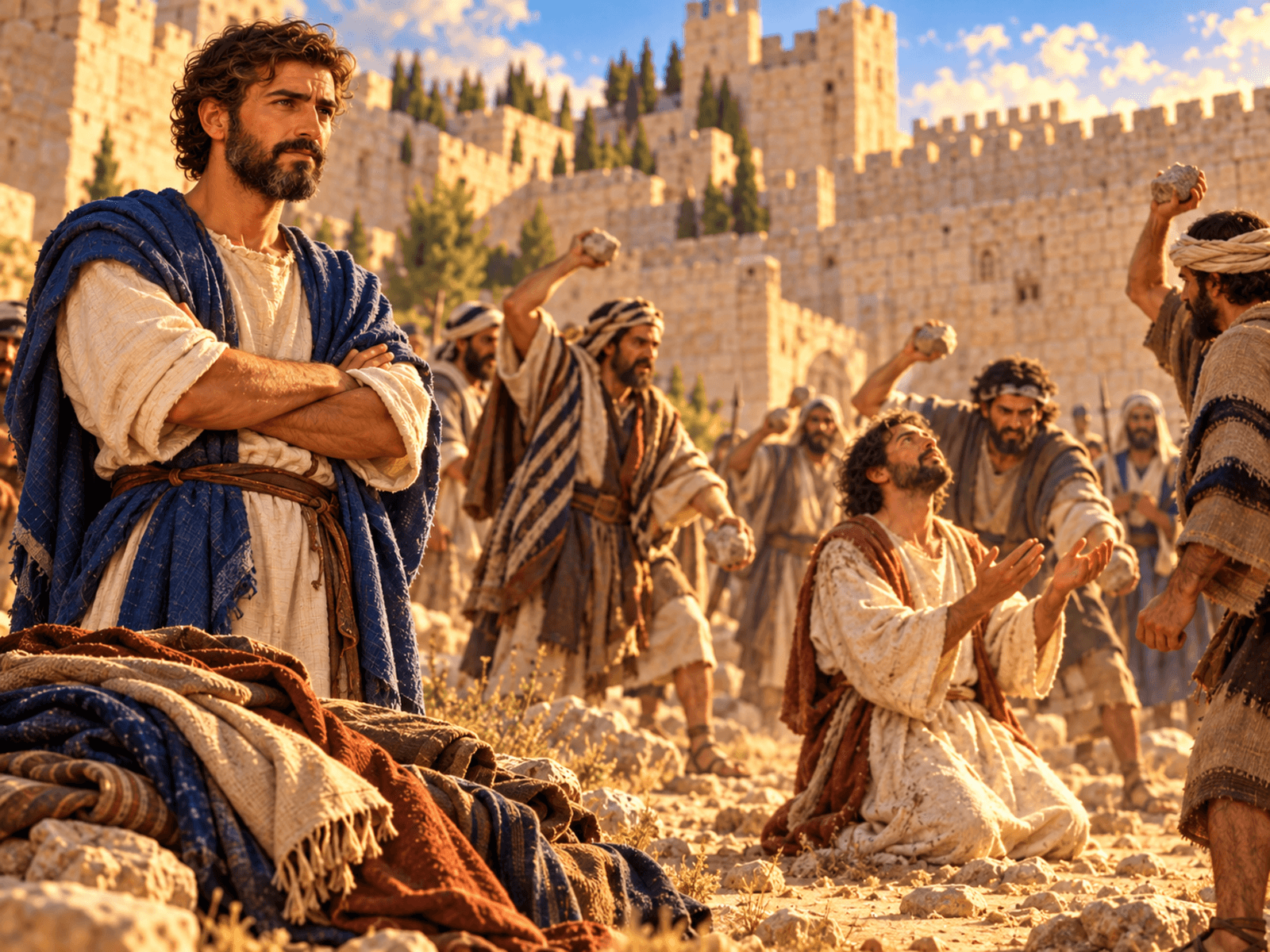
Illustrated scene from Paul's story: The Stoning of Stephen (Acts 7:57–8:2)
Meet the people of the Bible
Follow their lives in order, with illustrated scenes and Bible passages that tell their stories.
 Paul

Photo: zeevveez, via Wikimedia Commons. License: CC BY 2.0. Source. Location: Capernaum, on the northern shore of the Sea of Galilee. Resized for the web.
Explore the places of the Bible
See where biblical events happened, why each place matters, and what archaeology helps us understand.
Capernaum
Jesus' home base by the Sea of Galilee, and the town where Peter lived.
Get full access with one subscription
Explore the people and places of the Bible. Read summaries of every book, with images and clear explanations covering every chapter. Access all these features and our Bible study tools with one subscription.
See PlansAsk AI about Matthew 11:21
Ask a question about this verse and get a clear answer, with Bible references you can read for yourself.
Every Bible book, explained chapter by chapter
Explore summaries of every book of the Bible, with images and easy-to-understand explanations covering every chapter.
Keep studying Matthew 11:21
Related Bible verses
Key themes
Related topics
At a Glance — the Book of Matthew
- Author
- Matthew the apostle
- Written
- Around AD 60-70
- Genre
- Gospel
- Original Audience
- Jewish Christians
Frequently Asked Questions
Quick, clear answers about this verse
What does Matthew 11:21 mean?
Matthew 11:21 expresses Jesus' sorrow for Chorazin and Bethsaida, cities that witnessed His miracles but did not repent. He suggests that if Tyre and Sidon had seen these miracles, they would have genuinely repented, highlighting the accountability of those who reject divine revelation.
What is the significance of sackcloth and ashes in Matthew 11:21?
Sackcloth and ashes symbolize genuine repentance and mourning for sin. In Matthew 11:21, Jesus uses this imagery to indicate that true change of heart is necessary when confronted with God's truth.
How can we apply Matthew 11:21 to our lives today?
This verse encourages us to reflect on our own responses to God's work in our lives. It challenges us to recognize our shortcomings and to respond with sincerity and humility, embracing the call for genuine repentance.
Daily Verse — straight to your inbox
A verse and a 2-sentence plain-English explanation, every morning. Free. Unsubscribe anytime.