New Testament
Matthew 13:28
Read the Bible in clear, modern English—easy to understand, faithful to the meaning, and written for everyday readers.
He told them, 'An enemy did this.' The servants asked, 'Do you want us to go pull them up?'
Compare translations
He said unto them, An enemy hath done this. The servants said unto him, Wilt thou then that we go and gather them up?
What Matthew 13:28 means
Plain-English insight for readers
In this verse, Jesus explains to his disciples that the presence of weeds among the wheat in a field is the work of an enemy. The servants, noticing the weeds, ask if they should remove them. This reflects a common human instinct to fix problems immediately. However, Jesus implies that removing the weeds could harm the wheat, symbolizing the need for patience and discernment in dealing with evil. The enemy represents Satan, who sows discord and sin among believers. This passage teaches that while evil exists, it is not always our role to confront it directly. Instead, we should trust in God's timing and judgment, allowing for growth and maturity in faith before any separation of good from evil occurs. This encourages believers to focus on their own growth and to leave judgment to God, who knows the right time for everything.
How to apply Matthew 13:28 to your life
In our lives, we often encounter challenges and negativity. Instead of rushing to eliminate every problem, we should practice patience and trust that God will handle situations in His timing. Focus on your own spiritual growth while allowing God to address the issues around you.
Curated for this public verse page. Matthew Summary
Learn the Bible through its people and places
Get to know the people in Scripture through illustrated stories, and explore the places where they lived and traveled.
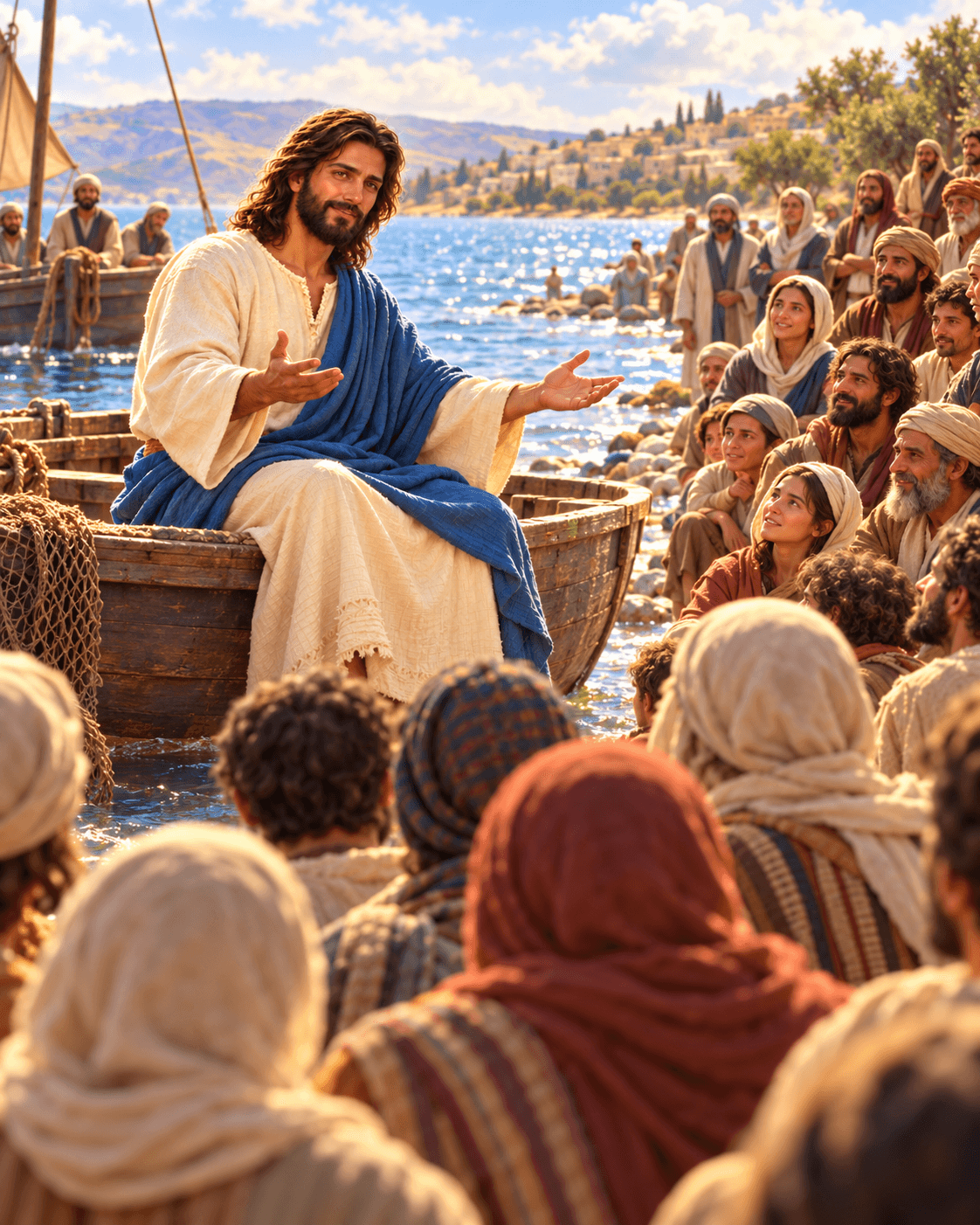
Illustrated scene from Jesus's story: Parables by the Sea (Matthew 13:1–52)
Meet the people of the Bible
Follow their lives in order, with illustrated scenes and Bible passages that tell their stories.
 Jesus

Photo: Photochrom print, Library of Congress Prints and Photographs Division (LCCN 2002724966). License: Public domain in the United States; Library of Congress states no known restrictions on publication. Source. Location: Bethlehem, West Bank; print preserved by the Library of Congress. Resized for the web.
Explore the places of the Bible
See where biblical events happened, why each place matters, and what archaeology helps us understand.
Bethlehem
David's hometown, and the town where Jesus was born.
Get full access with one subscription
Explore the people and places of the Bible. Read summaries of every book, with images and clear explanations covering every chapter. Access all these features and our Bible study tools with one subscription.
See PlansAsk AI about Matthew 13:28
Ask a question about this verse and get a clear answer, with Bible references you can read for yourself.
Every Bible book, explained chapter by chapter
Explore summaries of every book of the Bible, with images and easy-to-understand explanations covering every chapter.
Keep studying Matthew 13:28
Related Bible verses
Key themes
Related topics
At a Glance — the Book of Matthew
- Author
- Matthew the apostle
- Written
- Around AD 60-70
- Genre
- Gospel
- Original Audience
- Jewish Christians
Frequently Asked Questions
Quick, clear answers about this verse
What does Matthew 13:28 mean?
Matthew 13:28 explains that the presence of weeds among the wheat is the result of an enemy's actions. This illustrates the idea that evil can infiltrate good situations, and it emphasizes the need for patience in dealing with such challenges.
What is the meaning of 'an enemy hath done this' in Matthew 13:28?
The phrase 'an enemy hath done this' refers to the devil or Satan, who introduces evil and discord among believers. It highlights the reality of spiritual warfare and the importance of recognizing the source of conflict.
How does Matthew 13:28 relate to patience?
Matthew 13:28 emphasizes patience by showing that removing weeds too soon can harm the wheat. It encourages believers to trust in God's timing rather than rushing to fix problems.
What lesson can we learn from Matthew 13:28?
The lesson from Matthew 13:28 is to focus on personal spiritual growth and to trust God with the challenges of evil around us. It teaches that not every problem needs immediate action and that discernment is key.
Daily Verse — straight to your inbox
A verse and a 2-sentence plain-English explanation, every morning. Free. Unsubscribe anytime.