New Testament
Matthew 14:10
Read the Bible in clear, modern English—easy to understand, faithful to the meaning, and written for everyday readers.
He sent orders, and John was beheaded in the prison.
Compare translations
And he sent, and beheaded John in the prison.
What Matthew 14:10 means
Plain-English insight for readers
In this verse, we see the tragic end of John the Baptist, who was imprisoned by King Herod. Herod, influenced by the request of his stepdaughter Salome, ordered John's execution. This act highlights the consequences of Herod's moral corruption and the dangers of political power. John had been a bold prophet, calling out sin and preparing the way for Jesus. His beheading serves as a stark reminder of the cost of standing for truth in a world that often values convenience and pleasure over righteousness. The event also foreshadows the challenges that Jesus and His followers would face as they spread the message of the Kingdom of God. John's death is a pivotal moment that underscores the seriousness of the spiritual battle between good and evil, and it emphasizes the need for courage in the face of opposition.
How to apply Matthew 14:10 to your life
This verse challenges us to consider the cost of our convictions. Standing for truth may lead to opposition or sacrifice, but it is essential to remain steadfast in our beliefs. We should seek to be courageous like John, even when faced with difficult circumstances.
Curated for this public verse page. Matthew Summary
Learn the Bible through its people and places
Get to know the people in Scripture through illustrated stories, and explore the places where they lived and traveled.
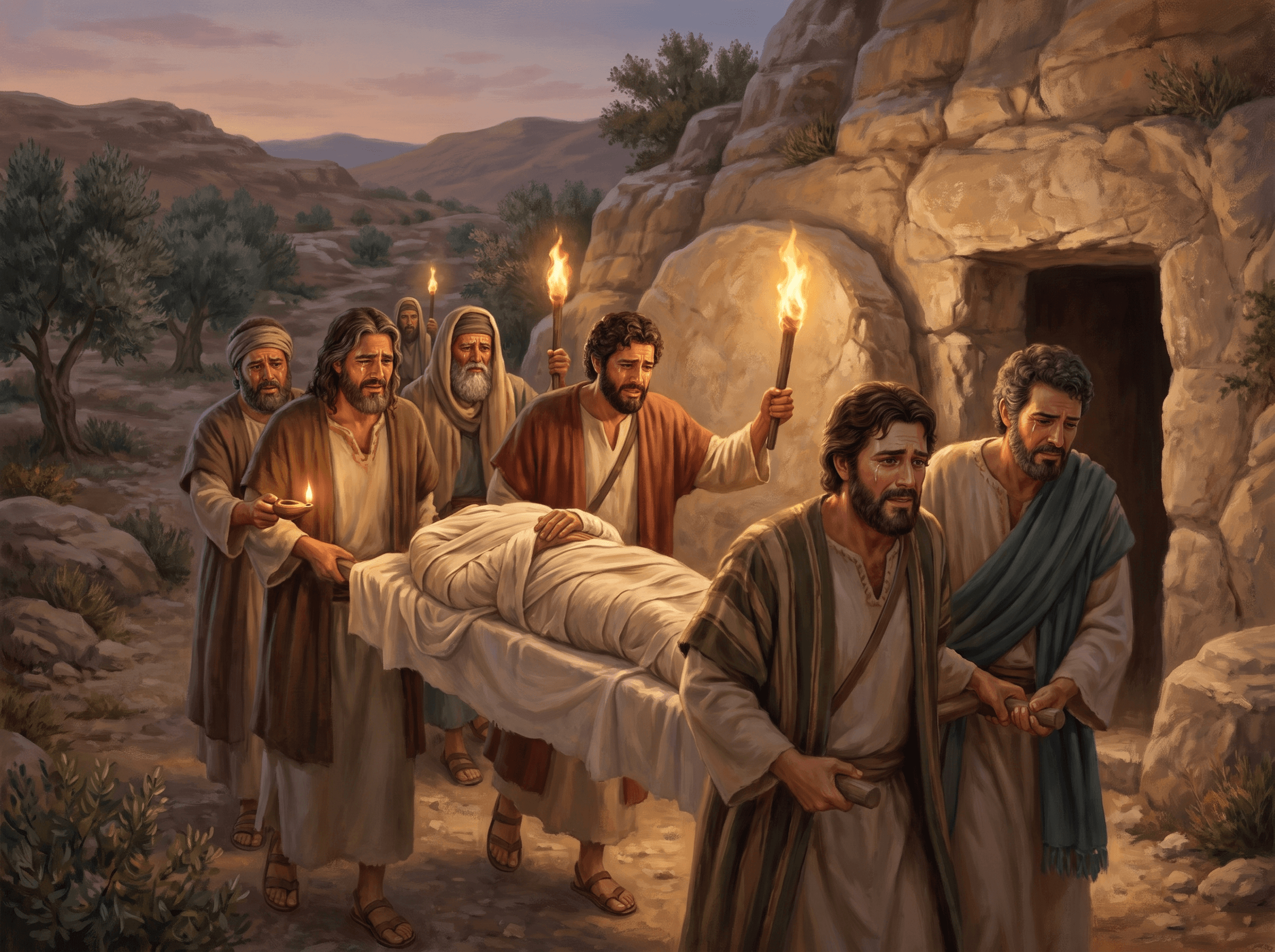
Illustrated scene from John the Baptist's story: The Death of John (Matthew 14:6–12)
Meet the people of the Bible
Follow their lives in order, with illustrated scenes and Bible passages that tell their stories.
 John the Baptist

Photo: Photochrom print, Library of Congress Prints and Photographs Division (LCCN 2002725045). License: Public domain in the United States; Library of Congress states no known restrictions on publication. Source. Location: Nazareth, Israel; print preserved by the Library of Congress. Resized for the web.
Explore the places of the Bible
See where biblical events happened, why each place matters, and what archaeology helps us understand.
Nazareth
The small town in Galilee where Jesus grew up.
Get full access with one subscription
Explore the people and places of the Bible. Read summaries of every book, with images and clear explanations covering every chapter. Access all these features and our Bible study tools with one subscription.
See PlansAsk AI about Matthew 14:10
Ask a question about this verse and get a clear answer, with Bible references you can read for yourself.
Every Bible book, explained chapter by chapter
Explore summaries of every book of the Bible, with images and easy-to-understand explanations covering every chapter.
Keep studying Matthew 14:10
Related Bible verses
Related topics
At a Glance — the Book of Matthew
- Author
- Matthew the apostle
- Written
- Around AD 60-70
- Genre
- Gospel
- Original Audience
- Jewish Christians
Frequently Asked Questions
Quick, clear answers about this verse
What does Matthew 14:10 mean?
Matthew 14:10 describes the execution of John the Baptist by King Herod, who ordered his beheading in prison. This event illustrates the tragic consequences of Herod's moral failings and the dangers of political power.
What is the significance of John's beheading in Matthew 14:10?
John's beheading signifies the high cost of standing for truth and righteousness. It serves as a reminder of the spiritual battle between good and evil and foreshadows the challenges faced by Jesus and His followers.
Why was John the Baptist executed according to Matthew 14:10?
John the Baptist was executed because he publicly criticized Herod's immoral actions, particularly his marriage to Herodias, his brother's wife. Herod, influenced by his stepdaughter Salome's request, chose to silence John.
What themes are present in Matthew 14:10?
Key themes in Matthew 14:10 include martyrdom, political corruption, courage in the face of opposition, and the consequences of sin. These themes highlight the moral complexities of leadership and the cost of truth.
Daily Verse — straight to your inbox
A verse and a 2-sentence plain-English explanation, every morning. Free. Unsubscribe anytime.