New Testament
Matthew 22:13
Read the Bible in clear, modern English—easy to understand, faithful to the meaning, and written for everyday readers.
Then the king told his servants, 'Tie him hand and foot and throw him outside into the darkness, where there will be weeping and gnashing of teeth.'
Compare translations
Then said the king to the servants, Bind him hand and foot, and take him away, and cast him into outer darkness; there shall be weeping and gnashing of teeth.
What Matthew 22:13 means
Plain-English insight for readers
In this verse, the king represents God, and the servants symbolize His angels or messengers. The man who is bound and cast out signifies those who reject God's invitation or fail to live according to His standards. The 'outer darkness' is a metaphor for separation from God, often interpreted as hell, where there is intense sorrow and regret, depicted by 'weeping and gnashing of teeth.' This imagery emphasizes the seriousness of rejecting God's grace and the consequences of not being prepared for His kingdom. The king's actions reflect divine judgment, highlighting that there are consequences for those who do not honor the invitation to the wedding feast, which symbolizes the kingdom of heaven. This verse serves as a warning about the importance of being ready and living a life that aligns with God's expectations.
How to apply Matthew 22:13 to your life
This verse reminds us to take God's invitation seriously and to live in a way that reflects our commitment to Him. It encourages self-examination of our faith and actions, ensuring we are prepared for the life He calls us to lead, avoiding spiritual complacency.
Curated for this public verse page. Matthew Summary
Explore more of the Bible
Learn the Bible through its people and places
Get to know the people in Scripture through illustrated stories, and explore the places where they lived and traveled.
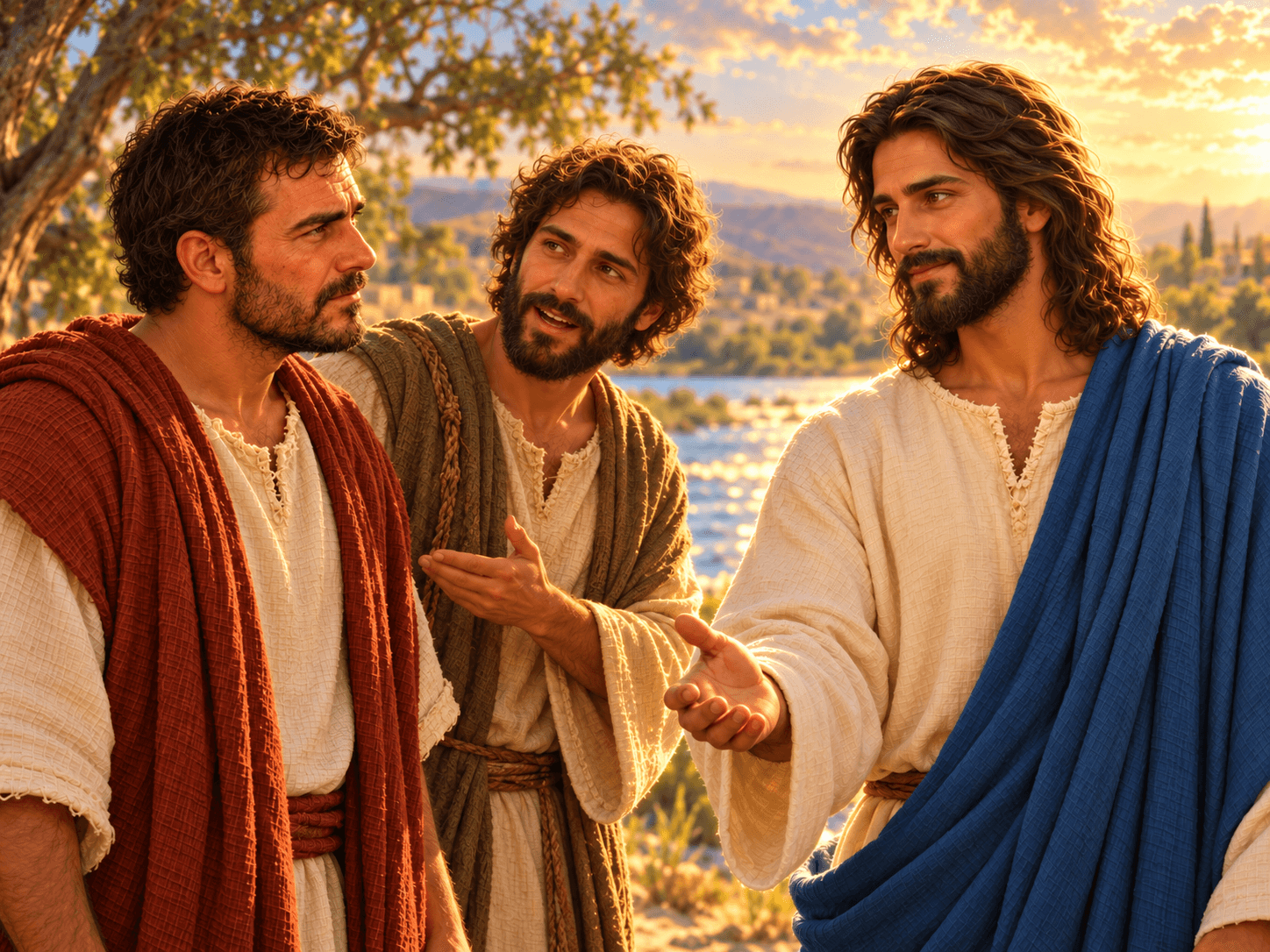
Illustrated scene from Peter's story: Andrew Brings Simon to Jesus (John 1:40–42)
Meet the people of the Bible
Follow their lives in order, with illustrated scenes and Bible passages that tell their stories.
 Peter

Photo: Photochrom print, Library of Congress Prints and Photographs Division (LCCN 2002724966). License: Public domain in the United States; Library of Congress states no known restrictions on publication. Source. Location: Bethlehem, West Bank; print preserved by the Library of Congress. Resized for the web.
Explore the places of the Bible
See where biblical events happened, why each place matters, and what archaeology helps us understand.
Bethlehem
David's hometown, and the town where Jesus was born.
Get full access with one subscription
Explore the people and places of the Bible. Read summaries of every book, with images and clear explanations covering every chapter. Access all these features and our Bible study tools with one subscription.
See PlansAsk AI about Matthew 22:13
Ask a question about this verse and get a clear answer, with Bible references you can read for yourself.
Every Bible book, explained chapter by chapter
Explore summaries of every book of the Bible, with images and easy-to-understand explanations covering every chapter.
Keep studying Matthew 22:13
Related Bible verses
Key themes
Related topics
At a Glance — the Book of Matthew
- Author
- Matthew the apostle
- Written
- Around AD 60-70
- Genre
- Gospel
- Original Audience
- Jewish Christians
Frequently Asked Questions
Quick, clear answers about this verse
What does 'outer darkness' mean in Matthew 22:13?
In Matthew 22:13, 'outer darkness' symbolizes a state of separation from God, often interpreted as hell. It represents the consequences of rejecting God's invitation and living outside His will. This imagery conveys the seriousness of spiritual neglect and the sorrow that comes from being distanced from divine presence.
Who does the king represent in this parable?
In this parable, the king represents God, who invites people to partake in His kingdom. The king's actions reflect divine judgment and the seriousness of accepting God's grace. Those who reject His invitation, like the man bound and cast out, face consequences for their choices.
What does 'weeping and gnashing of teeth' signify?
The phrase 'weeping and gnashing of teeth' signifies intense sorrow, regret, and anguish. It illustrates the emotional and spiritual pain experienced by those who reject God's invitation and find themselves separated from Him. This imagery serves as a warning about the dire consequences of not being prepared for God's kingdom.
How can I ensure I am prepared for God's kingdom?
To ensure you are prepared for God's kingdom, engage in regular self-examination of your faith and actions. Cultivate a relationship with God through prayer, study of Scripture, and community fellowship. Live out your faith by aligning your actions with God's teachings, demonstrating love, grace, and accountability in your daily life.
Daily Verse — straight to your inbox
A verse and a 2-sentence plain-English explanation, every morning. Free. Unsubscribe anytime.