New Testament
Matthew 22:45
Read the Bible in clear, modern English—easy to understand, faithful to the meaning, and written for everyday readers.
If David calls him Lord, how can he be David's son?"
Compare translations
If David then call him Lord, how is he his son?
What Matthew 22:45 means
Plain-English insight for readers
In this verse, Jesus is challenging the religious leaders' understanding of the Messiah's identity. He points out that David, a revered king, referred to the Messiah as 'Lord.' This raises a question: how can the Messiah be both David's descendant (his son) and his Lord? This paradox highlights the divine nature of the Messiah, suggesting that He is more than just a human descendant of David. Jesus uses this argument to reveal that the Messiah is not merely a political figure but is divine, emphasizing His authority and pre-existence. This teaching confronts the limited views of the religious leaders and invites them to reconsider their understanding of Scripture and the true nature of the Messiah. It serves as a profound reminder of the complexity of Jesus' identity as both fully human and fully divine, fulfilling the prophecies of the Old Testament while also transcending them.
How to apply Matthew 22:45 to your life
This verse encourages us to explore the deeper meanings of Scripture and to recognize the complexity of Jesus' identity. It challenges us to think critically about our understanding of faith and to seek a more profound relationship with Christ, acknowledging His lordship in our lives.
Curated for this public verse page. Matthew Summary
Learn the Bible through its people and places
Get to know the people in Scripture through illustrated stories, and explore the places where they lived and traveled.
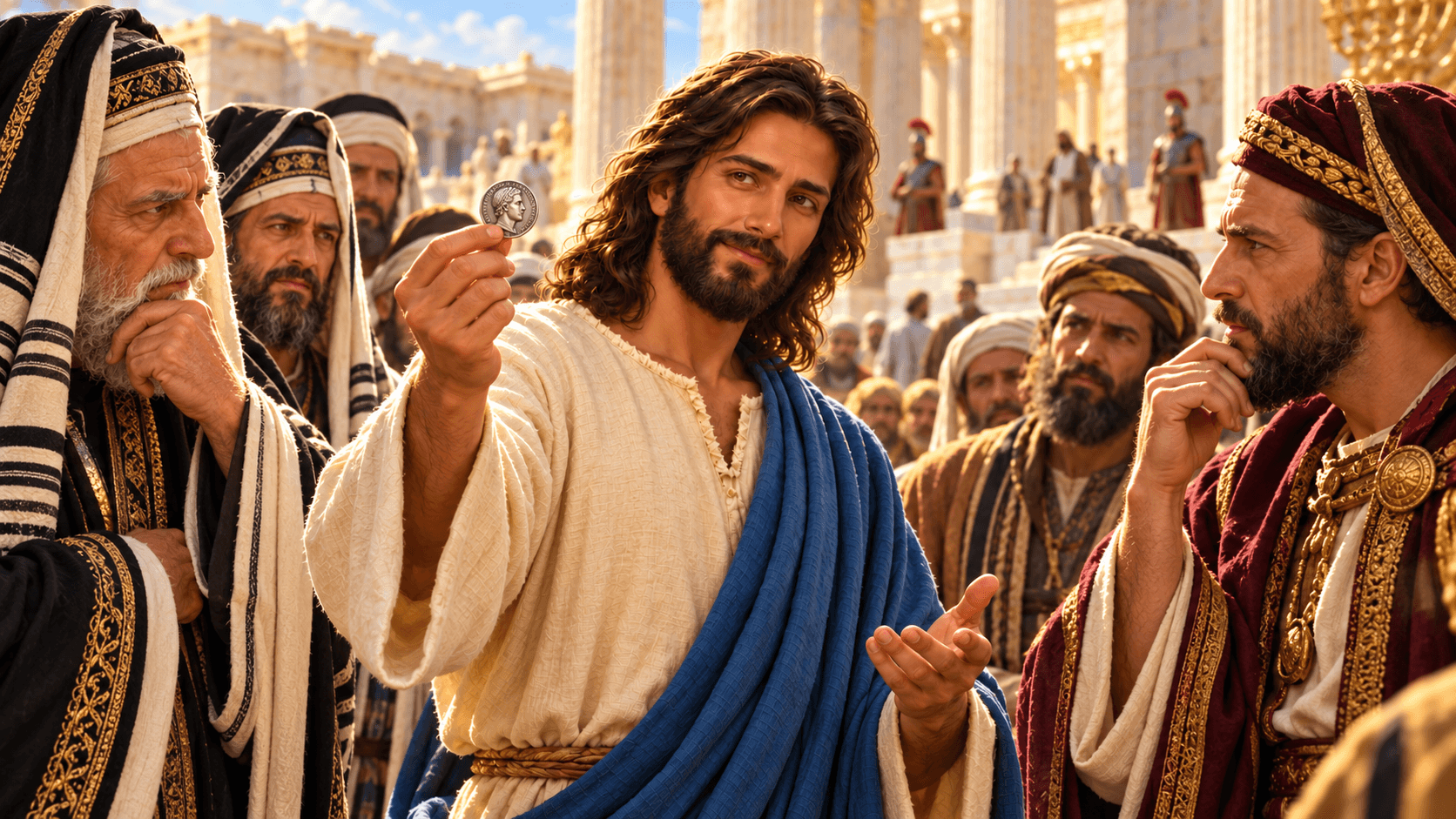
Illustrated scene from Jesus's story: Questions in the Temple (Matthew 22:15–46)
Meet the people of the Bible
Follow their lives in order, with illustrated scenes and Bible passages that tell their stories.
 Jesus
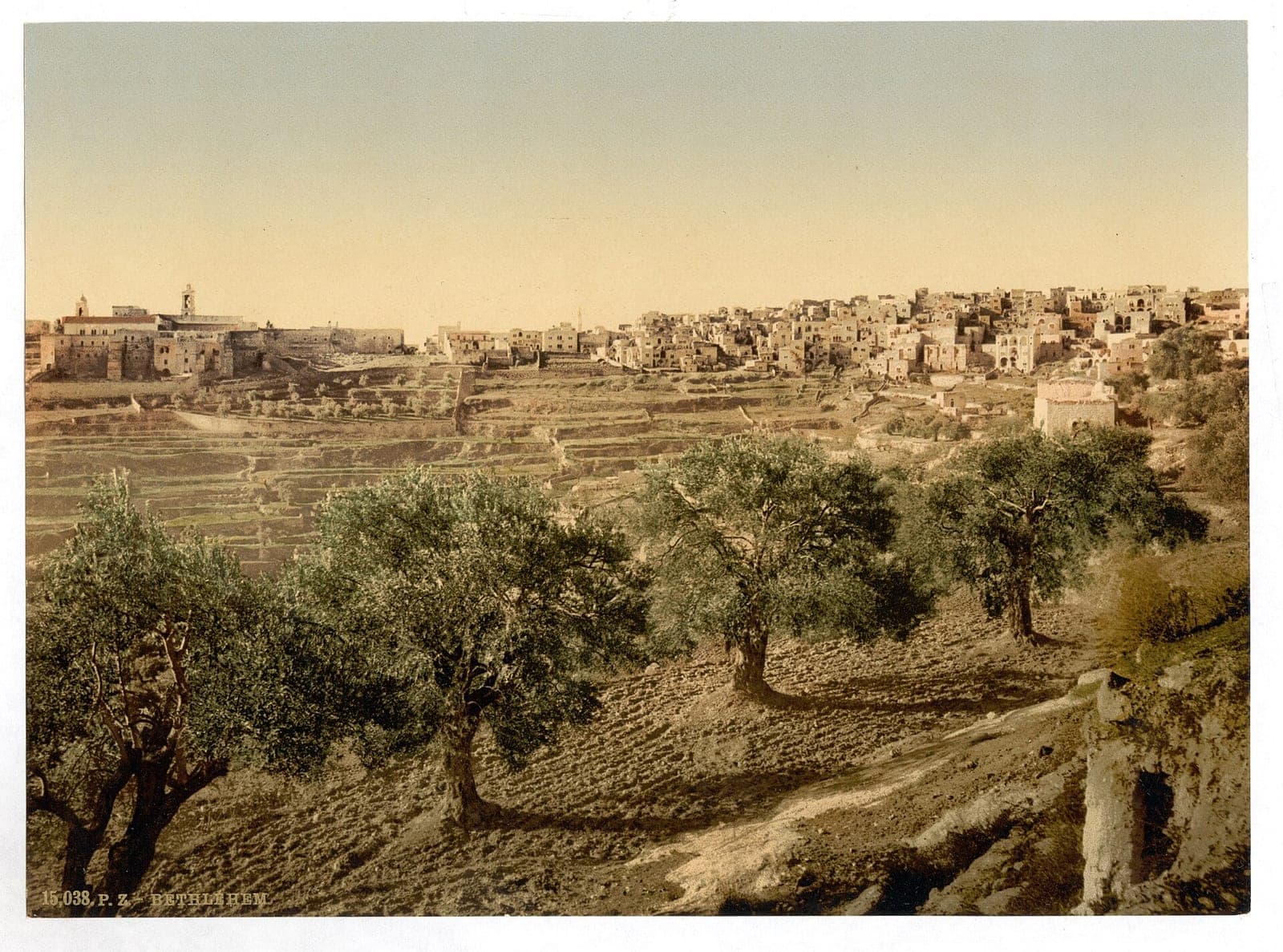
Photo: Photochrom print, Library of Congress Prints and Photographs Division (LCCN 2002724966). License: Public domain in the United States; Library of Congress states no known restrictions on publication. Source. Location: Bethlehem, West Bank; print preserved by the Library of Congress. Resized for the web.
Explore the places of the Bible
See where biblical events happened, why each place matters, and what archaeology helps us understand.
Bethlehem
David's hometown, and the town where Jesus was born.
Get full access with one subscription
Explore the people and places of the Bible. Read summaries of every book, with images and clear explanations covering every chapter. Access all these features and our Bible study tools with one subscription.
See PlansAsk AI about Matthew 22:45
Ask a question about this verse and get a clear answer, with Bible references you can read for yourself.
Every Bible book, explained chapter by chapter
Explore summaries of every book of the Bible, with images and easy-to-understand explanations covering every chapter.
Keep studying Matthew 22:45
Related Bible verses
Key themes
Related topics
At a Glance — the Book of Matthew
- Author
- Matthew the apostle
- Written
- Around AD 60-70
- Genre
- Gospel
- Original Audience
- Jewish Christians
Frequently Asked Questions
Quick, clear answers about this verse
What does Matthew 22:45 mean?
Matthew 22:45 features Jesus questioning how David could call the Messiah 'Lord' if the Messiah is his son. This highlights the dual nature of the Messiah as both a descendant of David and a divine figure, challenging the religious leaders' understanding of His identity.
How does Matthew 22:45 relate to the identity of Jesus?
Matthew 22:45 illustrates the complexity of Jesus' identity as both human and divine. By referencing David's words, Jesus reveals that He fulfills the role of the Messiah in a way that transcends traditional expectations.
Daily Verse — straight to your inbox
A verse and a 2-sentence plain-English explanation, every morning. Free. Unsubscribe anytime.