New Testament
Matthew 23:27
Read the Bible in clear, modern English—easy to understand, faithful to the meaning, and written for everyday readers.
How terrible it will be for you, scribes and Pharisees, you hypocrites! You're like whitewashed tombs — beautiful on the outside, but inside you're full of dead men's bones and everything unclean.
Compare translations
Woe unto you, scribes and Pharisees, hypocrites! for ye are like unto whited sepulchres, which indeed appear beautiful outward, but are within full of dead men’s bones, and of all uncleanness.
What Matthew 23:27 means
Plain-English insight for readers
In this verse, Jesus criticizes the religious leaders of His time, the scribes and Pharisees, for their hypocrisy. He compares them to whitewashed tombs, which look clean and beautiful on the outside but are filled with decay and death on the inside. This metaphor highlights the contrast between their outward appearance of righteousness and their inner moral corruption. The scribes and Pharisees were focused on external rituals and appearances, neglecting the true essence of faith and righteousness. Jesus emphasizes that true purity comes from within, not from outward displays of piety. This warning serves as a reminder that God values genuine faith and integrity over mere appearances. It challenges believers to examine their own hearts and ensure that their actions align with their inner beliefs, promoting authenticity in their spiritual lives.
How to apply Matthew 23:27 to your life
This verse encourages us to reflect on our own lives and ensure that we are not merely putting on a facade of righteousness. We should strive for authenticity in our faith, focusing on inner transformation rather than just outward appearances. True faith is about what is in our hearts.
Curated for this public verse page. Matthew Summary
Explore more of the Bible
Learn the Bible through its people and places
Get to know the people in Scripture through illustrated stories, and explore the places where they lived and traveled.
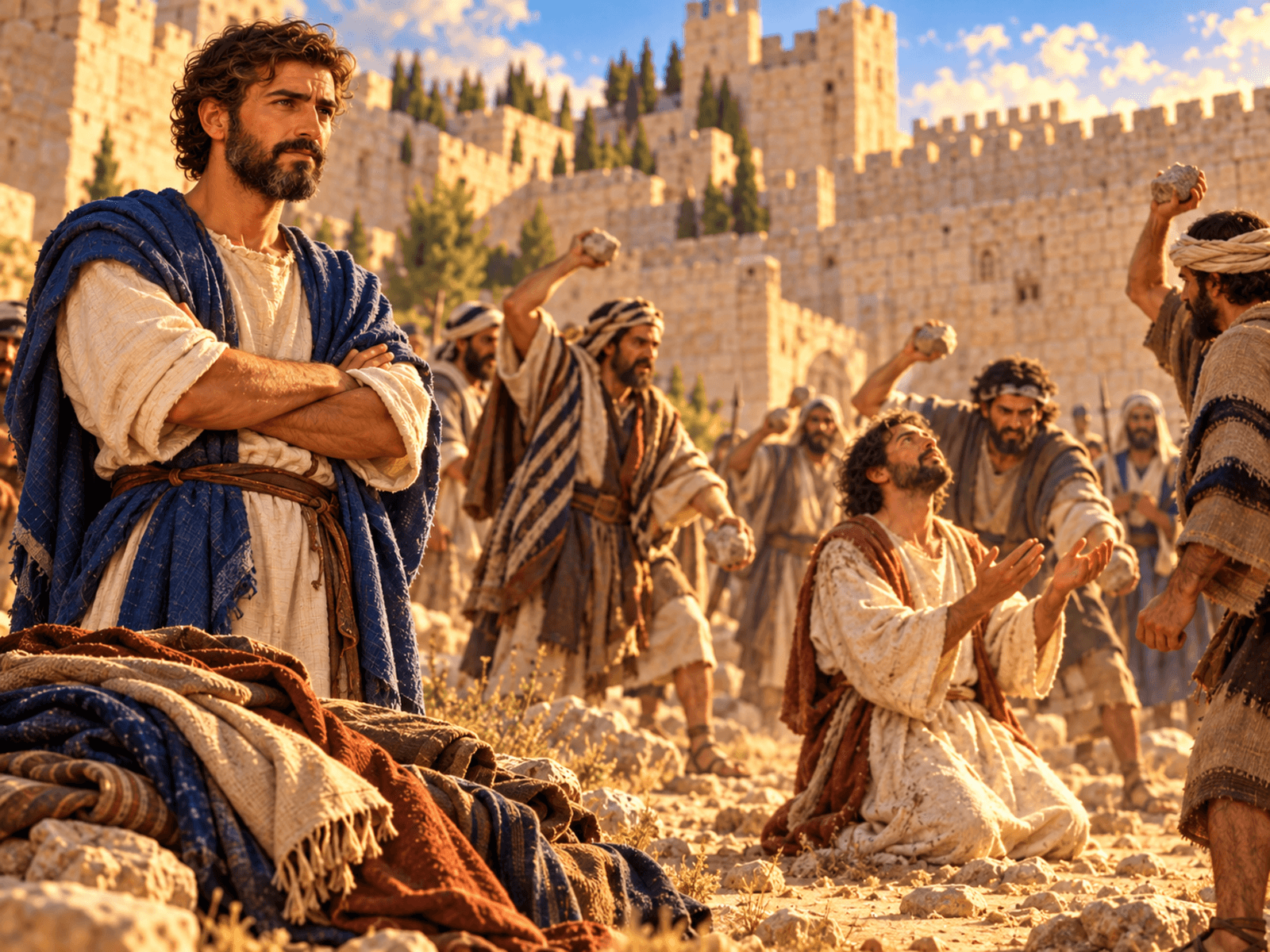
Illustrated scene from Paul's story: The Stoning of Stephen (Acts 7:57–8:2)
Meet the people of the Bible
Follow their lives in order, with illustrated scenes and Bible passages that tell their stories.
 Paul

Photo: Photochrom print, Library of Congress Prints and Photographs Division (LCCN 2002725045). License: Public domain in the United States; Library of Congress states no known restrictions on publication. Source. Location: Nazareth, Israel; print preserved by the Library of Congress. Resized for the web.
Explore the places of the Bible
See where biblical events happened, why each place matters, and what archaeology helps us understand.
Nazareth
The small town in Galilee where Jesus grew up.
Get full access with one subscription
Explore the people and places of the Bible. Read summaries of every book, with images and clear explanations covering every chapter. Access all these features and our Bible study tools with one subscription.
See PlansAsk AI about Matthew 23:27
Ask a question about this verse and get a clear answer, with Bible references you can read for yourself.
Fuller verse explanations
Explore what a verse means, what was happening around it, and how it connects to other Bible passages.
Plain Meaning
Jesus compares the scribes and Pharisees to whitewashed tombs. In the KJV, "sepulchres" means tombs. A tomb painted white looks clean and attractive on the outside. Inside, it holds bones and rot. Jesus says these religious leaders are the same: they look good to people around them, but inside they are corrupt. The next verse states this plainly — outwardly they appear righteous, but inside they are full of hypocrisy and wrongdoing.
Read It in Context
Jesus is speaking a series of "woes" — sharp public condemnations — against the scribes and Pharisees. The woe just before this one (verse 25) uses a similar picture: they clean the outside of a cup while the inside stays dirty. This verse sharpens that same charge.
The full Clear view adds what to notice, common misreadings, and the passage that best explains this one — for Matthew 23:27 and any verse in the Bible.
Every Bible book, explained chapter by chapter
Explore summaries of every book of the Bible, with images and easy-to-understand explanations covering every chapter.
Keep studying Matthew 23:27
Related Bible verses
Key themes
Related topics
At a Glance — the Book of Matthew
- Author
- Matthew the apostle
- Written
- Around AD 60-70
- Genre
- Gospel
- Original Audience
- Jewish Christians
Frequently Asked Questions
Quick, clear answers about this verse
What does Matthew 23:27 mean?
Matthew 23:27 means that Jesus is warning the religious leaders, the scribes and Pharisees, about their hypocrisy. He compares them to whitewashed tombs, which look good on the outside but are corrupt inside, highlighting the difference between their outward appearance and their inner moral state.
What is the meaning of 'whitewashed tombs' in Matthew 23:27?
In Matthew 23:27, 'whitewashed tombs' refers to tombs that are painted to look clean and beautiful, symbolizing how the Pharisees appear righteous outwardly but are spiritually dead and corrupt inside. This metaphor illustrates the danger of focusing on external appearances rather than true inner purity.
How does Matthew 23:27 apply to our lives today?
Matthew 23:27 encourages us to examine our own lives for authenticity in our faith. It reminds us to focus on inner transformation and integrity rather than just maintaining a good outward appearance.
What themes are present in Matthew 23:27?
The themes in Matthew 23:27 include hypocrisy, the importance of inner purity, the critique of religious leaders, the contrast between outward appearance and true righteousness, and the call for moral integrity.
Daily Verse — straight to your inbox
A verse and a 2-sentence plain-English explanation, every morning. Free. Unsubscribe anytime.