New Testament
Matthew 27:25
Read the Bible in clear, modern English—easy to understand, faithful to the meaning, and written for everyday readers.
The whole crowd answered, "Let his blood be on us and on our children!"
Compare translations
Then answered all the people, and said, His blood be on us, and on our children.
What Matthew 27:25 means
Plain-English insight for readers
In this verse, the crowd is responding to Pilate's question about Jesus' fate. They are essentially accepting responsibility for Jesus' death, declaring that they are willing to bear the consequences of His bloodshed. This statement is significant as it reflects the collective choice of the people to reject Jesus as the Messiah. The phrase 'on us and on our children' indicates a deep commitment to this decision, suggesting that they believe the repercussions of their actions will extend to future generations. This moment highlights the gravity of their choice and foreshadows the consequences that would follow for the Jewish people, as well as the broader implications for humanity regarding sin and redemption. It serves as a poignant reminder of the weight of our decisions and the impact they can have beyond our immediate circumstances.
How to apply Matthew 27:25 to your life
This verse challenges us to consider the weight of our choices and their potential impact on future generations. It encourages us to take responsibility for our actions and to reflect on how our decisions align with our faith. We should strive to make choices that honor God and promote His love.
Curated for this public verse page. Matthew Summary
Learn the Bible through its people and places
Get to know the people in Scripture through illustrated stories, and explore the places where they lived and traveled.
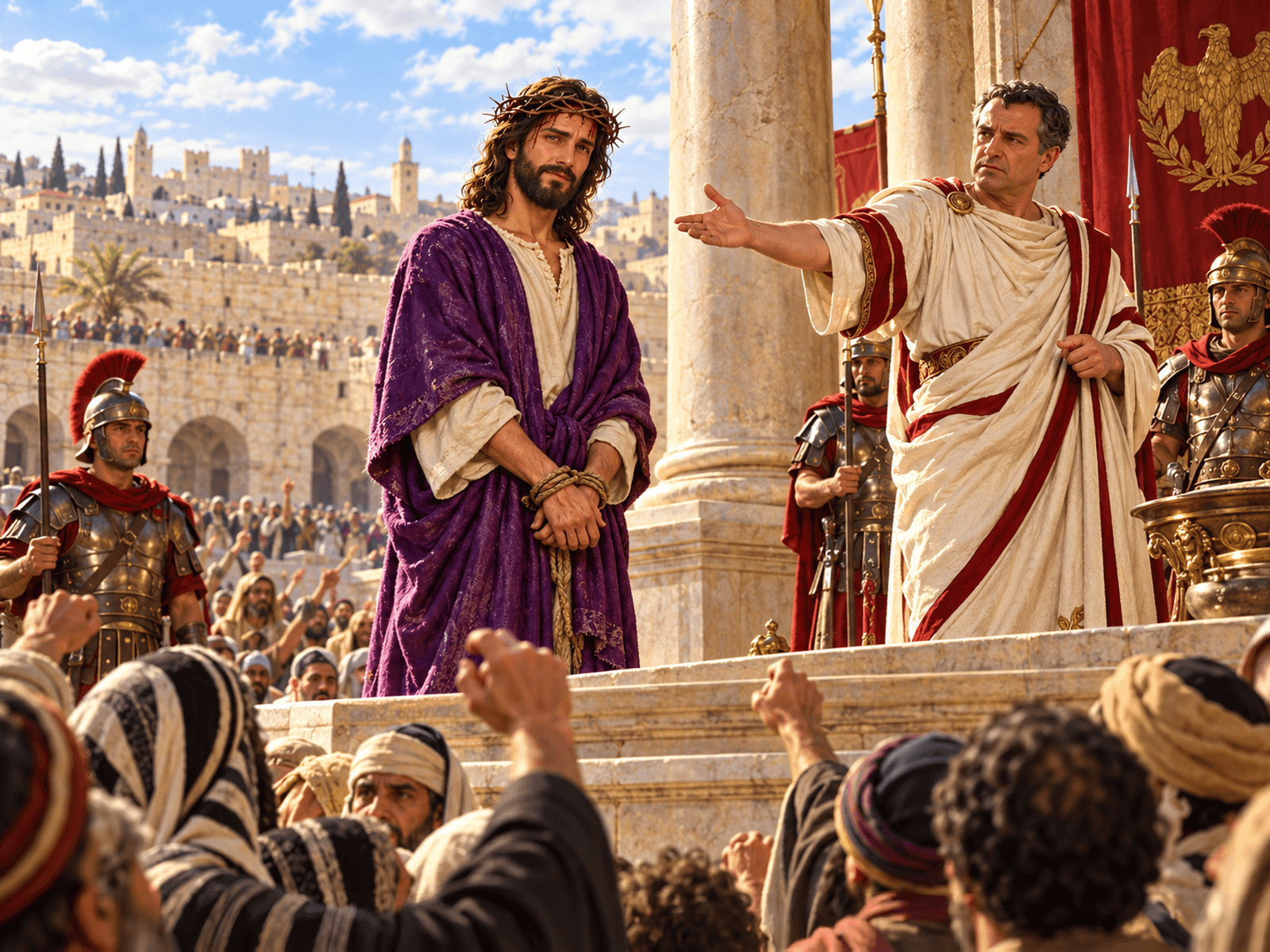
Illustrated scene from Jesus's story: On Trial Before Pilate (Matthew 27:11–31)
Meet the people of the Bible
Follow their lives in order, with illustrated scenes and Bible passages that tell their stories.
 Jesus

Photo: Photochrom print, Library of Congress Prints and Photographs Division (LCCN 2002725045). License: Public domain in the United States; Library of Congress states no known restrictions on publication. Source. Location: Nazareth, Israel; print preserved by the Library of Congress. Resized for the web.
Explore the places of the Bible
See where biblical events happened, why each place matters, and what archaeology helps us understand.
Nazareth
The small town in Galilee where Jesus grew up.
Get full access with one subscription
Explore the people and places of the Bible. Read summaries of every book, with images and clear explanations covering every chapter. Access all these features and our Bible study tools with one subscription.
See PlansAsk AI about Matthew 27:25
Ask a question about this verse and get a clear answer, with Bible references you can read for yourself.
Every Bible book, explained chapter by chapter
Explore summaries of every book of the Bible, with images and easy-to-understand explanations covering every chapter.
Keep studying Matthew 27:25
Related Bible verses
Key themes
Related topics
At a Glance — the Book of Matthew
- Author
- Matthew the apostle
- Written
- Around AD 60-70
- Genre
- Gospel
- Original Audience
- Jewish Christians
Frequently Asked Questions
Quick, clear answers about this verse
What does Matthew 27:25 mean?
Matthew 27:25 captures the moment when the crowd accepts responsibility for Jesus' death, declaring they are willing to bear the consequences of His bloodshed. This reflects their rejection of Jesus as the Messiah and highlights the serious implications of their choice.
How does Matthew 27:25 relate to the concept of generational impact?
Matthew 27:25 illustrates the idea that choices can have lasting effects, as the crowd acknowledges that the repercussions of their decision will extend to their children. This highlights the importance of considering how our actions influence future generations.
What themes are present in Matthew 27:25?
Key themes in Matthew 27:25 include responsibility, collective choice, rejection of Jesus, consequences of sin, and the impact of decisions on future generations.
Daily Verse — straight to your inbox
A verse and a 2-sentence plain-English explanation, every morning. Free. Unsubscribe anytime.