New Testament
Matthew 3:7
Read the Bible in clear, modern English—easy to understand, faithful to the meaning, and written for everyday readers.
But when John saw large numbers of Pharisees and Sadducees showing up to be baptized, he confronted them: "You brood of vipers! Who warned you to run from the coming wrath?
Compare translations
But when he saw many of the Pharisees and Sadducees come to his baptism, he said unto them, O generation of vipers, who hath warned you to flee from the wrath to come?
What Matthew 3:7 means
Plain-English insight for readers
In this verse, John the Baptist sees many Pharisees and Sadducees coming to him for baptism. Instead of welcoming them, he calls them a "brood of vipers," indicating that he sees them as deceitful and dangerous. John questions their motives, asking who warned them to escape the impending judgment. This confrontation highlights the seriousness of repentance and the need for genuine faith. The Pharisees and Sadducees were religious leaders, often seen as hypocritical, and John challenges their superficial approach to faith. He emphasizes that true repentance is necessary to avoid the coming wrath of God. John's strong words serve as a warning that merely participating in religious rituals is not enough; a sincere change of heart is essential. This sets the stage for the message of Jesus, who calls for authentic transformation rather than empty rituals.
How to apply Matthew 3:7 to your life
This verse reminds us to examine our own motives in our spiritual lives. Are we genuinely seeking a relationship with God, or are we just going through the motions? True faith requires sincerity and a willingness to change.
Curated for this public verse page. Matthew Summary
Learn the Bible through its people and places
Get to know the people in Scripture through illustrated stories, and explore the places where they lived and traveled.
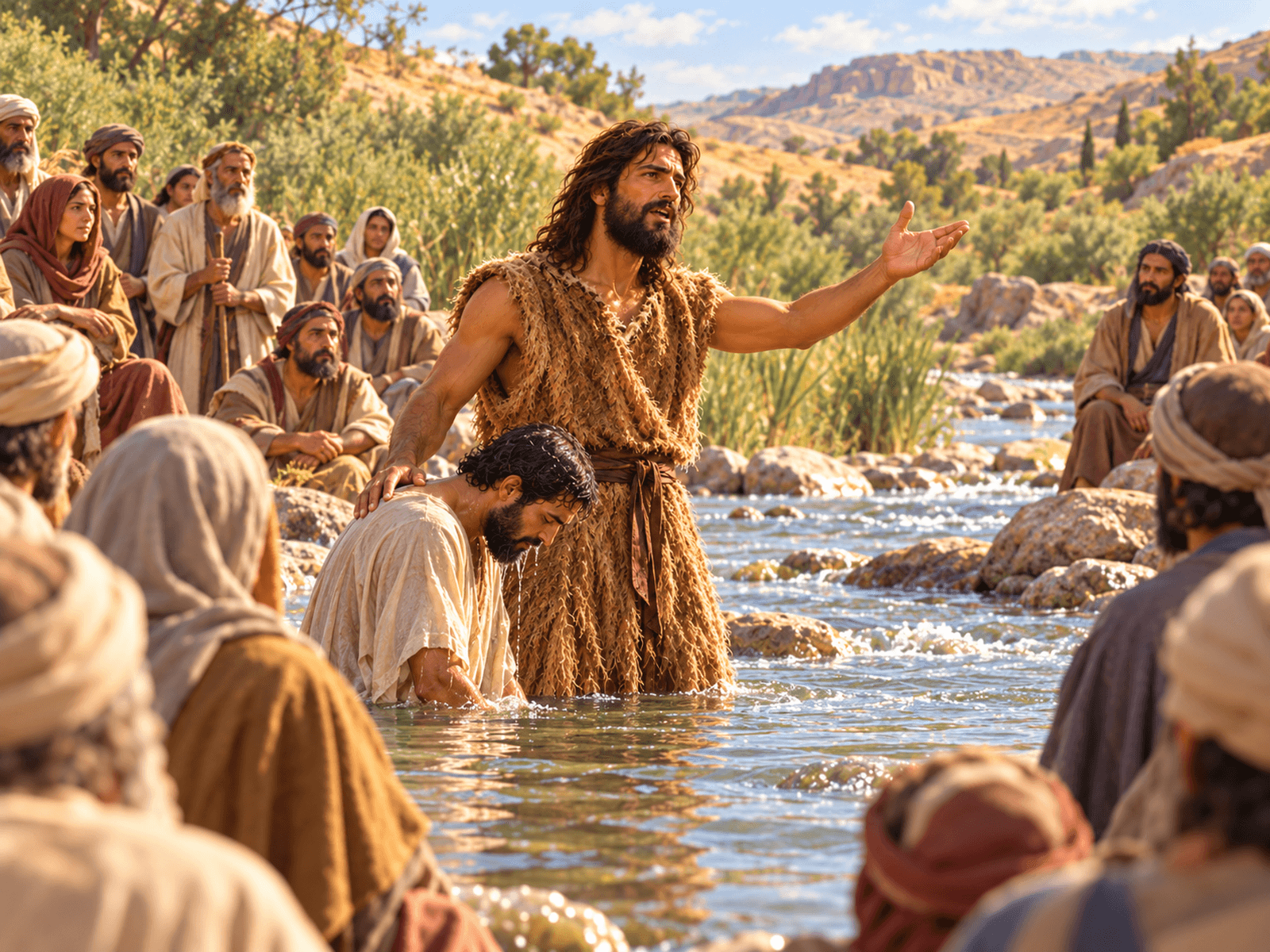
Illustrated scene from Jesus's story: John the Baptist Prepares the Way (Matthew 3:1–12)
Meet the people of the Bible
Follow their lives in order, with illustrated scenes and Bible passages that tell their stories.
 Jesus

Photo: Gary Todd (Gary Lee Todd, Ph.D.), via Wikimedia Commons. License: CC0 1.0 Universal Public Domain Dedication. Source. Location: Southern end of the Temple Mount, Jerusalem Old City. Resized for the web.
Explore the places of the Bible
See where biblical events happened, why each place matters, and what archaeology helps us understand.
Jerusalem
David's capital, the city of the temple, and the place where Jesus died and rose again.
Get full access with one subscription
Explore the people and places of the Bible. Read summaries of every book, with images and clear explanations covering every chapter. Access all these features and our Bible study tools with one subscription.
See PlansAsk AI about Matthew 3:7
Ask a question about this verse and get a clear answer, with Bible references you can read for yourself.
Every Bible book, explained chapter by chapter
Explore summaries of every book of the Bible, with images and easy-to-understand explanations covering every chapter.
Keep studying Matthew 3:7
Related Bible verses
Key themes
Related topics
At a Glance — the Book of Matthew
- Author
- Matthew the apostle
- Written
- Around AD 60-70
- Genre
- Gospel
- Original Audience
- Jewish Christians
Frequently Asked Questions
Quick, clear answers about this verse
What does Matthew 3:7 mean?
In Matthew 3:7, John the Baptist confronts the Pharisees and Sadducees, calling them a 'brood of vipers' to highlight their deceitful nature. He questions their motives for seeking baptism, emphasizing that true repentance is necessary to escape God's coming judgment.
What does John mean by 'the coming wrath' in Matthew 3:7?
The 'coming wrath' refers to the impending judgment from God that will come upon those who do not genuinely repent. John warns that superficial faith and empty rituals will not protect them from this judgment.
What can we learn from Matthew 3:7 about faith?
Matthew 3:7 teaches that faith must be sincere and accompanied by genuine repentance. It warns against merely going through religious motions without a true change of heart.
Daily Verse — straight to your inbox
A verse and a 2-sentence plain-English explanation, every morning. Free. Unsubscribe anytime.