Old Testament
Numbers 16:12
Read the Bible in clear, modern English—easy to understand, faithful to the meaning, and written for everyday readers.
Moses sent for Dathan and Abiram, the sons of Eliab, but they refused. "We're not coming!" they said.
Compare translations
And Moses sent to call Dathan and Abiram, the sons of Eliab: which said, We will not come up:
What Numbers 16:12 means
Plain-English insight for readers
In this verse, Moses attempts to communicate with Dathan and Abiram, who are leaders among the Israelites. They had previously rebelled against Moses' leadership, questioning his authority and the direction he was leading the people. When Moses sends for them, they outright refuse to come, demonstrating their defiance and unwillingness to engage in dialogue. This refusal highlights their rejection of Moses' leadership and the consequences of rebellion against God's appointed leaders. Their response reflects a broader theme of discontent among the Israelites during their journey in the wilderness, as they struggle with trust and obedience to God. This moment sets the stage for further conflict and illustrates the challenges Moses faced in guiding a people who were often resistant to authority and change. The refusal of Dathan and Abiram serves as a warning about the dangers of pride and rebellion, emphasizing the importance of humility and submission to God's chosen leaders.
How to apply Numbers 16:12 to your life
This verse teaches us the importance of humility and the dangers of pride. When faced with authority, we should consider our responses carefully. Instead of rebelling, we can seek to understand and engage in constructive dialogue, fostering unity and cooperation.
Curated for this public verse page. Numbers Summary
Learn the Bible through its people and places
Get to know the people in Scripture through illustrated stories, and explore the places where they lived and traveled.
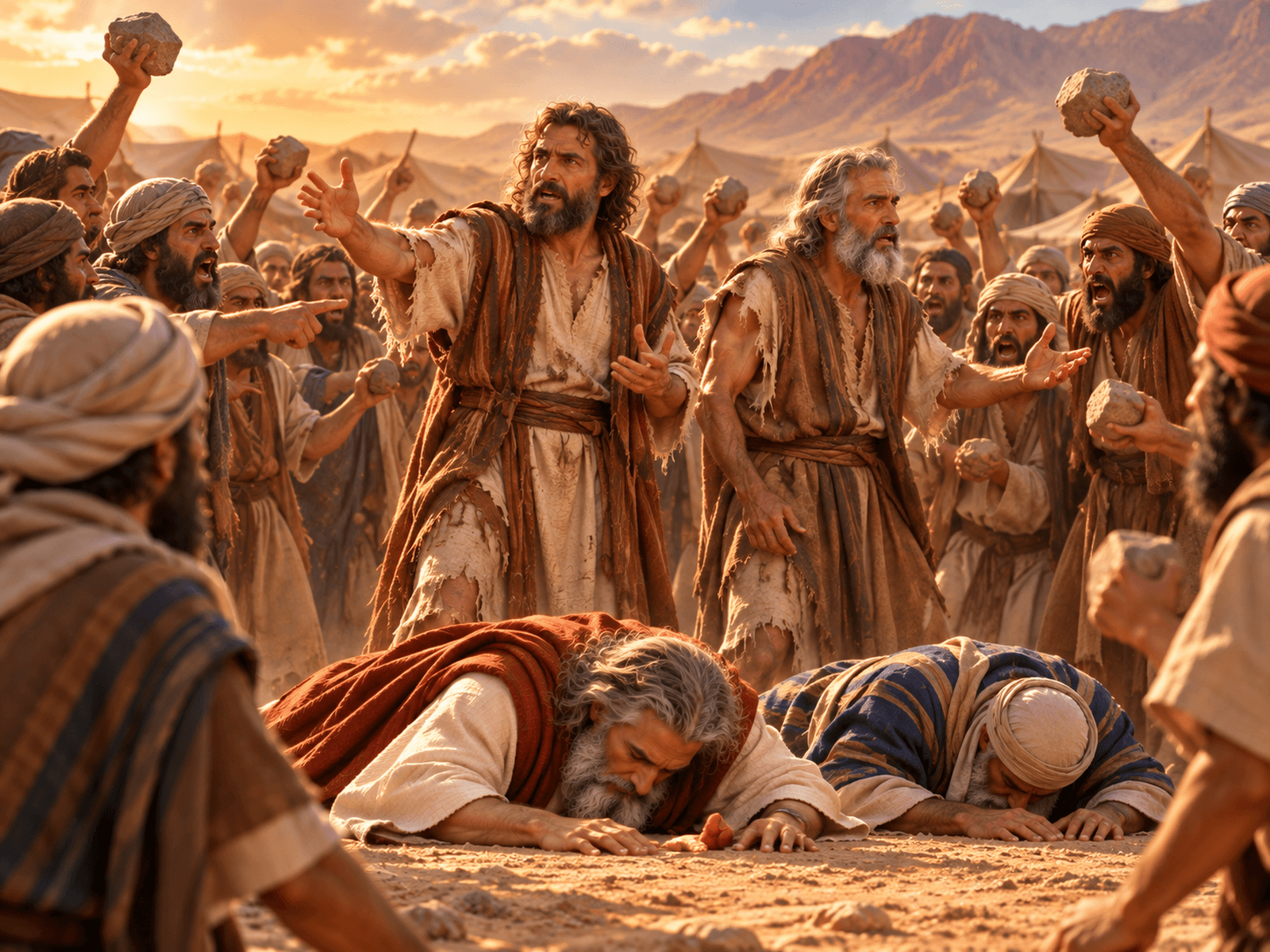
Illustrated scene from Moses's story: Korah's Rebellion (Numbers 16:1–50)
Meet the people of the Bible
Follow their lives in order, with illustrated scenes and Bible passages that tell their stories.
 Moses

Photo: Photochrom print, Library of Congress Prints and Photographs Division (LCCN 2002724987). License: Public domain in the United States; Library of Congress states no known restrictions on publication. Source. Location: Hebron, West Bank; print preserved by the Library of Congress. Resized for the web.
Explore the places of the Bible
See where biblical events happened, why each place matters, and what archaeology helps us understand.
Hebron
Where Abraham lived and buried Sarah, and where David was first made king.
Get full access with one subscription
Explore the people and places of the Bible. Read summaries of every book, with images and clear explanations covering every chapter. Access all these features and our Bible study tools with one subscription.
See PlansAsk AI about Numbers 16:12
Ask a question about this verse and get a clear answer, with Bible references you can read for yourself.
Every Bible book, explained chapter by chapter
Explore summaries of every book of the Bible, with images and easy-to-understand explanations covering every chapter.
Keep studying Numbers 16:12
Related Bible verses
Key themes
Related topics
At a Glance — the Book of Numbers
- Author
- Traditionally attributed to Moses
- Written
- Around 1400 BC
- Genre
- Law (Pentateuch)
- Original Audience
- The Israelites in the wilderness
Frequently Asked Questions
Quick, clear answers about this verse
What does Numbers 16:12 mean?
Numbers 16:12 describes Moses sending for Dathan and Abiram, who refuse to come. This refusal illustrates their rebellion against Moses' leadership and highlights the broader theme of discontent among the Israelites during their journey.
What is the significance of Dathan and Abiram's refusal in Numbers 16:12?
Dathan and Abiram's refusal to respond to Moses signifies their defiance and rejection of authority. It emphasizes the challenges Moses faced in leading a people resistant to following God's appointed leaders.
What themes are present in Numbers 16:12?
Key themes in Numbers 16:12 include rebellion, leadership, defiance, and the struggle for trust in authority. The verse reflects the Israelites' ongoing issues with obedience and acceptance of God's chosen leaders.
What can we learn from Numbers 16:12 about authority?
Numbers 16:12 teaches the importance of humility and the dangers of pride when responding to authority. It encourages constructive dialogue rather than rebellion, promoting unity and cooperation.
Daily Verse — straight to your inbox
A verse and a 2-sentence plain-English explanation, every morning. Free. Unsubscribe anytime.