Old Testament
Numbers 16:14
Read the Bible in clear, modern English—easy to understand, faithful to the meaning, and written for everyday readers.
You have not brought us into a land flowing with milk and honey or given us an inheritance of fields and vineyards. Will you put out the eyes of these men? We will not come up.
Compare translations
Moreover thou hast not brought us into a land that floweth with milk and honey, or given us inheritance of fields and vineyards: wilt thou put out the eyes of these men? we will not come up.
What Numbers 16:14 means
Plain-English insight for readers
In this verse, the speaker is expressing frustration and disappointment with Moses and Aaron. They accuse them of failing to lead the Israelites into the Promised Land, which is described as a place abundant with resources, symbolized by 'milk and honey.' The mention of 'fields and vineyards' highlights the expectation of prosperity and inheritance that the people feel they have been denied. The rhetorical question about putting out the eyes of the men suggests a feeling of being oppressed or mistreated, indicating that the speaker believes they are being unfairly treated. The declaration 'we will not come up' signifies a refusal to comply with Moses' leadership, reflecting a deep-seated discontent and rebellion against the authority that was supposed to guide them to a better future. This moment captures the tension and conflict within the community as they grapple with their circumstances and leadership.
How to apply Numbers 16:14 to your life
This verse reminds us to reflect on our leaders and the promises made to us. When feeling discontent or frustrated, it's important to communicate openly rather than rebel. Seeking understanding and clarity can lead to better relationships and outcomes, both in faith and community.
Curated for this public verse page. Numbers Summary
Learn the Bible through its people and places
Get to know the people in Scripture through illustrated stories, and explore the places where they lived and traveled.
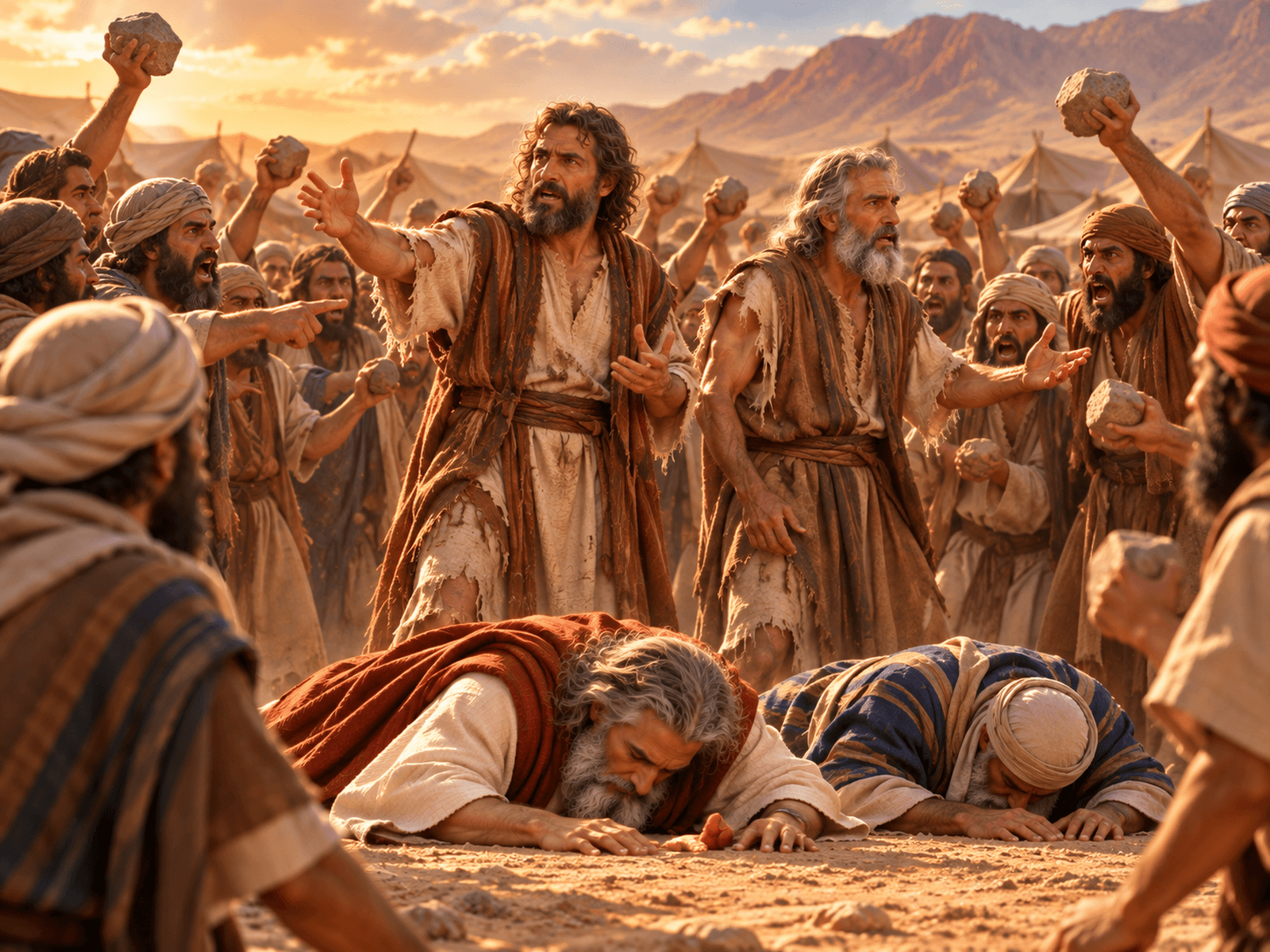
Illustrated scene from Moses's story: Korah's Rebellion (Numbers 16:1–50)
Meet the people of the Bible
Follow their lives in order, with illustrated scenes and Bible passages that tell their stories.
 Moses

Photo: Photochrom print, Library of Congress Prints and Photographs Division (LCCN 2002724987). License: Public domain in the United States; Library of Congress states no known restrictions on publication. Source. Location: Hebron, West Bank; print preserved by the Library of Congress. Resized for the web.
Explore the places of the Bible
See where biblical events happened, why each place matters, and what archaeology helps us understand.
Hebron
Where Abraham lived and buried Sarah, and where David was first made king.
Get full access with one subscription
Explore the people and places of the Bible. Read summaries of every book, with images and clear explanations covering every chapter. Access all these features and our Bible study tools with one subscription.
See PlansAsk AI about Numbers 16:14
Ask a question about this verse and get a clear answer, with Bible references you can read for yourself.
Every Bible book, explained chapter by chapter
Explore summaries of every book of the Bible, with images and easy-to-understand explanations covering every chapter.
Keep studying Numbers 16:14
Related Bible verses
Key themes
Related topics
At a Glance — the Book of Numbers
- Author
- Traditionally attributed to Moses
- Written
- Around 1400 BC
- Genre
- Law (Pentateuch)
- Original Audience
- The Israelites in the wilderness
Frequently Asked Questions
Quick, clear answers about this verse
What does Numbers 16:14 mean?
Numbers 16:14 expresses the frustration of the Israelites towards Moses and Aaron for not leading them into the Promised Land, which they expected to be prosperous. The verse highlights their feelings of disappointment and rebellion against their leaders.
What is the meaning of 'land flowing with milk and honey' in Numbers 16:14?
The phrase 'land flowing with milk and honey' symbolizes abundance and prosperity, representing the Israelites' expectation of a bountiful inheritance in the Promised Land.
Why do the Israelites say 'we will not come up' in Numbers 16:14?
The declaration 'we will not come up' signifies the Israelites' refusal to follow Moses and Aaron, expressing their deep dissatisfaction and rebellion against their leaders.
What themes are present in Numbers 16:14?
Key themes in Numbers 16:14 include rebellion, leadership, discontent, the promise of land, oppression, and the conflict between expectation and reality.
Daily Verse — straight to your inbox
A verse and a 2-sentence plain-English explanation, every morning. Free. Unsubscribe anytime.