Old Testament
Numbers 16:39
Read the Bible in clear, modern English—easy to understand, faithful to the meaning, and written for everyday readers.
So Eleazar the priest collected the bronze censers that the burned men had used, and they were hammered into sheets to cover the altar.
Compare translations
And Eleazar the priest took the brasen censers, wherewith they that were burnt had offered; and they were made broad plates for a covering of the altar:
What Numbers 16:39 means
Plain-English insight for readers
In this verse, Eleazar, the priest, is instructed to collect the bronze censers that were used by those who had been consumed by fire due to their rebellion against God. These censers, which were once instruments of defiance, are transformed into something sacred. Eleazar takes the bronze and hammers it into sheets to create a covering for the altar. This act symbolizes the purification of the altar and serves as a reminder of the consequences of disobedience. The altar, a place of worship and sacrifice, is now adorned with the very material that once represented rebellion, highlighting the themes of redemption and transformation. It shows that even the remnants of sin can be repurposed for holy use, emphasizing God's ability to bring good out of bad situations. This moment also reinforces the importance of the priestly role in mediating between God and the people, ensuring that worship remains pure and acceptable.
How to apply Numbers 16:39 to your life
This verse encourages us to reflect on how God can transform our past mistakes into something valuable. Just as the censers were repurposed for the altar, we can allow our experiences, even the painful ones, to be used for good in our lives and the lives of others.
Curated for this public verse page. Numbers Summary
Learn the Bible through its people and places
Get to know the people in Scripture through illustrated stories, and explore the places where they lived and traveled.
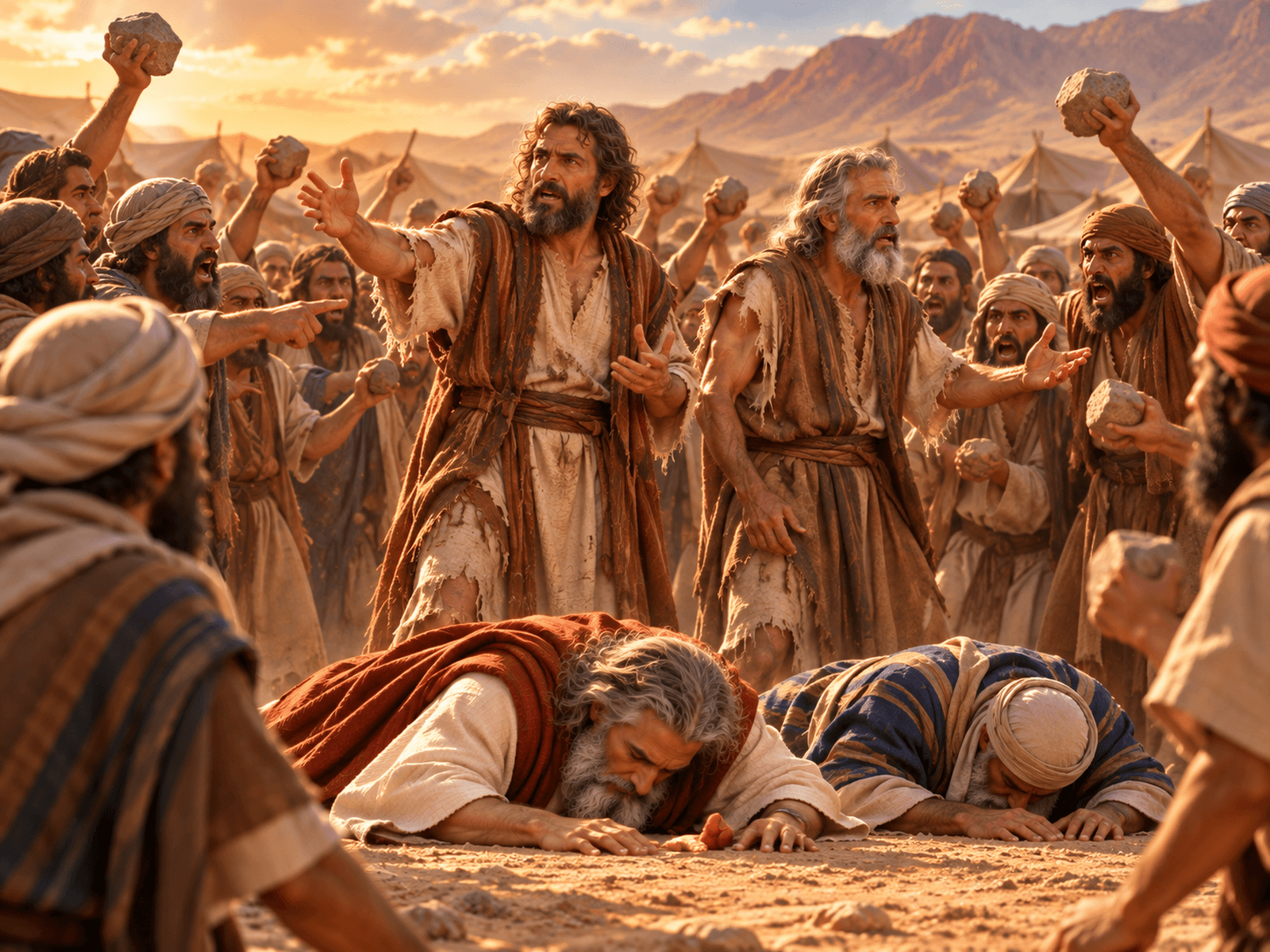
Illustrated scene from Moses's story: Korah's Rebellion (Numbers 16:1–50)
Meet the people of the Bible
Follow their lives in order, with illustrated scenes and Bible passages that tell their stories.
 Moses

Photo: Photochrom print, Library of Congress Prints and Photographs Division (LCCN 2002724987). License: Public domain in the United States; Library of Congress states no known restrictions on publication. Source. Location: Hebron, West Bank; print preserved by the Library of Congress. Resized for the web.
Explore the places of the Bible
See where biblical events happened, why each place matters, and what archaeology helps us understand.
Hebron
Where Abraham lived and buried Sarah, and where David was first made king.
Get full access with one subscription
Explore the people and places of the Bible. Read summaries of every book, with images and clear explanations covering every chapter. Access all these features and our Bible study tools with one subscription.
See PlansAsk AI about Numbers 16:39
Ask a question about this verse and get a clear answer, with Bible references you can read for yourself.
Every Bible book, explained chapter by chapter
Explore summaries of every book of the Bible, with images and easy-to-understand explanations covering every chapter.
Keep studying Numbers 16:39
Related Bible verses
Key themes
Related topics
At a Glance — the Book of Numbers
- Author
- Traditionally attributed to Moses
- Written
- Around 1400 BC
- Genre
- Law (Pentateuch)
- Original Audience
- The Israelites in the wilderness
Frequently Asked Questions
Quick, clear answers about this verse
What does Numbers 16:39 mean?
Numbers 16:39 describes how Eleazar the priest collected the bronze censers used by those who rebelled against God and transformed them into sheets to cover the altar. This act symbolizes the purification of the altar and serves as a reminder of the consequences of disobedience.
What is the significance of the bronze censers in Numbers 16:39?
The bronze censers in Numbers 16:39 represent the rebellion of those who were consumed by fire. Their transformation into altar coverings illustrates how God can repurpose even the remnants of sin for sacred use.
What does the altar represent in Numbers 16:39?
In Numbers 16:39, the altar represents a place of worship and sacrifice. The covering made from the censers signifies the importance of maintaining purity in worship and the possibility of redemption from past mistakes.
How does Numbers 16:39 relate to themes of redemption?
Numbers 16:39 highlights redemption by showing how the bronze censers, once symbols of rebellion, are repurposed for a holy purpose. This illustrates that God can transform our past failures into something valuable for His purposes.
Daily Verse — straight to your inbox
A verse and a 2-sentence plain-English explanation, every morning. Free. Unsubscribe anytime.