New Testament
Romans 9:21
Read the Bible in clear, modern English—easy to understand, faithful to the meaning, and written for everyday readers.
Does not the potter have authority over the clay, to make from the same lump one vessel for honorable use and another for dishonorable use?
Compare translations
Hath not the potter power over the clay, of the same lump to make one vessel unto honour, and another unto dishonour?
What Romans 9:21 means
Plain-English insight for readers
In this verse, Paul uses the metaphor of a potter and clay to illustrate God's sovereignty and authority over creation. Just as a potter can shape clay into different vessels for various purposes, God has the right to determine the roles and destinies of individuals. The 'same lump' signifies that all humanity comes from the same source, yet God chooses to honor some and not others based on His divine plan. This challenges the idea of fairness from a human perspective, emphasizing that God's decisions are based on His wisdom and purpose rather than human standards. The potter's authority reflects God's ultimate control over life, showing that He can use people for noble or ignoble purposes according to His will. This verse invites believers to trust in God's plan, even when it seems difficult to understand why some are chosen for honor and others for dishonor.
How to apply Romans 9:21 to your life
This verse encourages us to recognize God's authority in our lives and trust His plans for us. We may not always understand our purpose or the circumstances we face, but we can find comfort in knowing that God is in control and has a purpose for each of us.
Curated for this public verse page. Romans Summary
Explore more of the Bible
Learn the Bible through its people and places
Get to know the people in Scripture through illustrated stories, and explore the places where they lived and traveled.
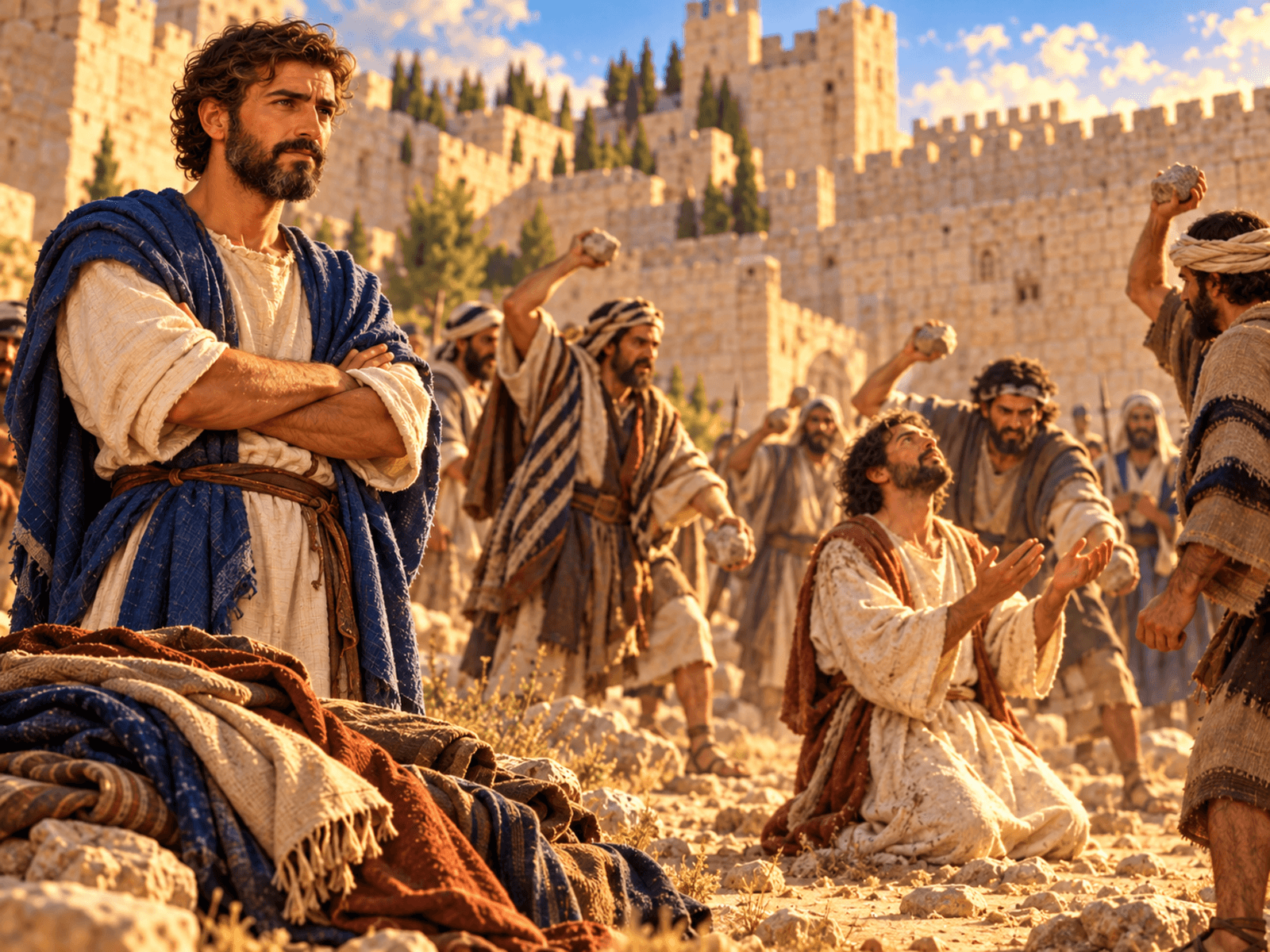
Illustrated scene from Paul's story: The Stoning of Stephen (Acts 7:57–8:2)
Meet the people of the Bible
Follow their lives in order, with illustrated scenes and Bible passages that tell their stories.
 Paul

Photo: Gary Todd (Gary Lee Todd, Ph.D.), via Wikimedia Commons. License: CC0 1.0 Universal Public Domain Dedication. Source. Location: Southern end of the Temple Mount, Jerusalem Old City. Resized for the web.
Explore the places of the Bible
See where biblical events happened, why each place matters, and what archaeology helps us understand.
Jerusalem
David's capital, the city of the temple, and the place where Jesus died and rose again.
Get full access with one subscription
Explore the people and places of the Bible. Read summaries of every book, with images and clear explanations covering every chapter. Access all these features and our Bible study tools with one subscription.
See PlansAsk AI about Romans 9:21
Ask a question about this verse and get a clear answer, with Bible references you can read for yourself.
Every Bible book, explained chapter by chapter
Explore summaries of every book of the Bible, with images and easy-to-understand explanations covering every chapter.
Keep studying Romans 9:21
Related Bible verses
Key themes
Related topics
At a Glance — the Book of Romans
- Author
- Paul the apostle
- Written
- Around AD 57
- Genre
- Letter (epistle)
- Original Audience
- Christians in Rome
Frequently Asked Questions
Quick, clear answers about this verse
What does Romans 9:21 mean about the potter and clay?
Romans 9:21 uses the metaphor of a potter shaping clay to illustrate God's sovereignty over humanity. Just as a potter has the authority to create different vessels for various purposes, God has the right to determine the roles and destinies of individuals. This verse emphasizes that while all humanity comes from the same source, God chooses to honor some and not others according to His divine plan.
How does Romans 9:21 relate to God's sovereignty?
This verse highlights God's ultimate authority and control over creation. It suggests that God's decisions regarding individuals' purposes and destinies are based on His wisdom and divine plan, rather than human concepts of fairness. By using the potter and clay metaphor, Paul illustrates that God has the power to shape lives for honorable or dishonorable purposes, reinforcing the idea that He is sovereign over all.
What is the significance of 'the same lump' in Romans 9:21?
The phrase 'the same lump' signifies that all humanity originates from the same source, emphasizing our shared creation by God. This highlights the idea that while we are all made from the same material, God has the authority to choose how each person will be used—some for honorable purposes and others for dishonorable ones. It underscores the theme of divine choice and the complexity of God's plan for humanity.
How can I apply Romans 9:21 to my life?
Romans 9:21 encourages believers to trust in God's authority and plan for their lives. Even when circumstances seem confusing or unfair, this verse reminds us that God is in control and has a purpose for each individual. By recognizing His sovereignty, we can find comfort and assurance that our lives are part of a greater divine design, and we can seek to fulfill the roles He has for us.
Daily Verse — straight to your inbox
A verse and a 2-sentence plain-English explanation, every morning. Free. Unsubscribe anytime.