Old Testament
Ruth 2:10
Read the Bible in clear, modern English—easy to understand, faithful to the meaning, and written for everyday readers.
Ruth fell on her face, bowing to the ground, and said to him, "Why have I found grace in your eyes, that you should notice me, since I am a stranger?"
Compare translations
Then she fell on her face, and bowed herself to the ground, and said unto him, Why have I found grace in thine eyes, that thou shouldest take knowledge of me, seeing I am a stranger?
What Ruth 2:10 means
Plain-English insight for readers
In Ruth 2:10, Ruth expresses her deep humility and surprise at Boaz's kindness towards her. As a Moabite woman, she feels like an outsider in Bethlehem, yet Boaz has shown her favor by allowing her to glean in his fields. Her act of falling on her face and bowing signifies respect and gratitude. Ruth's question highlights her awareness of her status as a stranger and her astonishment that someone of Boaz's standing would notice her. This moment illustrates the theme of grace, as Ruth recognizes that she does not deserve such kindness. Boaz's actions reflect a generous spirit, breaking social norms by treating a foreigner with dignity and respect. This interaction sets the stage for the unfolding relationship between Ruth and Boaz, emphasizing themes of loyalty, redemption, and God's providence in the lives of those who trust Him.
How to apply Ruth 2:10 to your life
Ruth's response teaches us the importance of humility and gratitude. In our interactions, we should recognize and appreciate the kindness of others, especially when it comes unexpectedly. This encourages us to show grace to those who may feel like outsiders in our communities.
Curated for this public verse page. Ruth Summary
Learn the Bible through its people and places
Get to know the people in Scripture through illustrated stories, and explore the places where they lived and traveled.
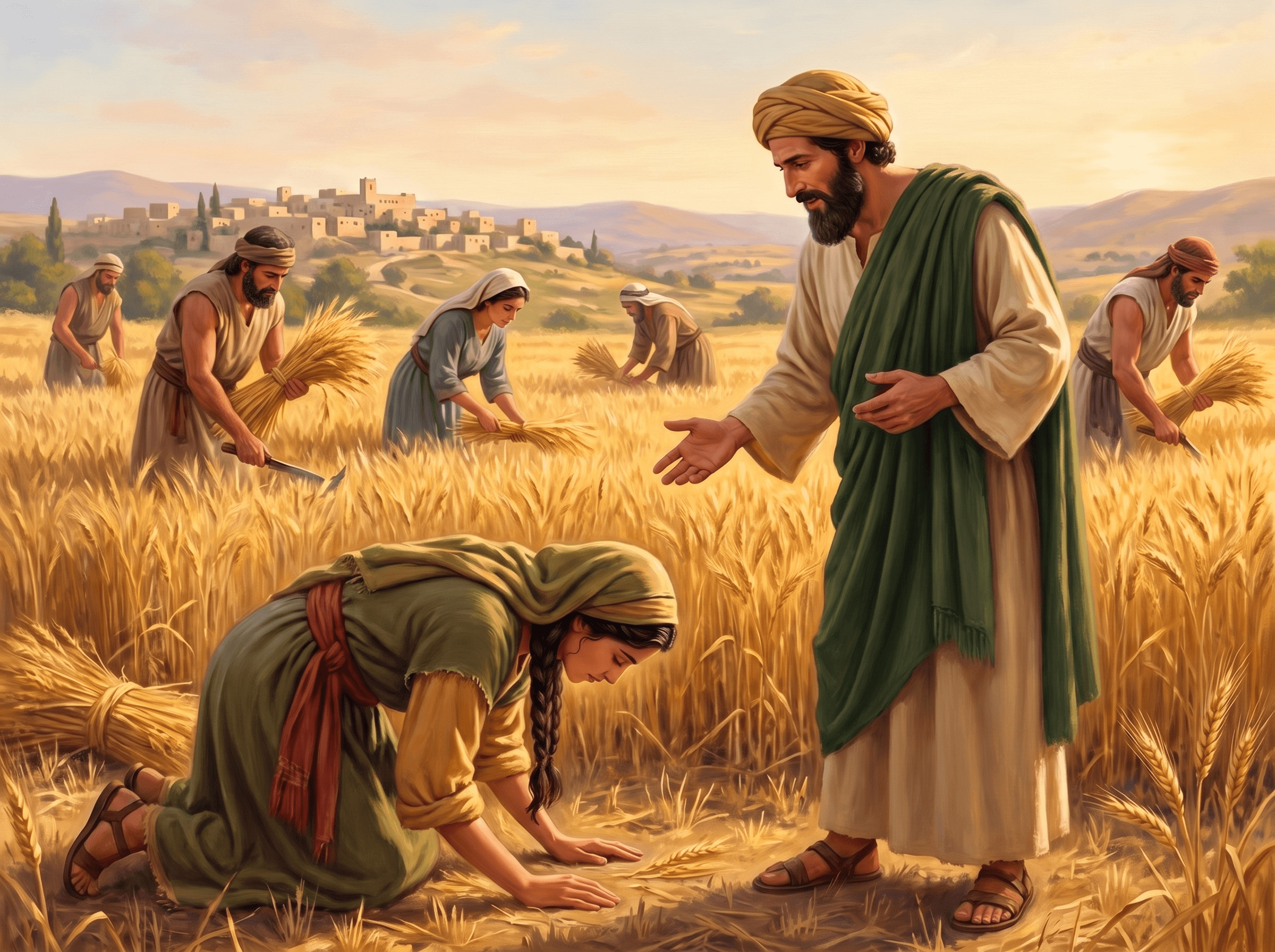
Illustrated scene from Ruth's story: Gleaning in the Field of Boaz (Ruth 2:1–16)
Meet the people of the Bible
Follow their lives in order, with illustrated scenes and Bible passages that tell their stories.
 Ruth

Photo: Deror Avi, via Wikimedia Commons. License: CC BY-SA 4.0. Source. Location: Tel Shiloh archaeological site, West Bank. Resized for the web.
Explore the places of the Bible
See where biblical events happened, why each place matters, and what archaeology helps us understand.
Shiloh
Where Israel set up the tabernacle, and where God called the boy Samuel.
Get full access with one subscription
Explore the people and places of the Bible. Read summaries of every book, with images and clear explanations covering every chapter. Access all these features and our Bible study tools with one subscription.
See PlansAsk AI about Ruth 2:10
Ask a question about this verse and get a clear answer, with Bible references you can read for yourself.
Every Bible book, explained chapter by chapter
Explore summaries of every book of the Bible, with images and easy-to-understand explanations covering every chapter.
Keep studying Ruth 2:10
Related Bible verses
At a Glance — the Book of Ruth
- Author
- Author unknown; traditionally Samuel
- Written
- Around 1050 BC
- Genre
- Historical narrative
- Original Audience
- The Israelites of the early monarchy
Frequently Asked Questions
Quick, clear answers about this verse
What does Ruth 2:10 mean?
Ruth 2:10 shows Ruth's humility and surprise at Boaz's kindness. As a foreigner, she feels unworthy of his attention, highlighting the theme of grace and the breaking of social barriers.
What is the significance of Ruth bowing in Ruth 2:10?
Ruth's act of bowing signifies deep respect and gratitude towards Boaz. It emphasizes her recognition of his kindness and her humble position as a stranger in his land.
Why does Ruth feel like a stranger in Ruth 2:10?
Ruth identifies as a stranger because she is a Moabite woman in Bethlehem, a place where she does not belong culturally or socially. This context adds depth to her surprise at Boaz's favor.
What does grace mean in the context of Ruth 2:10?
In Ruth 2:10, grace refers to the unmerited favor Boaz shows Ruth despite her being an outsider. It illustrates the kindness extended to those who may not typically receive it.
Daily Verse — straight to your inbox
A verse and a 2-sentence plain-English explanation, every morning. Free. Unsubscribe anytime.