Old Testament
1 Kings 11:12
Read the Bible in clear, modern English—easy to understand, faithful to the meaning, and written for everyday readers.
However, I won't do it during your lifetime, for the sake of your father David. Instead, I will tear it from your son's hands.
Compare translations
Notwithstanding in thy days I will not do it for David thy father’s sake: but I will rend it out of the hand of thy son.
What 1 Kings 11:12 means
Plain-English insight for readers
In this verse, God is communicating a significant decision regarding the future of the kingdom. He acknowledges the faithfulness of David, the father of King Solomon, and chooses to delay the consequences of Solomon's actions until after his death. This shows God's respect for David's legacy and the covenant made with him. However, the kingdom will eventually be taken away from Solomon's son, indicating that the choices made by leaders have lasting impacts. God's mercy is evident in His timing, as He allows Solomon to reign without immediate punishment. This moment serves as a reminder that our actions can affect future generations, and that God's plans unfold according to His wisdom. It highlights the importance of legacy and the weight of leadership decisions, emphasizing that while grace may be extended, accountability remains. Ultimately, this verse illustrates the balance between mercy and justice in God's dealings with humanity, reminding us that our lives are interconnected.
How to apply 1 Kings 11:12 to your life
Consider how your choices today can impact those who come after you. Reflect on the importance of living a life that honors your values and the legacy you wish to leave. Remember that while grace is available, accountability is also a part of life. Make decisions that you would be proud to pass on to future generations. Lead with integrity and purpose, knowing your actions matter greatly in the long run.
Curated for this public verse page. 1 Kings Summary
Learn the Bible through its people and places
Get to know the people in Scripture through illustrated stories, and explore the places where they lived and traveled.
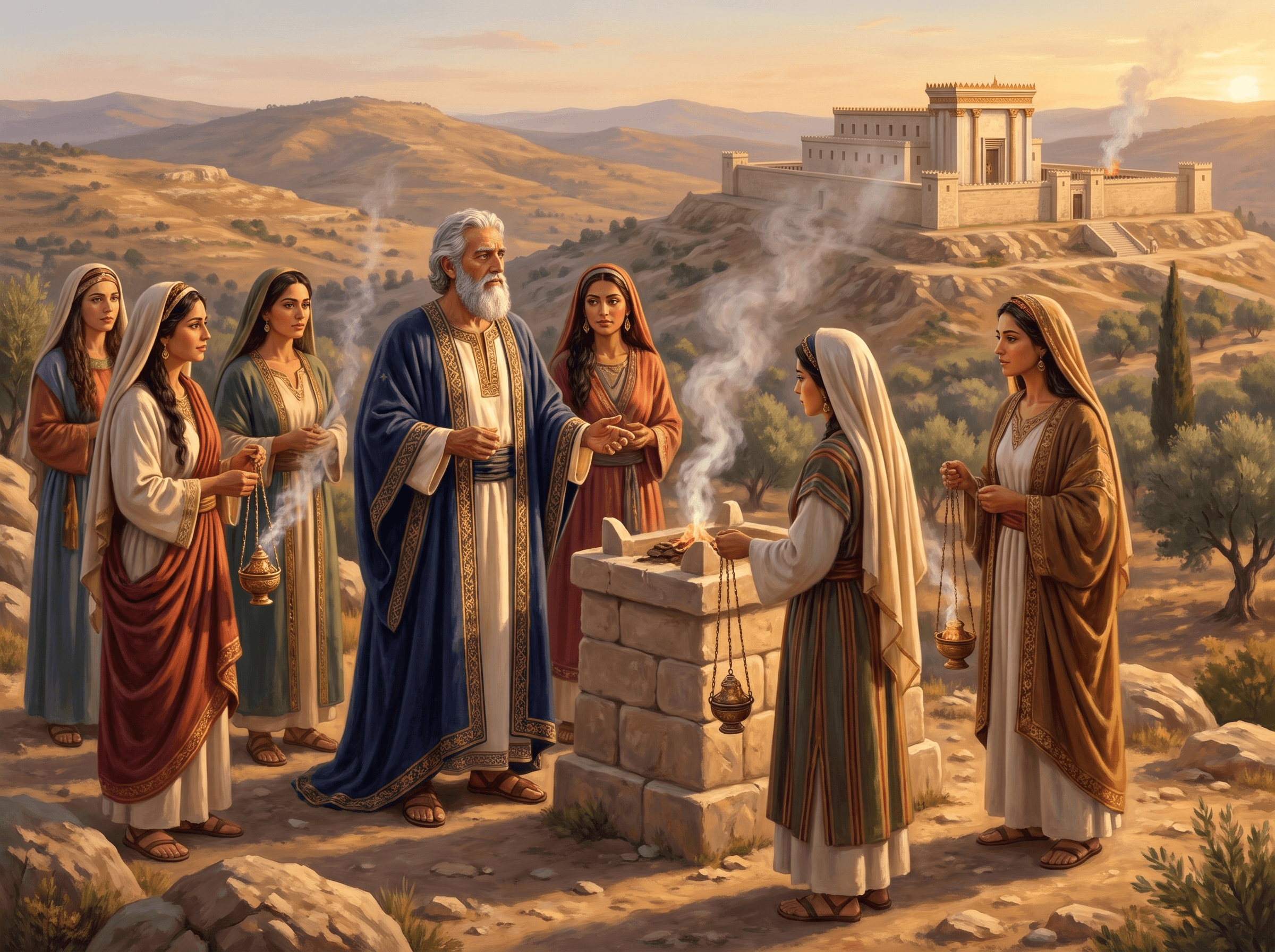
Illustrated scene from Solomon's story: His Heart Turns Away (1 Kings 11:1–13)
Meet the people of the Bible
Follow their lives in order, with illustrated scenes and Bible passages that tell their stories.
 Solomon

Photo: Diego Delso, via Wikimedia Commons. License: CC BY-SA 3.0. Source. Location: Tell es-Sultan, Jericho, West Bank. Resized for the web.
Explore the places of the Bible
See where biblical events happened, why each place matters, and what archaeology helps us understand.
Jericho
The city of palm trees, whose walls fell in Joshua's day.
Get full access with one subscription
Explore the people and places of the Bible. Read summaries of every book, with images and clear explanations covering every chapter. Access all these features and our Bible study tools with one subscription.
See PlansAsk AI about 1 Kings 11:12
Ask a question about this verse and get a clear answer, with Bible references you can read for yourself.
Every Bible book, explained chapter by chapter
Explore summaries of every book of the Bible, with images and easy-to-understand explanations covering every chapter.
Keep studying 1 Kings 11:12
Related Bible verses
Related topics
At a Glance — the Book of 1 Kings
- Author
- Author unknown; possibly Jeremiah
- Written
- Around 560 BC
- Genre
- Historical narrative
- Original Audience
- Exiled Israelites in Babylon
Frequently Asked Questions
Quick, clear answers about this verse
What does 1 Kings 11:12 mean?
1 Kings 11:12 means that God decided not to take the kingdom from Solomon during his lifetime out of respect for his father, David. Instead, the consequences of Solomon's actions would be delayed until after his death, showing both mercy and the importance of legacy.
What is the significance of David in 1 Kings 11:12?
David is significant in 1 Kings 11:12 because God honors his faithfulness and the covenant made with him. This respect leads God to postpone the punishment of Solomon's kingdom until after Solomon's reign.
What does 'rend it out of the hand of thy son' mean in 1 Kings 11:12?
'Rend it out of the hand of thy son' means that God will eventually take the kingdom away from Solomon's son. This indicates that the consequences of Solomon's actions will affect future generations.
What themes are present in 1 Kings 11:12?
The themes present in 1 Kings 11:12 include legacy, mercy, leadership, and consequences. The verse highlights how a leader's choices can impact future generations and the balance between God's mercy and justice.
Daily Verse — straight to your inbox
A verse and a 2-sentence plain-English explanation, every morning. Free. Unsubscribe anytime.