Old Testament
1 Kings 17:16
Read the Bible in clear, modern English—easy to understand, faithful to the meaning, and written for everyday readers.
The jar of flour did not run out, and the jug of oil did not run dry, according to the word of the LORD, which he spoke through Elijah.
Compare translations
And the barrel of meal wasted not, neither did the cruse of oil fail, according to the word of the LORD, which he spake by Elijah.
What 1 Kings 17:16 means
Plain-English insight for readers
In this story, a widow is facing a dire situation with her son. They are running out of food during a severe drought. The prophet Elijah visits her and tells her not to be afraid. He instructs her to use the last of her flour and oil to make a meal for him first. Miraculously, her jar of flour and jug of oil do not run out, providing for her and her son throughout the drought. This event shows how faith can lead to unexpected blessings. It emphasizes that when we trust in God's word, even in tough times, we can experience His provision. The widow's act of faith not only sustains her but also demonstrates God's care and power. This story reminds us that God can provide for our needs in ways we cannot imagine, even when resources seem scarce. It encourages us to trust in His promises and take steps of faith, knowing He is with us in our struggles and challenges, providing for us in our time of need. Trusting God can lead to miraculous outcomes in our lives, just as it did for the widow.
How to apply 1 Kings 17:16 to your life
When facing difficult times, remember the widow's story. Trust that God can provide for your needs, even when it seems impossible. Take steps of faith, and be open to how He might bless you. Your trust can lead to unexpected miracles in your life. Stay hopeful and keep believing in His promises, no matter the circumstances you face. “God is always with you.” “Trust Him.” “Believe.” “Have faith.” “Stay hopeful.” “Keep believing.”
Curated for this public verse page. 1 Kings Summary
Learn the Bible through its people and places
Get to know the people in Scripture through illustrated stories, and explore the places where they lived and traveled.
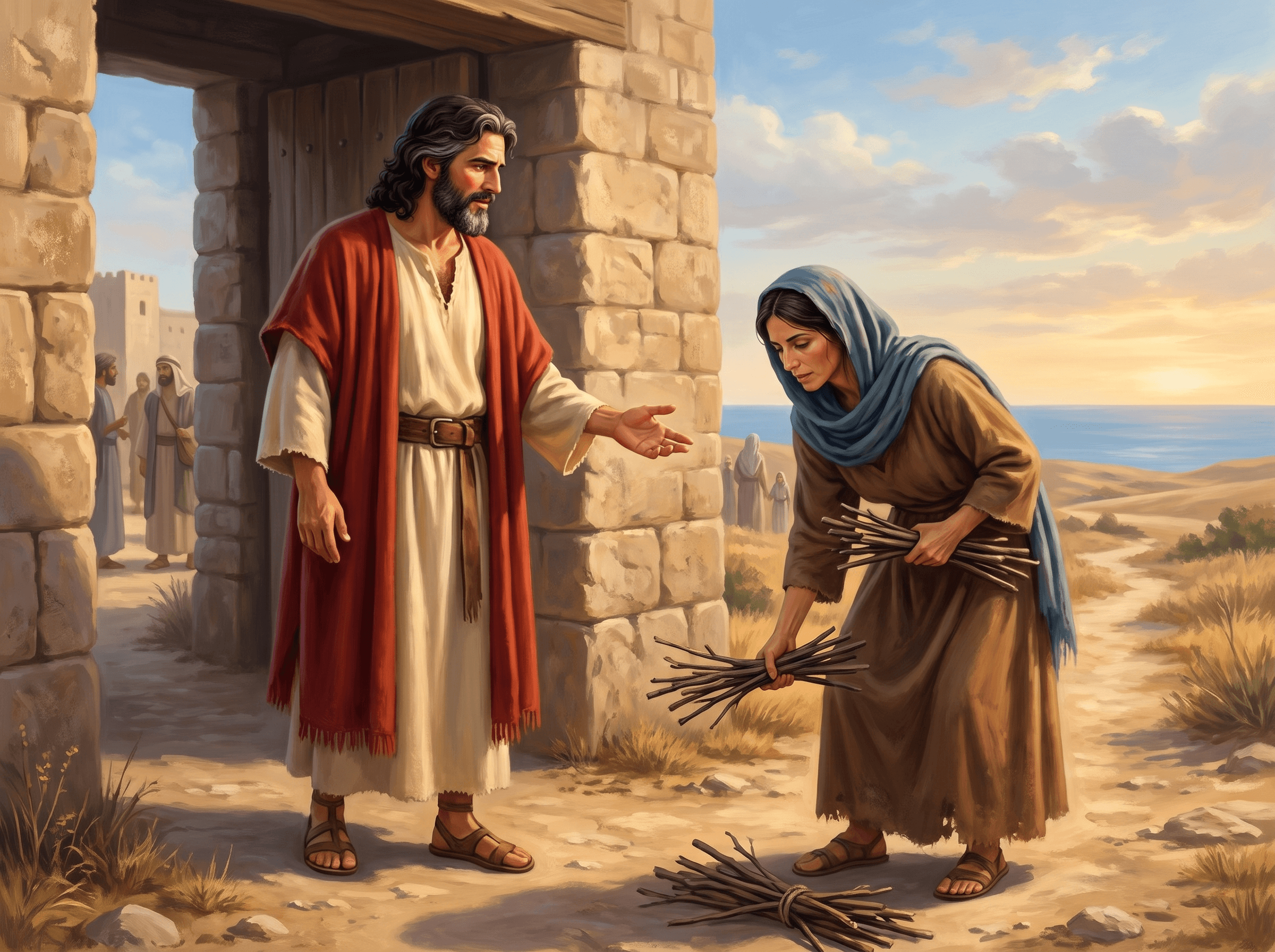
Illustrated scene from Elijah's story: The Widow of Zarephath (1 Kings 17:8–16)
Meet the people of the Bible
Follow their lives in order, with illustrated scenes and Bible passages that tell their stories.
 Elijah

Photo: Photochrom print, Library of Congress Prints and Photographs Division (LCCN 2002725043). License: Public domain in the United States; Library of Congress states no known restrictions on publication. Source. Location: Nablus and Mount Gerizim, West Bank; print preserved by the Library of Congress. Resized for the web.
Explore the places of the Bible
See where biblical events happened, why each place matters, and what archaeology helps us understand.
Shechem
Where God promised the land to Abram, and where Joshua led Israel to renew the covenant.
Get full access with one subscription
Explore the people and places of the Bible. Read summaries of every book, with images and clear explanations covering every chapter. Access all these features and our Bible study tools with one subscription.
See PlansAsk AI about 1 Kings 17:16
Ask a question about this verse and get a clear answer, with Bible references you can read for yourself.
Every Bible book, explained chapter by chapter
Explore summaries of every book of the Bible, with images and easy-to-understand explanations covering every chapter.
Keep studying 1 Kings 17:16
Related Bible verses
At a Glance — the Book of 1 Kings
- Author
- Author unknown; possibly Jeremiah
- Written
- Around 560 BC
- Genre
- Historical narrative
- Original Audience
- Exiled Israelites in Babylon
Frequently Asked Questions
Quick, clear answers about this verse
What does 1 Kings 17:16 teach about God's provision?
1 Kings 17:16 illustrates that God provides for our needs, even in dire circumstances. The widow's flour and oil miraculously do not run out, showing that when we trust in God's word and act in faith, He can sustain us. This verse encourages believers to rely on God's promises, especially during tough times, reminding us that He is capable of providing in ways we may not expect.
How can I apply the lesson from 1 Kings 17:16 in my life?
To apply the lesson from 1 Kings 17:16, start by trusting God with your needs, especially when facing challenges. Take steps of faith, like the widow did, by being generous or helping others even when resources are limited. Stay hopeful and look for God's provision in your life, knowing that He can work miracles when you trust Him. Remember to pray and seek guidance, as faith often leads to unexpected blessings.
What does the story of the widow and Elijah symbolize?
The story of the widow and Elijah symbolizes faith and obedience in the face of scarcity. It highlights the importance of trusting God’s word and acting on it, even when circumstances seem dire. The widow's willingness to share her last meal with Elijah demonstrates selflessness and faith, which leads to God's miraculous provision. This narrative encourages believers to have faith that God will meet their needs when they prioritize Him.
Why did Elijah ask the widow to make him a meal first?
Elijah asked the widow to make him a meal first to test her faith and obedience. By prioritizing God's messenger, she demonstrated her trust in God's provision. This act of faith was crucial, as it opened the door for God's miraculous supply of flour and oil. It teaches us that sometimes, putting God first in our decisions can lead to unexpected blessings and provision in our lives.
Daily Verse — straight to your inbox
A verse and a 2-sentence plain-English explanation, every morning. Free. Unsubscribe anytime.