Old Testament
1 Samuel 14:2
Read the Bible in clear, modern English—easy to understand, faithful to the meaning, and written for everyday readers.
Saul was camped on the outskirts of Gibeah, under a pomegranate tree in Migron. He had about 600 men with him,
Compare translations
And Saul tarried in the uttermost part of Gibeah under a pomegranate tree which is in Migron: and the people that were with him were about six hundred men;
What 1 Samuel 14:2 means
Plain-English insight for readers
In this scene, Saul, the king of Israel, is positioned at the edge of Gibeah, resting under a pomegranate tree in a place called Migron. He is not alone; he has gathered about 600 men around him. This moment captures a sense of waiting and uncertainty. Saul's choice of location suggests a desire for shade and comfort, but it also reflects a lack of decisive action. The presence of his men indicates that he has support, yet they are all in a state of inaction. This passage highlights the tension between leadership and the need for courage in challenging times. Saul's situation serves as a reminder that sometimes leaders must take bold steps rather than remain passive. The imagery of the pomegranate tree, often associated with abundance, contrasts with the stagnation of the moment. It invites us to consider how we respond when faced with challenges and whether we are willing to step out in faith, even when the path ahead is unclear. Saul's story encourages us to seek clarity and direction in our own lives.
How to apply 1 Samuel 14:2 to your life
When faced with uncertainty, reflect on your own leadership role. Are you waiting for the perfect moment to act? Sometimes, taking a small step forward can lead to greater clarity. Surround yourself with supportive people who encourage you to move ahead. Don't let fear keep you from making progress in your life or decisions.
Curated for this public verse page. 1 Samuel Summary
Explore more of the Bible
Learn the Bible through its people and places
Get to know the people in Scripture through illustrated stories, and explore the places where they lived and traveled.

Illustrated scene from Noah's story: Noah Is Born (Genesis 5:28–32)
Meet the people of the Bible
Follow their lives in order, with illustrated scenes and Bible passages that tell their stories.
 Noah
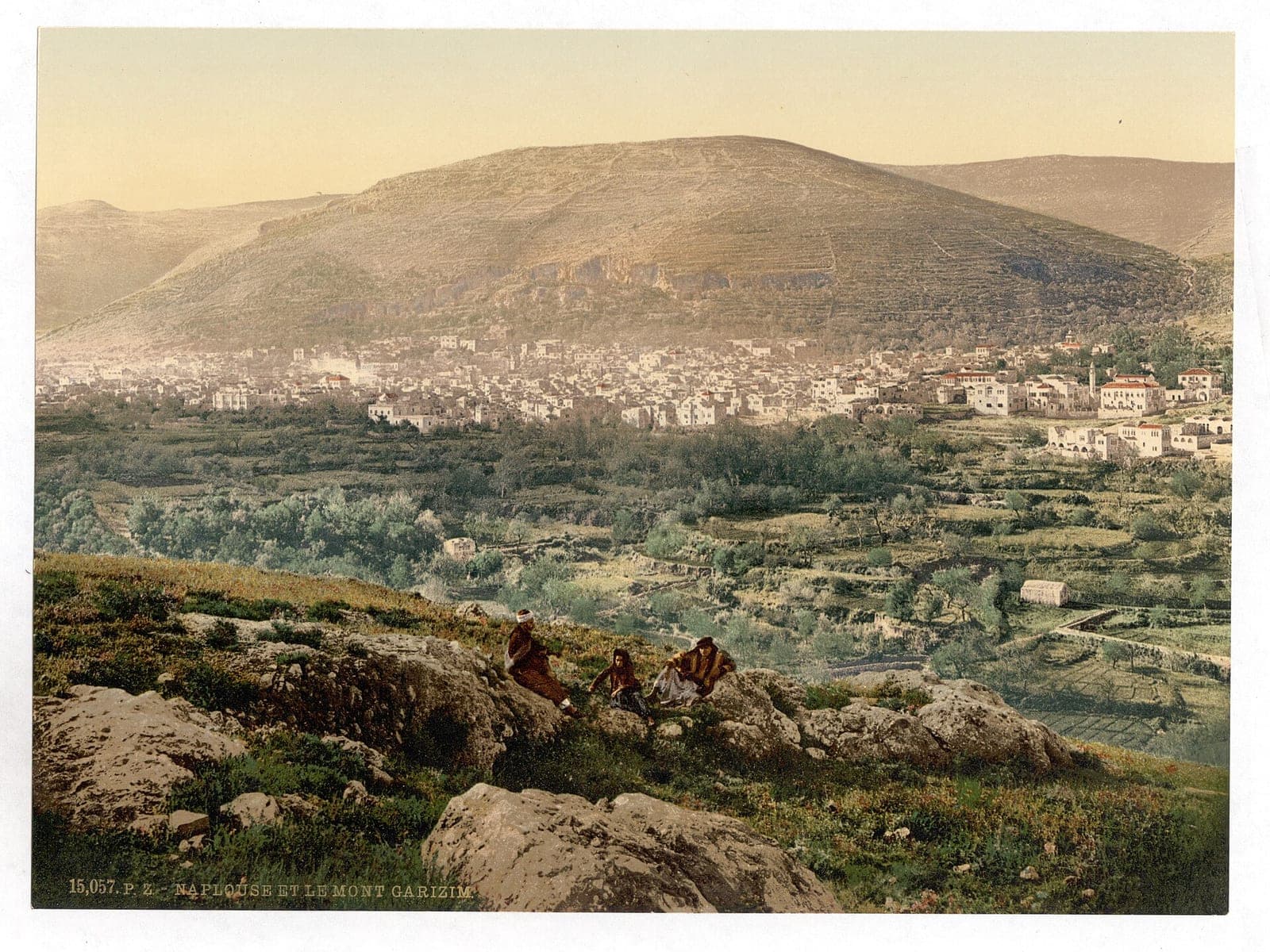
Photo: Photochrom print, Library of Congress Prints and Photographs Division (LCCN 2002725043). License: Public domain in the United States; Library of Congress states no known restrictions on publication. Source. Location: Nablus and Mount Gerizim, West Bank; print preserved by the Library of Congress. Resized for the web.
Explore the places of the Bible
See where biblical events happened, why each place matters, and what archaeology helps us understand.
Shechem
Where God promised the land to Abram, and where Joshua led Israel to renew the covenant.
Get full access with one subscription
Explore the people and places of the Bible. Read summaries of every book, with images and clear explanations covering every chapter. Access all these features and our Bible study tools with one subscription.
See PlansAsk AI about 1 Samuel 14:2
Ask a question about this verse and get a clear answer, with Bible references you can read for yourself.
Every Bible book, explained chapter by chapter
Explore summaries of every book of the Bible, with images and easy-to-understand explanations covering every chapter.
Keep studying 1 Samuel 14:2
Related Bible verses
Key themes
Related topics
At a Glance — the Book of 1 Samuel
- Author
- Traditionally attributed to Samuel, Nathan, and Gad
- Written
- Around 930 BC
- Genre
- Historical narrative
- Original Audience
- The Israelites of the early monarchy
Frequently Asked Questions
Quick, clear answers about this verse
What does 1 Samuel 14:2 mean?
1 Samuel 14:2 describes King Saul's situation as he waits with 600 men under a pomegranate tree in Migron. This scene illustrates a moment of inactivity and uncertainty, highlighting the tension between leadership and the need for decisive action.
What is the significance of the pomegranate tree in 1 Samuel 14:2?
The pomegranate tree in 1 Samuel 14:2 symbolizes abundance and comfort. Its presence contrasts with Saul's stagnation, prompting reflection on how we respond to challenges and the importance of taking action.
Why was Saul waiting in 1 Samuel 14:2?
Saul was waiting in 1 Samuel 14:2 likely due to uncertainty about how to proceed in a challenging situation. His pause reflects a moment of contemplation before taking action.
How does 1 Samuel 14:2 relate to leadership?
1 Samuel 14:2 highlights the challenges of leadership, particularly the need for courage and decisive action. Saul's inaction with his men around him serves as a lesson on the importance of moving forward in times of uncertainty.
Daily Verse — straight to your inbox
A verse and a 2-sentence plain-English explanation, every morning. Free. Unsubscribe anytime.