Old Testament
2 Chronicles 2:10
Read the Bible in clear, modern English—easy to understand, faithful to the meaning, and written for everyday readers.
As payment for your workers who cut the timber, I'll provide 20,000 measures of crushed wheat, 20,000 measures of barley, 20,000 baths of wine, and 20,000 baths of olive oil."
Compare translations
And, behold, I will give to thy servants, the hewers that cut timber, twenty thousand measures of beaten wheat, and twenty thousand measures of barley, and twenty thousand baths of wine, and twenty thousand baths of oil.
What 2 Chronicles 2:10 means
Plain-English insight for readers
In this passage, King Solomon is making a generous offer to Hiram, the king of Tyre, for the laborers who will be cutting timber for the construction of the temple. He promises to provide a substantial amount of food and drink as payment. Specifically, he mentions 20,000 measures of crushed wheat and barley, along with 20,000 baths of wine and olive oil. This shows Solomon's commitment to ensuring that the workers are well taken care of. It reflects the importance of valuing those who contribute to significant projects. By providing ample resources, Solomon is fostering goodwill and cooperation. This act of generosity not only supports the workers but also strengthens the relationship between the two kingdoms. It highlights the significance of fair compensation and respect for labor in any endeavor, especially one as monumental as building a temple. Solomon's approach sets a standard for leadership and collaboration, emphasizing that great achievements require the support and well-being of all involved.
How to apply 2 Chronicles 2:10 to your life
Consider how you can show appreciation to those who help you in your projects. Whether it's through fair pay, kind words, or providing for their needs, recognizing their contributions fosters a positive environment. Building strong relationships is essential for success in any endeavor, big or small. Make it a habit to acknowledge and reward hard work in your life and community.
Curated for this public verse page. 2 Chronicles Summary
Learn the Bible through its people and places
Get to know the people in Scripture through illustrated stories, and explore the places where they lived and traveled.
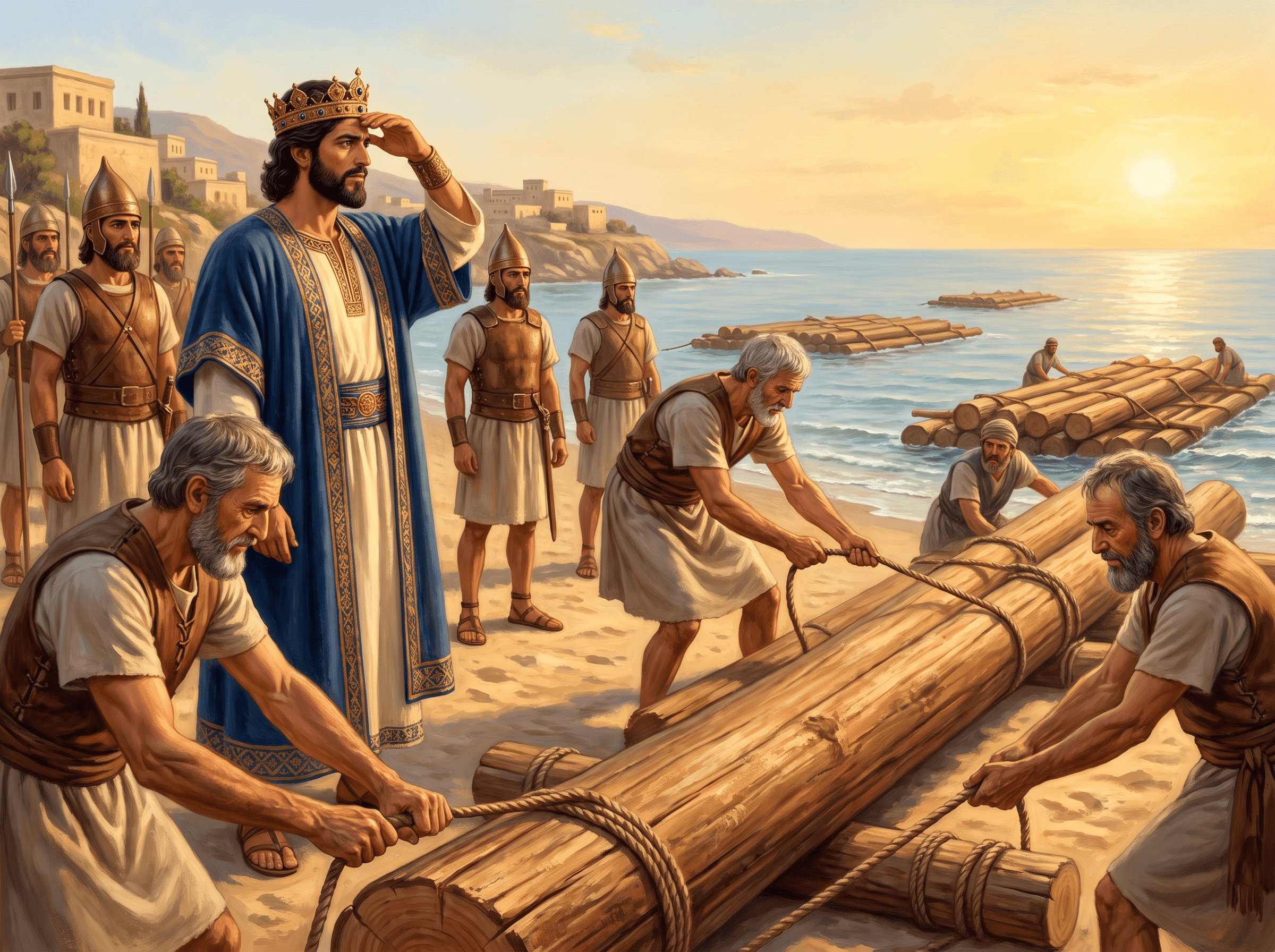
Illustrated scene from Solomon's story: Cedars from Hiram (2 Chronicles 2:1–18)
Meet the people of the Bible
Follow their lives in order, with illustrated scenes and Bible passages that tell their stories.
 Solomon

Photo: Diego Delso, via Wikimedia Commons. License: CC BY-SA 3.0. Source. Location: Tell es-Sultan, Jericho, West Bank. Resized for the web.
Explore the places of the Bible
See where biblical events happened, why each place matters, and what archaeology helps us understand.
Jericho
The city of palm trees, whose walls fell in Joshua's day.
Get full access with one subscription
Explore the people and places of the Bible. Read summaries of every book, with images and clear explanations covering every chapter. Access all these features and our Bible study tools with one subscription.
See PlansAsk AI about 2 Chronicles 2:10
Ask a question about this verse and get a clear answer, with Bible references you can read for yourself.
Every Bible book, explained chapter by chapter
Explore summaries of every book of the Bible, with images and easy-to-understand explanations covering every chapter.
Keep studying 2 Chronicles 2:10
Related Bible verses
Key themes
Related topics
At a Glance — the Book of 2 Chronicles
- Author
- Traditionally attributed to Ezra
- Written
- Around 430 BC
- Genre
- Historical narrative
- Original Audience
- Post-exilic Jews
Frequently Asked Questions
Quick, clear answers about this verse
What does 2 Chronicles 2:10 teach about fair compensation?
This verse illustrates the importance of fair compensation for laborers. King Solomon promises a generous payment to Hiram for the workers who will cut timber for the temple. By offering substantial amounts of wheat, barley, wine, and olive oil, Solomon emphasizes that valuing and rewarding the contributions of workers is essential for successful collaboration and project completion.
Why did Solomon offer such a large quantity of resources?
Solomon's offer of 20,000 measures of wheat and barley, along with 20,000 baths of wine and olive oil, reflects his commitment to ensuring that the workers are well taken care of. This not only supports the laborers but also fosters goodwill between Solomon and Hiram, strengthening their alliance. Such generosity is crucial in building trust and cooperation in significant undertakings.
How can we apply the principles from 2 Chronicles 2:10 in our lives?
We can apply the principles from this verse by recognizing and appreciating the contributions of those who assist us in our endeavors. Whether in work, community projects, or personal relationships, showing gratitude through fair compensation, kind gestures, or support can create a positive environment. Acknowledging hard work fosters collaboration and strengthens relationships, which are vital for achieving success.
What is the significance of Solomon's relationship with Hiram in this verse?
The relationship between Solomon and Hiram is significant as it highlights the importance of alliances in leadership. By offering generous compensation for labor, Solomon not only secures the timber needed for the temple but also strengthens diplomatic ties with Hiram. This collaboration exemplifies how mutual respect and support can lead to successful outcomes in large projects.
Daily Verse — straight to your inbox
A verse and a 2-sentence plain-English explanation, every morning. Free. Unsubscribe anytime.