Old Testament
2 Chronicles 2:3
Read the Bible in clear, modern English—easy to understand, faithful to the meaning, and written for everyday readers.
Solomon sent a message to King Huram of Tyre: "You supplied my father David with cedar to build his palace. I'm asking you to do the same for me.
Compare translations
And Solomon sent to Huram the king of Tyre, saying, As thou didst deal with David my father, and didst send him cedars to build him an house to dwell therein, even so deal with me.
What 2 Chronicles 2:3 means
Plain-English insight for readers
In this passage, Solomon reaches out to King Huram of Tyre, recalling how Huram had previously helped his father, David, by providing cedar wood for building a palace. Solomon is now seeking the same support for his own construction project. This request highlights the importance of relationships and alliances in achieving great tasks. Solomon understands that he cannot do everything alone and values the contributions of others. By acknowledging the past assistance given to his father, he builds a bridge for future cooperation. This moment reflects a blend of respect and practicality, showing that great endeavors often require collaboration. Solomon's approach is direct and respectful, emphasizing the continuity of support between generations. It reminds us that asking for help is a sign of wisdom, not weakness, and that we can build on the foundations laid by those before us. This interaction sets the stage for the grand temple that Solomon will build, symbolizing unity and shared purpose.
How to apply 2 Chronicles 2:3 to your life
Consider the relationships in your life and how they can help you achieve your goals. Don't hesitate to reach out for support when needed. Remember that building on the foundations laid by others can lead to greater success. Asking for help is a strength, not a weakness. Embrace collaboration in your endeavors for a brighter future together.
Curated for this public verse page. 2 Chronicles Summary
Learn the Bible through its people and places
Get to know the people in Scripture through illustrated stories, and explore the places where they lived and traveled.
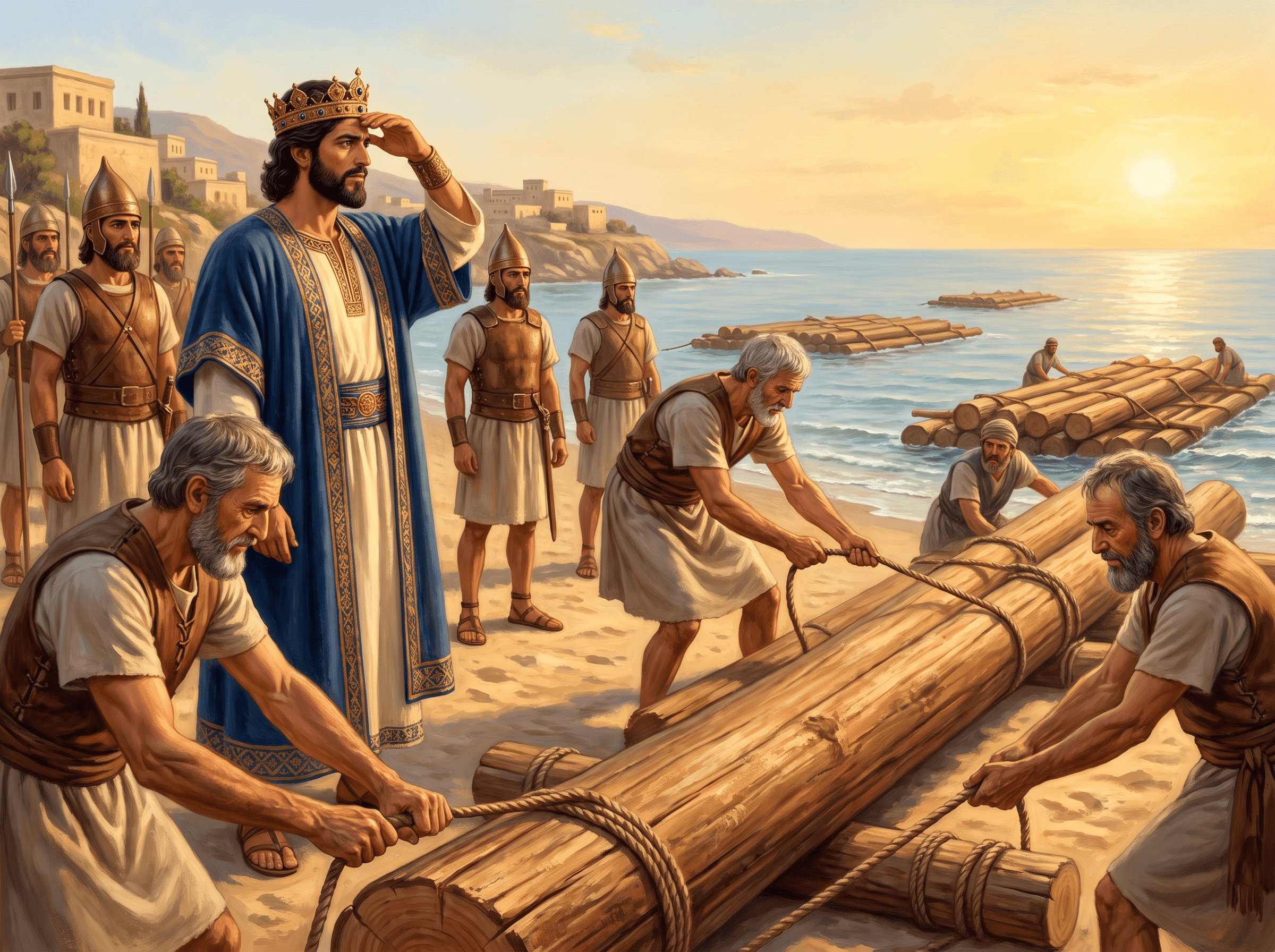
Illustrated scene from Solomon's story: Cedars from Hiram (2 Chronicles 2:1–18)
Meet the people of the Bible
Follow their lives in order, with illustrated scenes and Bible passages that tell their stories.
 Solomon

Photo: Diego Delso, via Wikimedia Commons. License: CC BY-SA 3.0. Source. Location: Tell es-Sultan, Jericho, West Bank. Resized for the web.
Explore the places of the Bible
See where biblical events happened, why each place matters, and what archaeology helps us understand.
Jericho
The city of palm trees, whose walls fell in Joshua's day.
Get full access with one subscription
Explore the people and places of the Bible. Read summaries of every book, with images and clear explanations covering every chapter. Access all these features and our Bible study tools with one subscription.
See PlansAsk AI about 2 Chronicles 2:3
Ask a question about this verse and get a clear answer, with Bible references you can read for yourself.
Every Bible book, explained chapter by chapter
Explore summaries of every book of the Bible, with images and easy-to-understand explanations covering every chapter.
Keep studying 2 Chronicles 2:3
Related Bible verses
Key themes
Related topics
At a Glance — the Book of 2 Chronicles
- Author
- Traditionally attributed to Ezra
- Written
- Around 430 BC
- Genre
- Historical narrative
- Original Audience
- Post-exilic Jews
Frequently Asked Questions
Quick, clear answers about this verse
What does 2 Chronicles 2:3 teach about seeking help?
2 Chronicles 2:3 illustrates the importance of seeking help from others when undertaking significant tasks. Solomon reaches out to King Huram, recalling past assistance given to his father, David. This shows that asking for support is a wise approach, emphasizing that collaboration can lead to greater achievements. It encourages us to recognize the value of relationships and alliances in our own endeavors.
Why did Solomon contact King Huram of Tyre?
Solomon contacted King Huram of Tyre to request cedar wood for building his temple, just as Huram had previously supplied cedar to his father, David, for his palace. This request not only highlights the continuity of support between generations but also reflects Solomon's understanding of the importance of alliances in accomplishing significant projects.
What can we learn about relationships from this verse?
This verse teaches us that relationships are vital for success. Solomon's outreach to King Huram demonstrates the significance of maintaining connections and building on past collaborations. It reminds us that leveraging our networks and acknowledging the contributions of others can enhance our ability to achieve our goals.
How does this verse reflect on the concept of legacy?
In 2 Chronicles 2:3, Solomon's request to Huram underscores the theme of legacy. By recalling how Huram assisted David, Solomon honors his father's legacy while seeking to continue that support in his own endeavors. This illustrates how the actions and relationships of previous generations can influence and aid future accomplishments.
Daily Verse — straight to your inbox
A verse and a 2-sentence plain-English explanation, every morning. Free. Unsubscribe anytime.