Old Testament
2 Chronicles 6:13
Read the Bible in clear, modern English—easy to understand, faithful to the meaning, and written for everyday readers.
He had built a bronze platform five cubits long, five cubits wide, and three cubits high, and placed it in the center of the courtyard. He stood on it, then knelt down on his knees before the whole assembly of Israel and spread out his hands toward heaven.
Compare translations
For Solomon had made a brasen scaffold of five cubits long, and five cubits broad, and three cubits high, and had set it in the midst of the court: and upon it he stood, and kneeled down upon his knees before all the congregation of Israel, and spread forth his hands toward heaven,
What 2 Chronicles 6:13 means
Plain-English insight for readers
In this moment, Solomon demonstrates humility and reverence before God. He constructed a large bronze platform to stand on, making himself visible to the people gathered around. By kneeling and spreading his hands toward heaven, he shows his dependence on God and his desire for divine guidance. This act is not just a personal prayer; it’s a public declaration of faith. Solomon’s posture signifies submission and respect, inviting the entire assembly of Israel to witness his commitment to God. It’s a powerful reminder that true leadership involves humility and seeking help from a higher power. This scene emphasizes the importance of prayer and connection with God, especially in significant moments of life. Solomon’s actions encourage us to approach God with sincerity and openness, recognizing our need for His wisdom and support in our lives. His example inspires us to be bold in our faith while remaining humble in our hearts, fostering a deeper relationship with the divine.
How to apply 2 Chronicles 6:13 to your life
When facing challenges, remember to approach them with humility and seek guidance through prayer. Like Solomon, take time to connect with God, acknowledging your dependence on Him. This practice can strengthen your faith and provide clarity in difficult situations, fostering a deeper relationship with the divine. Stay open to His wisdom and support in your life, just as Solomon did. In moments of decision, let your heart be aligned with His.
Curated for this public verse page. 2 Chronicles Summary
Learn the Bible through its people and places
Get to know the people in Scripture through illustrated stories, and explore the places where they lived and traveled.
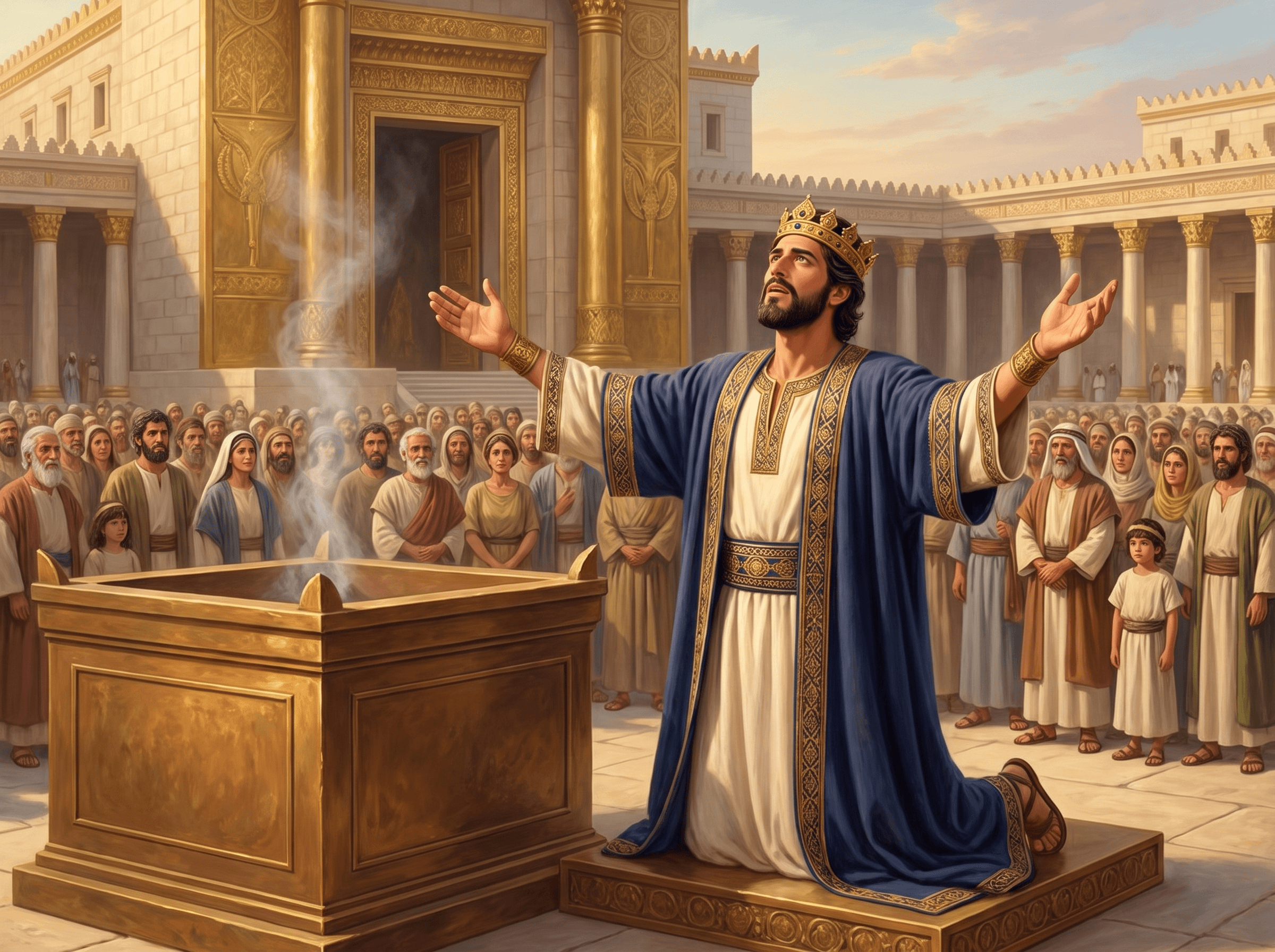
Illustrated scene from Solomon's story: The Prayer of Dedication (2 Chronicles 6:1–42)
Meet the people of the Bible
Follow their lives in order, with illustrated scenes and Bible passages that tell their stories.
 Solomon

Photo: U.S. Army photo by Spc. Samantha R. Ciaramitaro, via DVIDS and Wikimedia Commons. License: Public domain in the United States — U.S. federal-government work. Source. Location: Great Ziggurat, Ur Archaeological City (Tell el-Mukayyar), Dhi Qar Governorate, Iraq. Resized for the web.
Explore the places of the Bible
See where biblical events happened, why each place matters, and what archaeology helps us understand.
Ur
The city Abram's family left to travel toward Canaan.
Get full access with one subscription
Explore the people and places of the Bible. Read summaries of every book, with images and clear explanations covering every chapter. Access all these features and our Bible study tools with one subscription.
See PlansAsk AI about 2 Chronicles 6:13
Ask a question about this verse and get a clear answer, with Bible references you can read for yourself.
Every Bible book, explained chapter by chapter
Explore summaries of every book of the Bible, with images and easy-to-understand explanations covering every chapter.
Keep studying 2 Chronicles 6:13
Related Bible verses
Related topics
At a Glance — the Book of 2 Chronicles
- Author
- Traditionally attributed to Ezra
- Written
- Around 430 BC
- Genre
- Historical narrative
- Original Audience
- Post-exilic Jews
Frequently Asked Questions
Quick, clear answers about this verse
What does 2 Chronicles 6:13 mean?
2 Chronicles 6:13 describes King Solomon's act of humility and reverence as he kneels on a bronze platform before the assembly of Israel, spreading his hands toward heaven. This moment signifies his dependence on God and his desire for divine guidance during a significant occasion.
What is the significance of Solomon kneeling in 2 Chronicles 6:13?
Solomon kneeling in 2 Chronicles 6:13 demonstrates his humility as a leader and his recognition of God's authority. It serves as a public declaration of faith, inviting the people of Israel to witness his commitment to seeking God's wisdom.
What does the bronze platform represent in 2 Chronicles 6:13?
The bronze platform in 2 Chronicles 6:13 represents a place of prominence for Solomon to address the people, highlighting the importance of the moment. It also symbolizes the act of making oneself visible and accessible to God and the community.
How does 2 Chronicles 6:13 relate to prayer?
2 Chronicles 6:13 emphasizes the importance of prayer by showing Solomon's posture of kneeling and spreading his hands toward heaven. This act illustrates a sincere approach to God, highlighting the need for divine guidance and support.
Daily Verse — straight to your inbox
A verse and a 2-sentence plain-English explanation, every morning. Free. Unsubscribe anytime.