Old Testament
2 Chronicles 6:17
Read the Bible in clear, modern English—easy to understand, faithful to the meaning, and written for everyday readers.
So now, LORD, God of Israel, let the word you spoke to your servant David come true.
Compare translations
Now then, O LORD God of Israel, let thy word be verified, which thou hast spoken unto thy servant David.
What 2 Chronicles 6:17 means
Plain-English insight for readers
In this moment, the speaker, likely Solomon, is addressing God directly, acknowledging His promise to David. He expresses a deep desire for God's word to be fulfilled. This reflects a profound trust in God's faithfulness and the importance of keeping promises. The speaker is not just asking for a wish; he is reminding God of His commitment. This shows a relationship built on faith and expectation. It’s a moment of hope, where the past promises are tied to present actions. The speaker believes that God’s word has power and significance, and he is eager to see it come to life. This plea highlights the importance of remembering and honoring commitments, both divine and human. It encourages us to hold onto our faith in the promises made to us, trusting that they will be realized in due time. It’s a call to be patient and hopeful, knowing that what has been promised can indeed come true, shaping our lives in meaningful ways. This moment captures the essence of faith in action.
How to apply 2 Chronicles 6:17 to your life
Reflect on the promises made to you, whether by God or others. Consider how you can actively trust and wait for those promises to unfold. This can strengthen your faith and encourage you to remain hopeful in challenging times. Remember, patience is often part of the journey toward fulfillment. Stay engaged in your faith and relationships as you wait for outcomes to manifest. “Trust the process.” “Believe in the promise.” “Stay hopeful.”
Curated for this public verse page. 2 Chronicles Summary
Learn the Bible through its people and places
Get to know the people in Scripture through illustrated stories, and explore the places where they lived and traveled.
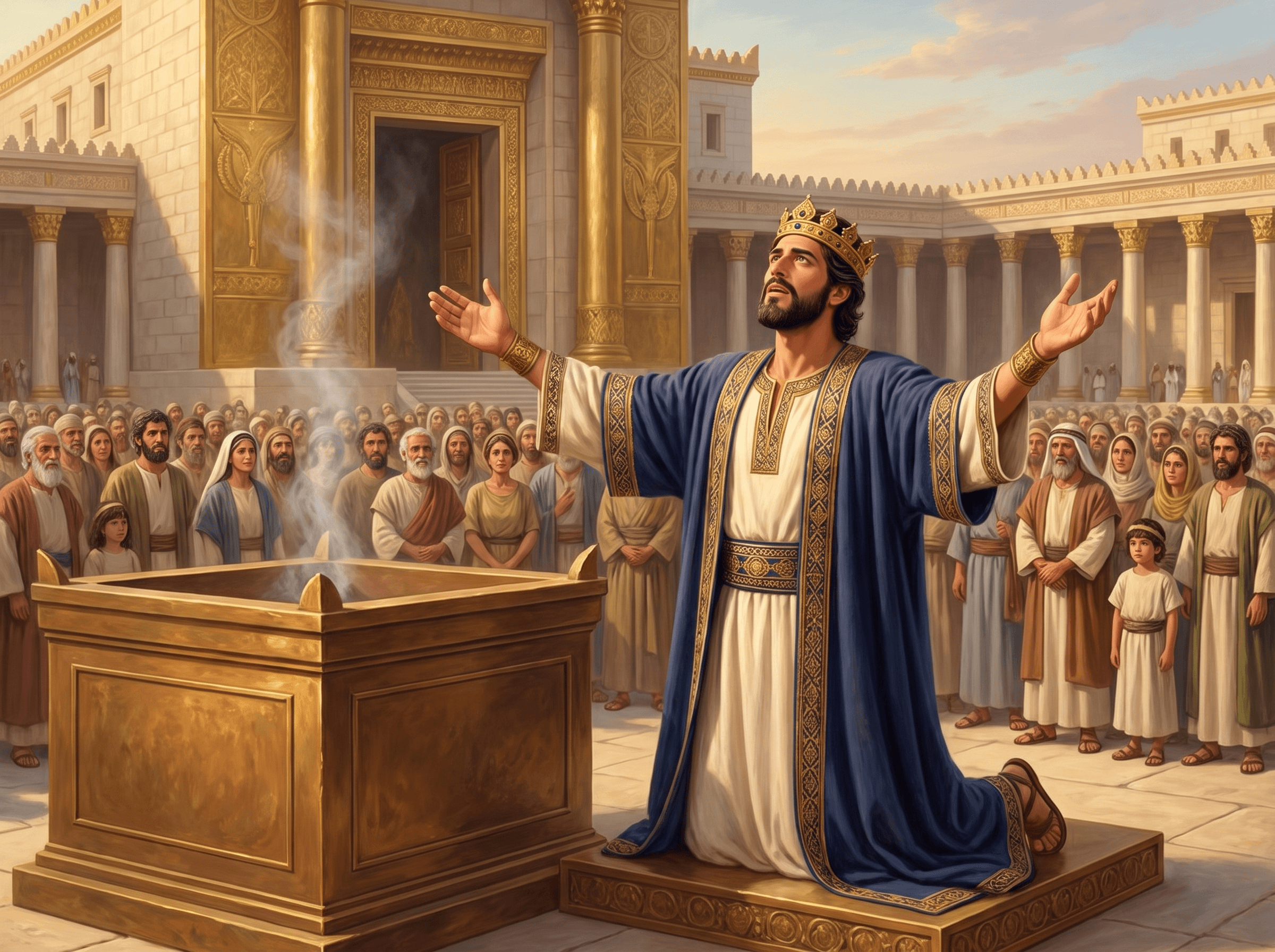
Illustrated scene from Solomon's story: The Prayer of Dedication (2 Chronicles 6:1–42)
Meet the people of the Bible
Follow their lives in order, with illustrated scenes and Bible passages that tell their stories.
 Solomon

Photo: U.S. Army photo by Spc. Samantha R. Ciaramitaro, via DVIDS and Wikimedia Commons. License: Public domain in the United States — U.S. federal-government work. Source. Location: Great Ziggurat, Ur Archaeological City (Tell el-Mukayyar), Dhi Qar Governorate, Iraq. Resized for the web.
Explore the places of the Bible
See where biblical events happened, why each place matters, and what archaeology helps us understand.
Ur
The city Abram's family left to travel toward Canaan.
Get full access with one subscription
Explore the people and places of the Bible. Read summaries of every book, with images and clear explanations covering every chapter. Access all these features and our Bible study tools with one subscription.
See PlansAsk AI about 2 Chronicles 6:17
Ask a question about this verse and get a clear answer, with Bible references you can read for yourself.
Every Bible book, explained chapter by chapter
Explore summaries of every book of the Bible, with images and easy-to-understand explanations covering every chapter.
Keep studying 2 Chronicles 6:17
Related Bible verses
Key themes
Related topics
At a Glance — the Book of 2 Chronicles
- Author
- Traditionally attributed to Ezra
- Written
- Around 430 BC
- Genre
- Historical narrative
- Original Audience
- Post-exilic Jews
Frequently Asked Questions
Quick, clear answers about this verse
What does 2 Chronicles 6:17 mean?
In 2 Chronicles 6:17, the speaker, likely Solomon, is expressing a heartfelt plea to God, asking for the fulfillment of the promise made to David. This moment highlights the importance of God's faithfulness and the significance of His word. It shows a deep trust in God's commitment to His people and reflects a desire for divine promises to be realized in the present.
How can I apply 2 Chronicles 6:17 to my life?
You can apply the message of 2 Chronicles 6:17 by reflecting on the promises made to you, whether by God or others. Actively trust and wait for those promises to unfold in your life. This verse encourages you to remain hopeful and patient, especially during challenging times, reminding you that fulfillment often requires time and faith.
What themes are present in 2 Chronicles 6:17?
The key themes in 2 Chronicles 6:17 include faithfulness, promise, trust, hope, and commitment. This verse emphasizes the importance of believing in God's promises and maintaining a relationship built on trust. It also encourages you to hold onto hope as you wait for the realization of those promises.
Why is it important to remember God's promises?
Remembering God's promises is crucial because it strengthens your faith and provides hope during difficult times. It serves as a reminder of God's faithfulness and commitment to His people. Reflecting on these promises can encourage you to stay engaged in your faith and relationships, fostering patience and trust in the process of fulfillment.
Daily Verse — straight to your inbox
A verse and a 2-sentence plain-English explanation, every morning. Free. Unsubscribe anytime.