Old Testament
2 Chronicles 6:9
Read the Bible in clear, modern English—easy to understand, faithful to the meaning, and written for everyday readers.
However, you will not be the one to build the house; instead, your son, who will come from your own body, will build the house for my name.
Compare translations
Notwithstanding thou shalt not build the house; but thy son which shall come forth out of thy loins, he shall build the house for my name.
What 2 Chronicles 6:9 means
Plain-English insight for readers
In this passage, God is telling King David that he will not be the one to build the temple, a significant place of worship. Instead, God has chosen David's son to take on this important task. This decision highlights the idea that sometimes our dreams and plans may not come to fruition, but that doesn’t mean they are unimportant. David's legacy will continue through his son, who will fulfill this divine purpose. It shows that God has a plan that may extend beyond our own lives. The temple will be a place dedicated to God's name, symbolizing His presence among the people. This moment emphasizes the importance of family and the continuation of faith through generations. It reminds us that our contributions can pave the way for others to achieve great things in their own time. Ultimately, it’s about trusting in a larger plan that may not always align with our immediate desires or expectations, but is nonetheless significant and meaningful in the grand scheme of life. We are all part of a bigger story.
How to apply 2 Chronicles 6:9 to your life
Consider how your actions today can impact future generations. You may not see the full results of your efforts, but trust that they can lead to something greater. Embrace the idea that your role is part of a larger purpose, and support those who will follow in your footsteps. Your influence can inspire others to achieve their dreams and fulfill their destinies. Remember, every contribution matters in the journey of faith and life.
Curated for this public verse page. 2 Chronicles Summary
Learn the Bible through its people and places
Get to know the people in Scripture through illustrated stories, and explore the places where they lived and traveled.
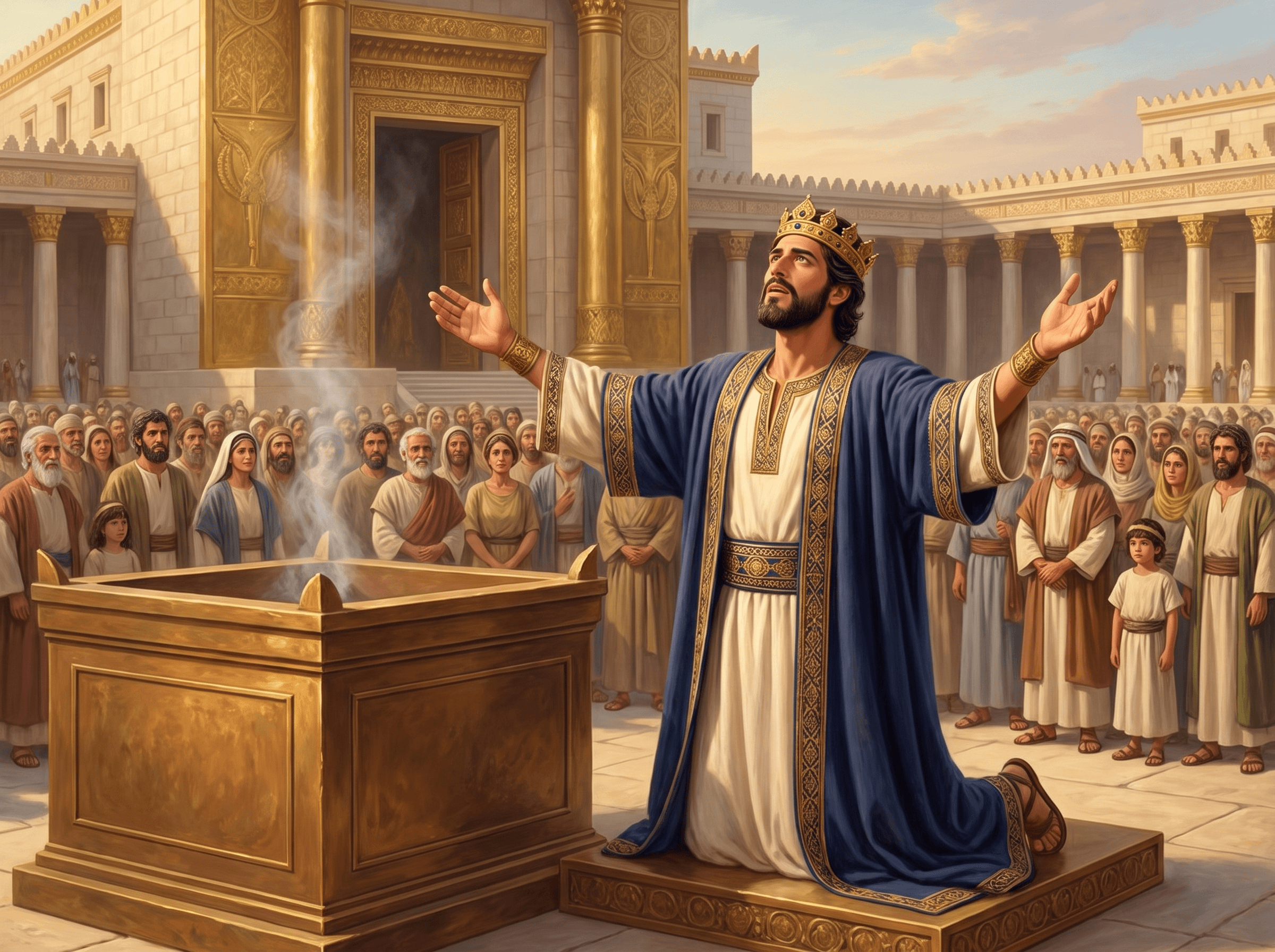
Illustrated scene from Solomon's story: The Prayer of Dedication (2 Chronicles 6:1–42)
Meet the people of the Bible
Follow their lives in order, with illustrated scenes and Bible passages that tell their stories.
 Solomon

Photo: U.S. Army photo by Spc. Samantha R. Ciaramitaro, via DVIDS and Wikimedia Commons. License: Public domain in the United States — U.S. federal-government work. Source. Location: Great Ziggurat, Ur Archaeological City (Tell el-Mukayyar), Dhi Qar Governorate, Iraq. Resized for the web.
Explore the places of the Bible
See where biblical events happened, why each place matters, and what archaeology helps us understand.
Ur
The city Abram's family left to travel toward Canaan.
Get full access with one subscription
Explore the people and places of the Bible. Read summaries of every book, with images and clear explanations covering every chapter. Access all these features and our Bible study tools with one subscription.
See PlansAsk AI about 2 Chronicles 6:9
Ask a question about this verse and get a clear answer, with Bible references you can read for yourself.
Every Bible book, explained chapter by chapter
Explore summaries of every book of the Bible, with images and easy-to-understand explanations covering every chapter.
Keep studying 2 Chronicles 6:9
Related Bible verses
Key themes
Related topics
At a Glance — the Book of 2 Chronicles
- Author
- Traditionally attributed to Ezra
- Written
- Around 430 BC
- Genre
- Historical narrative
- Original Audience
- Post-exilic Jews
Frequently Asked Questions
Quick, clear answers about this verse
What does 2 Chronicles 6:9 mean?
In 2 Chronicles 6:9, God informs King David that he will not build the temple, but his son will. This signifies that God's plans often extend beyond our own lives and that our legacies can continue through our children.
What is the significance of the temple in 2 Chronicles 6:9?
The temple represents a significant place of worship dedicated to God. It symbolizes His presence among the people and highlights the importance of faith and worship in the community.
Why can't David build the temple according to 2 Chronicles 6:9?
God tells David he cannot build the temple because it is meant for his son to fulfill this divine purpose. This decision emphasizes the idea that sometimes our dreams may not come to fruition for reasons beyond our understanding.
What does 'he shall build the house for my name' mean in 2 Chronicles 6:9?
This phrase indicates that the temple will be constructed as a place dedicated to God's name, signifying His presence and glory among His people.
Daily Verse — straight to your inbox
A verse and a 2-sentence plain-English explanation, every morning. Free. Unsubscribe anytime.