Old Testament
2 Chronicles 9:21
Read the Bible in clear, modern English—easy to understand, faithful to the meaning, and written for everyday readers.
The king had ships that sailed to Tarshish with Huram's crew. Once every 3 years, the Tarshish fleet would return carrying gold, silver, ivory, apes, and peacocks.
Compare translations
For the king’s ships went to Tarshish with the servants of Huram: every three years once came the ships of Tarshish bringing gold, and silver, ivory, and apes, and peacocks.
What 2 Chronicles 9:21 means
Plain-English insight for readers
In this passage, we learn about the impressive trade operations of King Solomon. He had a fleet of ships that traveled to a distant place called Tarshish, which was known for its wealth. Every three years, these ships returned, bringing back valuable treasures like gold, silver, and exotic items such as ivory, apes, and peacocks. This trade not only enriched Solomon's kingdom but also showcased his power and influence. The variety of goods indicates a thriving economy and a connection to far-off lands. Solomon's ability to engage in such trade reflects his wisdom and the prosperity of his reign. It also highlights the importance of trade in building relationships and expanding one's resources. The treasures brought back were not just material wealth; they symbolized the success and grandeur of his rule, making his kingdom renowned across the region. This passage illustrates how trade can lead to abundance and the significance of strategic partnerships in achieving greatness.
How to apply 2 Chronicles 9:21 to your life
Consider how you can cultivate relationships that lead to mutual benefit in your life. Just as Solomon's trade brought wealth, your connections can open doors to new opportunities. Focus on building partnerships that enrich both you and those around you, fostering a spirit of collaboration and growth. Remember, success often comes from working together with others toward common goals. Be proactive in seeking out these connections.
Curated for this public verse page. 2 Chronicles Summary
Learn the Bible through its people and places
Get to know the people in Scripture through illustrated stories, and explore the places where they lived and traveled.
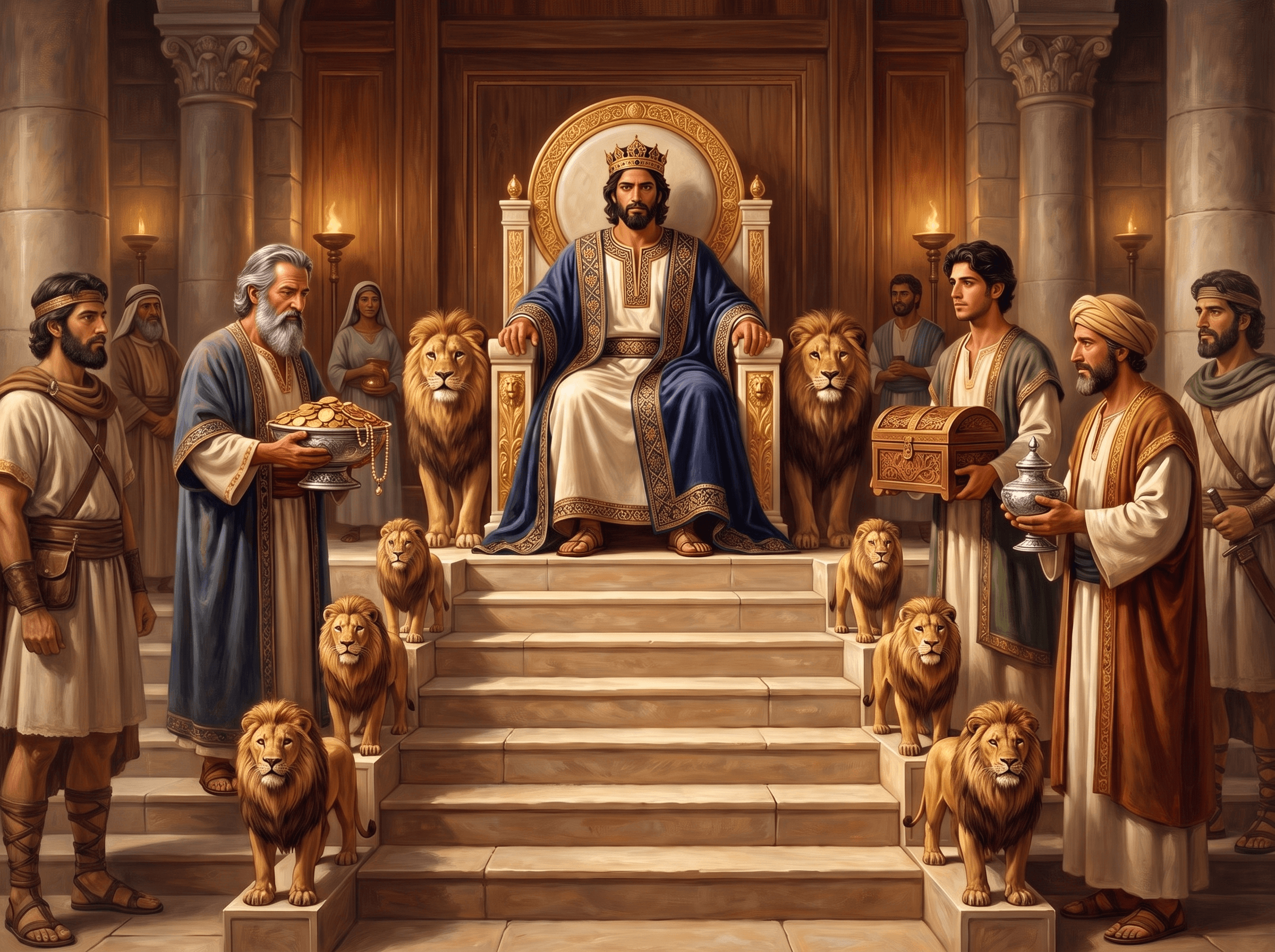
Illustrated scene from Solomon's story: Solomon's Riches (2 Chronicles 9:13–28)
Meet the people of the Bible
Follow their lives in order, with illustrated scenes and Bible passages that tell their stories.
 Solomon

Photo: Diego Delso, via Wikimedia Commons. License: CC BY-SA 3.0. Source. Location: Tell es-Sultan, Jericho, West Bank. Resized for the web.
Explore the places of the Bible
See where biblical events happened, why each place matters, and what archaeology helps us understand.
Jericho
The city of palm trees, whose walls fell in Joshua's day.
Get full access with one subscription
Explore the people and places of the Bible. Read summaries of every book, with images and clear explanations covering every chapter. Access all these features and our Bible study tools with one subscription.
See PlansAsk AI about 2 Chronicles 9:21
Ask a question about this verse and get a clear answer, with Bible references you can read for yourself.
Every Bible book, explained chapter by chapter
Explore summaries of every book of the Bible, with images and easy-to-understand explanations covering every chapter.
Keep studying 2 Chronicles 9:21
Related Bible verses
Key themes
Related topics
At a Glance — the Book of 2 Chronicles
- Author
- Traditionally attributed to Ezra
- Written
- Around 430 BC
- Genre
- Historical narrative
- Original Audience
- Post-exilic Jews
Frequently Asked Questions
Quick, clear answers about this verse
What does 2 Chronicles 9:21 teach about King Solomon's trade?
2 Chronicles 9:21 highlights King Solomon's extensive trade operations, showcasing his wealth and influence. The verse describes how Solomon's ships traveled to Tarshish every three years, returning with valuable goods like gold, silver, ivory, apes, and peacocks. This trade not only enriched his kingdom but also demonstrated his strategic connections with distant lands, emphasizing the importance of trade in building a prosperous and powerful reign.
Why is Tarshish significant in the context of this verse?
Tarshish is significant because it was known as a wealthy trading hub during Solomon's time. The mention of ships sailing to Tarshish indicates that Solomon engaged in long-distance trade, acquiring valuable resources that contributed to his kingdom's prosperity. The goods brought back from Tarshish, including exotic items, reflect the extent of Solomon's influence and the thriving economy of his reign.
What can we learn about partnerships from 2 Chronicles 9:21?
From 2 Chronicles 9:21, we learn that strategic partnerships can lead to mutual benefits and success. Just as Solomon collaborated with Huram's crew for trade, we can cultivate relationships that open doors to new opportunities in our own lives. Building partnerships based on trust and shared goals can enhance our resources and lead to greater achievements, illustrating the power of collaboration.
How does this verse relate to the concept of prosperity?
This verse illustrates that prosperity often comes from wise decisions and strategic actions, such as trade. Solomon's ability to engage in trade with Tarshish brought immense wealth and exotic goods to his kingdom, symbolizing not just material success but also the flourishing of his reign. It serves as a reminder that prosperity can be achieved through effective planning and leveraging connections.
Daily Verse — straight to your inbox
A verse and a 2-sentence plain-English explanation, every morning. Free. Unsubscribe anytime.