Old Testament
2 Chronicles 9:25
Read the Bible in clear, modern English—easy to understand, faithful to the meaning, and written for everyday readers.
Solomon had 4,000 stalls for his horses and chariots, along with 12,000 horsemen. He stationed them in the chariot cities and with him in Jerusalem.
Compare translations
And Solomon had four thousand stalls for horses and chariots, and twelve thousand horsemen; whom he bestowed in the chariot cities, and with the king at Jerusalem.
What 2 Chronicles 9:25 means
Plain-English insight for readers
In this passage, we learn about King Solomon's impressive military organization. He had a vast number of resources, including 4,000 stalls for horses and chariots, and 12,000 horsemen. This shows his power and the importance he placed on having a strong army. Solomon strategically stationed his horsemen in various chariot cities and also kept some close to him in Jerusalem. This arrangement not only ensured that he had a ready defense but also demonstrated his ability to manage a large kingdom effectively. The presence of such a military force indicates that Solomon was prepared for any threats and was serious about maintaining peace and order. His leadership style involved careful planning and resource allocation, which contributed to the stability of his reign. Overall, this verse highlights the significance of preparation and organization in leadership, reflecting Solomon's wisdom and foresight in governing his people and territory well. It serves as a reminder of the importance of being ready for challenges in our own lives.
How to apply 2 Chronicles 9:25 to your life
We can learn from Solomon's example by being prepared in our own lives. Whether it's in our careers, relationships, or personal goals, having a plan and the right resources can help us face challenges. Take time to organize your priorities and ensure you have support when needed. Preparation can lead to greater success and peace of mind in daily life. Remember, being proactive is key to overcoming obstacles effectively and confidently.
Curated for this public verse page. 2 Chronicles Summary
Learn the Bible through its people and places
Get to know the people in Scripture through illustrated stories, and explore the places where they lived and traveled.
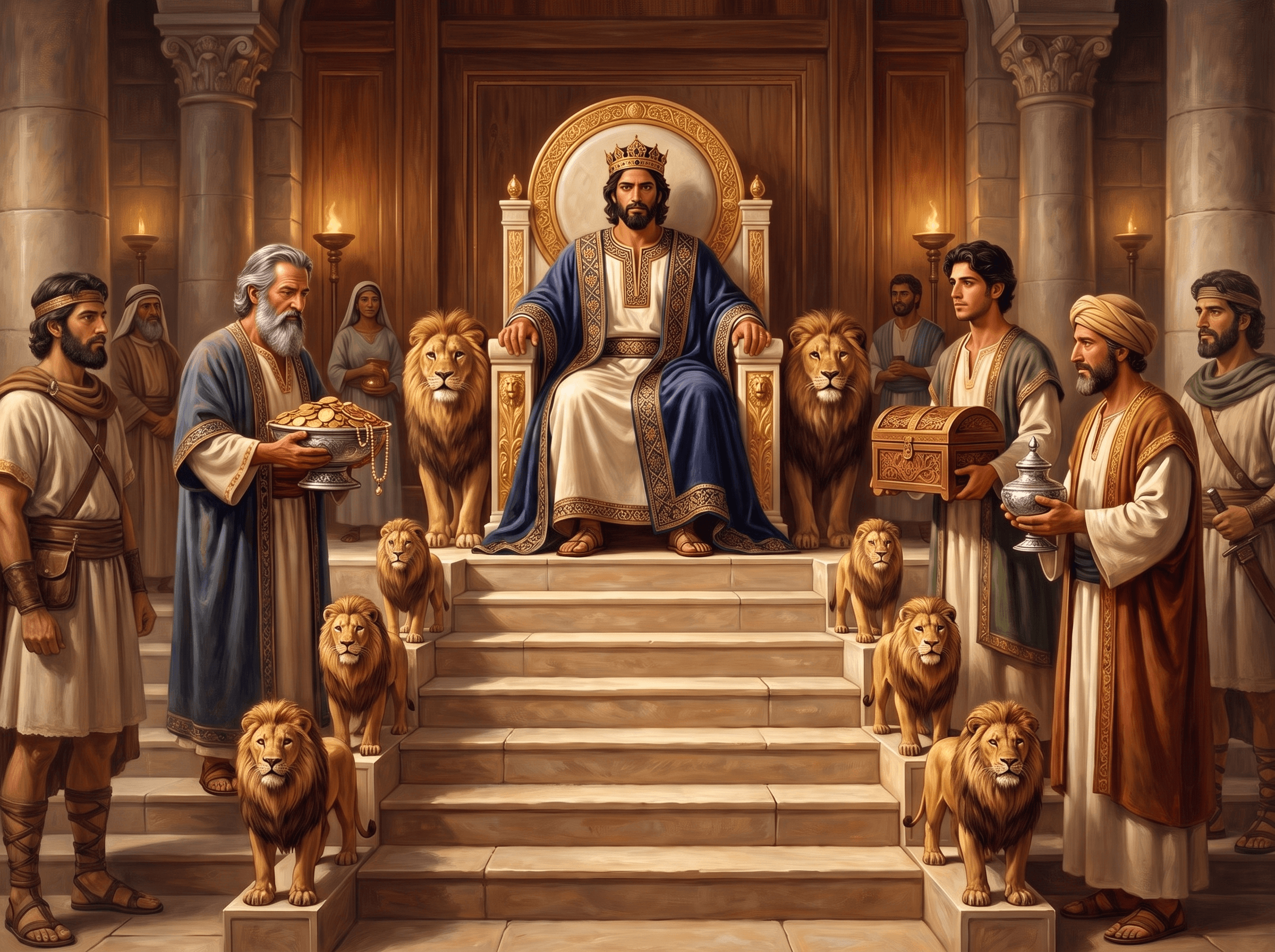
Illustrated scene from Solomon's story: Solomon's Riches (2 Chronicles 9:13–28)
Meet the people of the Bible
Follow their lives in order, with illustrated scenes and Bible passages that tell their stories.
 Solomon

Photo: Diego Delso, via Wikimedia Commons. License: CC BY-SA 3.0. Source. Location: Tell es-Sultan, Jericho, West Bank. Resized for the web.
Explore the places of the Bible
See where biblical events happened, why each place matters, and what archaeology helps us understand.
Jericho
The city of palm trees, whose walls fell in Joshua's day.
Get full access with one subscription
Explore the people and places of the Bible. Read summaries of every book, with images and clear explanations covering every chapter. Access all these features and our Bible study tools with one subscription.
See PlansAsk AI about 2 Chronicles 9:25
Ask a question about this verse and get a clear answer, with Bible references you can read for yourself.
Every Bible book, explained chapter by chapter
Explore summaries of every book of the Bible, with images and easy-to-understand explanations covering every chapter.
Keep studying 2 Chronicles 9:25
Related Bible verses
Key themes
Related topics
At a Glance — the Book of 2 Chronicles
- Author
- Traditionally attributed to Ezra
- Written
- Around 430 BC
- Genre
- Historical narrative
- Original Audience
- Post-exilic Jews
Frequently Asked Questions
Quick, clear answers about this verse
What does 2 Chronicles 9:25 tell us about Solomon's military strength?
2 Chronicles 9:25 reveals that King Solomon had a significant military organization, boasting 4,000 stalls for horses and chariots and 12,000 horsemen. This indicates his commitment to maintaining a strong defense and highlights the importance he placed on military preparedness during his reign. Solomon's ability to manage such resources effectively reflects his wisdom and strategic planning.
How can we apply the lessons from Solomon's organization in our lives?
The example of Solomon's organization can inspire us to be proactive in our own lives. By planning ahead and ensuring we have the necessary resources, whether in our careers or personal goals, we can better face challenges. Taking time to organize our priorities and seek support when needed can lead to greater success and peace of mind, demonstrating the value of preparedness.
What does the term 'chariot cities' mean in this context?
In 2 Chronicles 9:25, 'chariot cities' refers to specific locations where Solomon stationed his horsemen and kept his military resources. These cities were likely fortified and strategically chosen to enhance his military readiness. The term emphasizes the importance of having a well-distributed military presence to ensure quick response capabilities in times of conflict.
Why is military strength significant in Solomon's reign?
Military strength during Solomon's reign was crucial for maintaining peace and order in his kingdom. A strong army not only deterred potential threats but also reinforced Solomon's authority as a ruler. His extensive military organization, as described in 2 Chronicles 9:25, showcases his understanding of the need for security and stability, which were essential for the prosperity of his people.
Daily Verse — straight to your inbox
A verse and a 2-sentence plain-English explanation, every morning. Free. Unsubscribe anytime.