New Testament
Acts 19:26
Read the Bible in clear, modern English—easy to understand, faithful to the meaning, and written for everyday readers.
And you can see and hear that not only in Ephesus but throughout nearly the entire province of Asia, this Paul has persuaded and turned away a large number of people, saying that gods made with hands are not gods at all.
Compare translations
Moreover ye see and hear, that not alone at Ephesus, but almost throughout all Asia, this Paul hath persuaded and turned away much people, saying that they be no gods, which are made with hands:
What Acts 19:26 means
Plain-English insight for readers
In this passage, we see the impact of Paul's message in Ephesus and beyond. He has been convincing many people that the idols they worship, crafted by human hands, are not true gods. This idea challenges the beliefs of those who rely on these physical representations for their spirituality. Paul's teachings are spreading throughout Asia, causing a significant shift in how people view their faith. The message is clear: true divinity cannot be contained in objects made by humans. This revelation is stirring up both interest and conflict, as it threatens the established religious practices. The transformation in people's beliefs highlights the power of truth and the importance of questioning what we accept as real. It invites us to reflect on what we hold sacred and whether it truly aligns with deeper truths about existence and spirituality. Paul's influence is a reminder that change is possible when we embrace new understandings of faith and divinity, leading to a more profound connection with the divine.
How to apply Acts 19:26 to your life
Consider what you hold as sacred in your life. Are there beliefs or practices that may not align with deeper truths? Embrace the opportunity to explore and question your faith. This journey can lead to a more authentic and meaningful spiritual experience. Seek out what truly resonates with your understanding of the divine and your purpose in life.
Curated for this public verse page. Acts Summary
Learn the Bible through its people and places
Get to know the people in Scripture through illustrated stories, and explore the places where they lived and traveled.
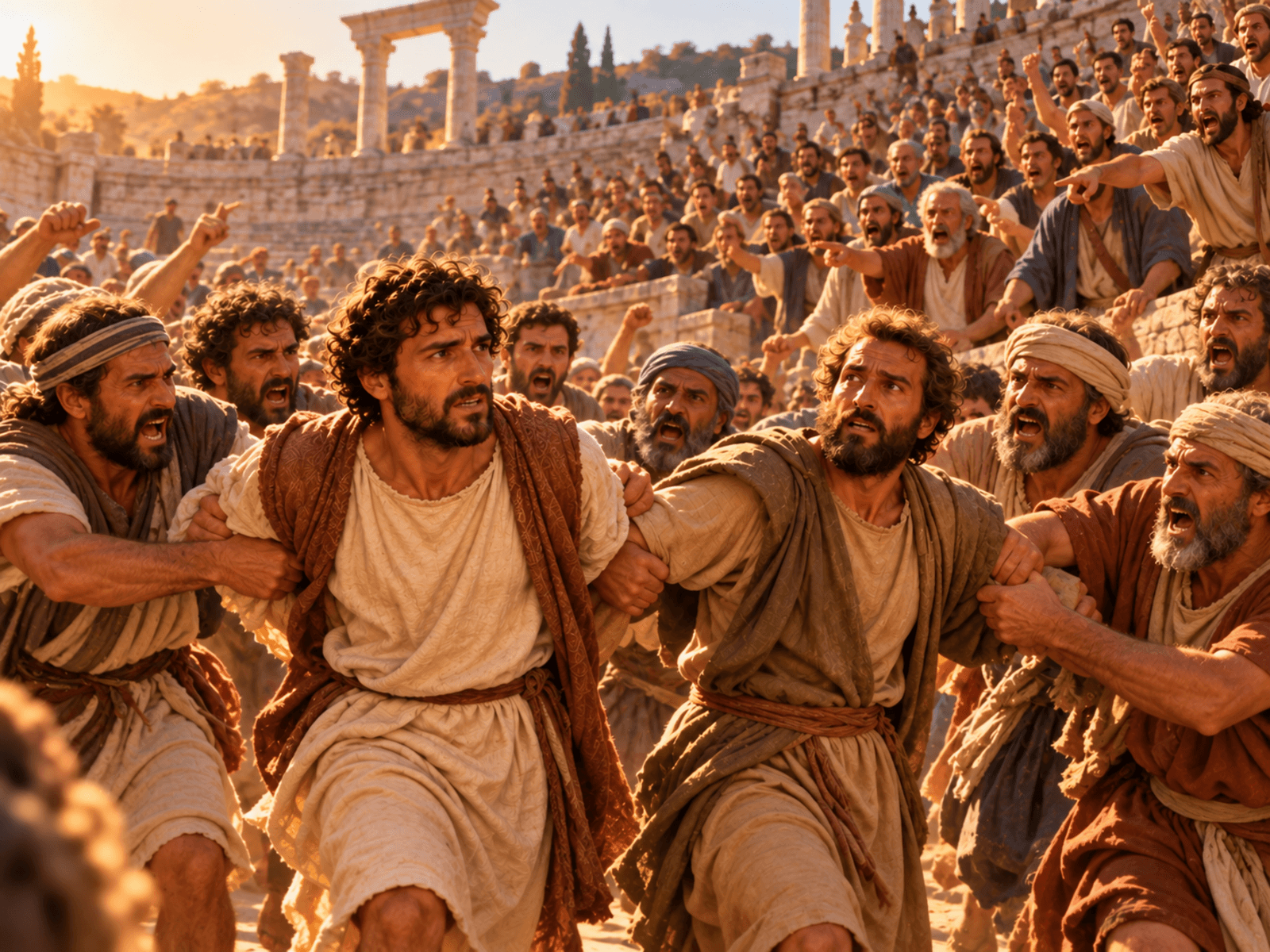
Illustrated scene from Paul's story: “Great Is Artemis” (Acts 19:23–41)
Meet the people of the Bible
Follow their lives in order, with illustrated scenes and Bible passages that tell their stories.
 Paul

Photo: Gary Todd (Gary Lee Todd, Ph.D.), via Wikimedia Commons. License: CC0 1.0 Universal Public Domain Dedication. Source. Location: Southern end of the Temple Mount, Jerusalem Old City. Resized for the web.
Explore the places of the Bible
See where biblical events happened, why each place matters, and what archaeology helps us understand.
Jerusalem
David's capital, the city of the temple, and the place where Jesus died and rose again.
Get full access with one subscription
Explore the people and places of the Bible. Read summaries of every book, with images and clear explanations covering every chapter. Access all these features and our Bible study tools with one subscription.
See PlansAsk AI about Acts 19:26
Ask a question about this verse and get a clear answer, with Bible references you can read for yourself.
Every Bible book, explained chapter by chapter
Explore summaries of every book of the Bible, with images and easy-to-understand explanations covering every chapter.
Keep studying Acts 19:26
Related Bible verses
Related topics
At a Glance — the Book of Acts
- Author
- Luke the physician
- Written
- Around AD 62
- Genre
- Historical narrative
- Original Audience
- Gentile Christians (addressed to Theophilus)
Frequently Asked Questions
Quick, clear answers about this verse
What does Acts 19:26 say about Paul's influence in Ephesus?
Acts 19:26 highlights Paul's significant impact in Ephesus and the surrounding region of Asia. It notes that he has persuaded many people to abandon their worship of idols, asserting that these handmade gods are not true deities. This shift in belief challenges the established religious practices and indicates a growing movement towards understanding a more profound spiritual truth.
How does Acts 19:26 relate to the concept of idolatry?
In Acts 19:26, Paul’s message directly confronts idolatry by declaring that gods made by human hands are not gods at all. This challenges the common practice of idol worship, urging individuals to reconsider what they deem sacred. The verse serves as a reminder that true divinity transcends physical objects and cannot be confined to man-made representations.
What can we learn about faith from Acts 19:26?
Acts 19:26 teaches us about the transformative power of faith. It illustrates how new understandings can lead to significant changes in belief systems. Paul's ability to persuade many to rethink their worship practices emphasizes the importance of questioning and exploring one's faith, encouraging a deeper connection with what is truly divine.
Why is Paul's message in Acts 19:26 considered controversial?
Paul's message in Acts 19:26 is controversial because it directly challenges the established religious norms of the time. By declaring that idols are not true gods, he threatens the livelihoods of those who profit from idol worship and the cultural identity tied to these practices. This creates tension and conflict as people grapple with the implications of his teachings.
Daily Verse — straight to your inbox
A verse and a 2-sentence plain-English explanation, every morning. Free. Unsubscribe anytime.