New Testament
Acts 2:29
Read the Bible in clear, modern English—easy to understand, faithful to the meaning, and written for everyday readers.
"Brothers, let me speak plainly about the patriarch David: he died, he was buried, and his tomb is still here among us to this day.
Compare translations
Men and brethren, let me freely speak unto you of the patriarch David, that he is both dead and buried, and his sepulchre is with us unto this day.
What Acts 2:29 means
Plain-English insight for readers
In this passage, Peter is addressing the crowd, speaking about King David, a significant figure in their history. He emphasizes that David, despite his greatness, is no longer alive. David died and was buried, and his tomb remains a physical reminder of his mortality. This statement serves to highlight the contrast between David's earthly life and the message Peter is about to share about Jesus. David was revered, but he could not escape death. By mentioning David's tomb, Peter is grounding his message in reality, showing that even the greatest leaders face the same fate as everyone else. This sets the stage for Peter to explain how Jesus, who was also from David's lineage, overcame death, offering hope and a new beginning. The focus is on the importance of recognizing our human limitations while also pointing to the promise of life beyond death through faith in Jesus. Peter's words remind us that while we honor our past, we must also look forward to the future with hope.
How to apply Acts 2:29 to your life
Reflect on the legacy of those who have come before you, like David. Acknowledge their contributions but remember that life is fleeting. Use this awareness to inspire you to live fully and purposefully. Embrace the hope that comes from faith in something greater than ourselves, like the promise of eternal life through Jesus.
Curated for this public verse page. Acts Summary
Learn the Bible through its people and places
Get to know the people in Scripture through illustrated stories, and explore the places where they lived and traveled.
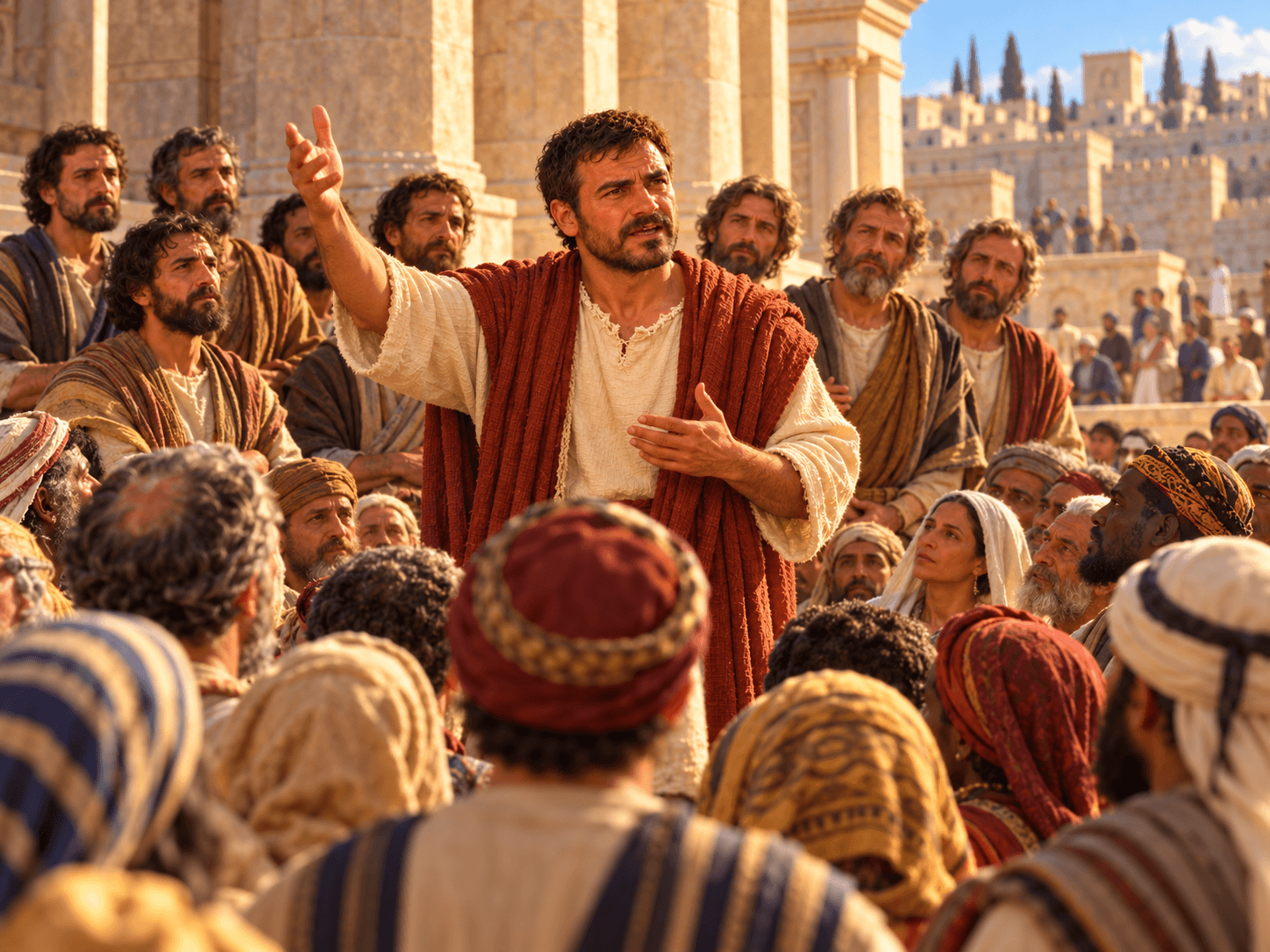
Illustrated scene from Peter's story: Peter Preaches at Pentecost (Acts 2:14–41)
Meet the people of the Bible
Follow their lives in order, with illustrated scenes and Bible passages that tell their stories.
 Peter

Photo: Gary Todd (Gary Lee Todd, Ph.D.), via Wikimedia Commons. License: CC0 1.0 Universal Public Domain Dedication. Source. Location: Southern end of the Temple Mount, Jerusalem Old City. Resized for the web.
Explore the places of the Bible
See where biblical events happened, why each place matters, and what archaeology helps us understand.
Jerusalem
David's capital, the city of the temple, and the place where Jesus died and rose again.
Get full access with one subscription
Explore the people and places of the Bible. Read summaries of every book, with images and clear explanations covering every chapter. Access all these features and our Bible study tools with one subscription.
See PlansAsk AI about Acts 2:29
Ask a question about this verse and get a clear answer, with Bible references you can read for yourself.
Every Bible book, explained chapter by chapter
Explore summaries of every book of the Bible, with images and easy-to-understand explanations covering every chapter.
Keep studying Acts 2:29
Related Bible verses
Key themes
Related topics
At a Glance — the Book of Acts
- Author
- Luke the physician
- Written
- Around AD 62
- Genre
- Historical narrative
- Original Audience
- Gentile Christians (addressed to Theophilus)
Frequently Asked Questions
Quick, clear answers about this verse
What does Acts 2:29 mean?
Acts 2:29 means that Peter is reminding the crowd that King David, despite being a revered figure, is dead and buried. This emphasizes the reality of human mortality and sets the stage for Peter to discuss Jesus' resurrection.
What is the significance of David's tomb in Acts 2:29?
David's tomb in Acts 2:29 serves as a physical reminder of his mortality and the inevitability of death. By mentioning it, Peter contrasts David's earthly life with the message of hope he is about to share about Jesus overcoming death.
How does Acts 2:29 relate to the theme of hope in Jesus?
Acts 2:29 relates to the theme of hope in Jesus by contrasting David's death with the promise of eternal life through Jesus. Peter uses David's mortality to highlight the significance of Jesus' resurrection as a source of hope for believers.
What can we learn from Acts 2:29?
From Acts 2:29, we learn about the importance of recognizing our human limitations and mortality. It encourages us to reflect on the legacies of those before us while also looking forward to the hope of life after death through faith in Jesus.
Daily Verse — straight to your inbox
A verse and a 2-sentence plain-English explanation, every morning. Free. Unsubscribe anytime.