New Testament
Acts 26:11
Read the Bible in clear, modern English—easy to understand, faithful to the meaning, and written for everyday readers.
I punished them often in every synagogue and tried to force them to blaspheme. In my extreme rage against them, I persecuted them even to foreign cities.
Compare translations
And I punished them oft in every synagogue, and compelled them to blaspheme; and being exceedingly mad against them, I persecuted them even unto strange cities.
What Acts 26:11 means
Plain-English insight for readers
In this passage, the speaker reflects on their past actions, revealing a time when they were deeply hostile towards a group of people. They describe how they frequently punished individuals in synagogues, trying to force them to speak against their beliefs. This intense anger drove them to pursue these individuals even into distant cities. The speaker's actions were fueled by a misguided sense of righteousness, believing they were doing the right thing. However, this behavior highlights the dangers of allowing anger and hatred to dictate one's actions. It serves as a reminder of how easily one can become consumed by negative emotions, leading to harmful choices. The speaker's transformation later in life emphasizes the possibility of change and redemption, showing that even those who have acted violently can find a new path. This story encourages us to reflect on our own actions and the motivations behind them, urging us to seek understanding and compassion instead of anger.
How to apply Acts 26:11 to your life
Consider how anger can cloud your judgment and lead to harmful actions. Reflect on situations where you may have acted out of rage rather than understanding. Strive to approach conflicts with compassion and seek to understand others' perspectives, fostering a more peaceful environment in your life and community. Remember, change is always possible, no matter your past actions.
Curated for this public verse page. Acts Summary
Learn the Bible through its people and places
Get to know the people in Scripture through illustrated stories, and explore the places where they lived and traveled.
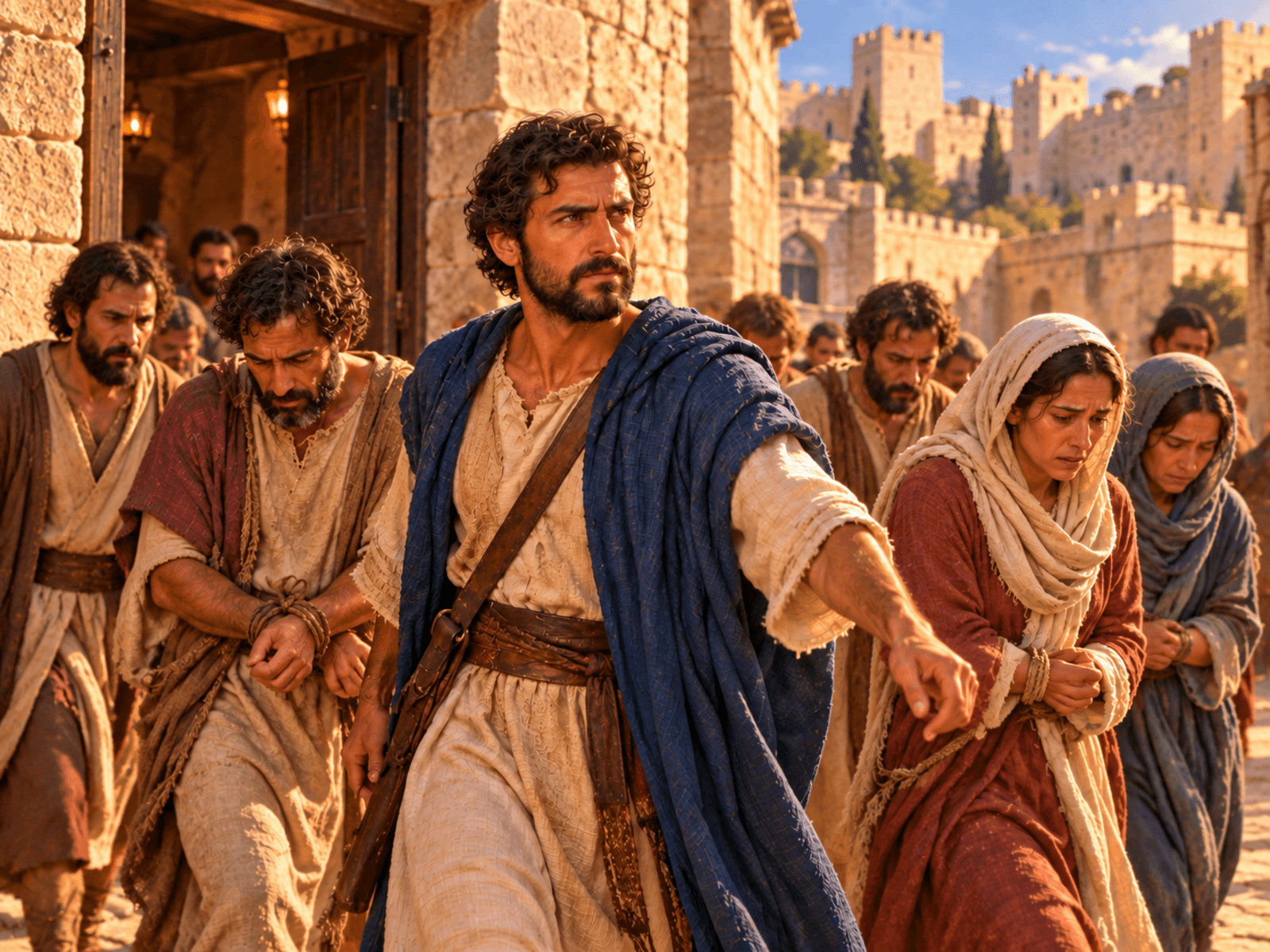
Illustrated scene from Paul's story: Saul Persecutes the Church (Acts 26:9–11)
Meet the people of the Bible
Follow their lives in order, with illustrated scenes and Bible passages that tell their stories.
 Paul

Photo: Photochrom print, Library of Congress Prints and Photographs Division (LCCN 2002725045). License: Public domain in the United States; Library of Congress states no known restrictions on publication. Source. Location: Nazareth, Israel; print preserved by the Library of Congress. Resized for the web.
Explore the places of the Bible
See where biblical events happened, why each place matters, and what archaeology helps us understand.
Nazareth
The small town in Galilee where Jesus grew up.
Get full access with one subscription
Explore the people and places of the Bible. Read summaries of every book, with images and clear explanations covering every chapter. Access all these features and our Bible study tools with one subscription.
See PlansAsk AI about Acts 26:11
Ask a question about this verse and get a clear answer, with Bible references you can read for yourself.
Every Bible book, explained chapter by chapter
Explore summaries of every book of the Bible, with images and easy-to-understand explanations covering every chapter.
Keep studying Acts 26:11
Related Bible verses
Key themes
Related topics
At a Glance — the Book of Acts
- Author
- Luke the physician
- Written
- Around AD 62
- Genre
- Historical narrative
- Original Audience
- Gentile Christians (addressed to Theophilus)
Frequently Asked Questions
Quick, clear answers about this verse
What does Acts 26:11 mean?
Acts 26:11 describes the speaker's past actions of punishing and persecuting individuals for their beliefs. It highlights the intense anger that drove these actions and serves as a reflection on the dangers of allowing hatred to dictate one's behavior.
What is the significance of blasphemy in Acts 26:11?
In Acts 26:11, blasphemy refers to the act of speaking against one's beliefs, which the speaker tried to force upon others. This reflects the extreme measures taken out of misguided righteousness and the lengths to which individuals may go when consumed by anger.
What does the speaker's transformation in Acts 26:11 indicate?
The speaker's reflection on their past actions in Acts 26:11 indicates a significant transformation, suggesting that change and redemption are possible. It emphasizes that even those who have acted violently can find a new path and learn from their past mistakes.
How does Acts 26:11 relate to the theme of anger?
Acts 26:11 illustrates how anger can lead to harmful actions, as the speaker recounts their extreme rage that drove them to persecute others. This serves as a cautionary tale about the consequences of allowing negative emotions to influence one's decisions.
Daily Verse — straight to your inbox
A verse and a 2-sentence plain-English explanation, every morning. Free. Unsubscribe anytime.