Old Testament
Daniel 2:9
Read the Bible in clear, modern English—easy to understand, faithful to the meaning, and written for everyday readers.
But if you do not make the dream known to me, there is only one decree for you: for you have prepared lying and corrupt words to speak before me until the time changes. Therefore, tell me the dream, and I will know that you can show me its interpretation.
Compare translations
But if ye will not make known unto me the dream, there is but one decree for you: for ye have prepared lying and corrupt words to speak before me, till the time be changed: therefore tell me the dream, and I shall know that ye can shew me the interpretation thereof.
What Daniel 2:9 means
Plain-English insight for readers
In this passage, King Nebuchadnezzar is demanding that his wise men reveal not only the interpretation of his troubling dream but also the dream itself. He believes that if they cannot do this, it shows they are deceitful and untrustworthy. The king is frustrated and feels threatened by their inability to provide answers. He warns them that if they fail, they will face severe consequences. This moment highlights the pressure and fear that come with leadership and the expectations placed on those in power. It also emphasizes the importance of honesty and integrity in communication. The king's challenge is a test of their abilities and a reflection of his own desperation for clarity. Ultimately, it sets the stage for a significant revelation that will unfold in the story, showcasing the power of divine insight over human wisdom. Nebuchadnezzar's demand reveals his deep need for truth in a world filled with uncertainty and deception, making this moment pivotal in the narrative.
How to apply Daniel 2:9 to your life
In our lives, we often face situations where honesty is crucial. Like Nebuchadnezzar, we may feel pressure to find answers quickly. It's important to seek truth and integrity in our relationships and decisions. When faced with uncertainty, remember that clarity often comes from open communication and trust. Don't shy away from asking for what you need to know to move forward confidently.
Curated for this public verse page. Daniel Summary
Learn the Bible through its people and places
Get to know the people in Scripture through illustrated stories, and explore the places where they lived and traveled.
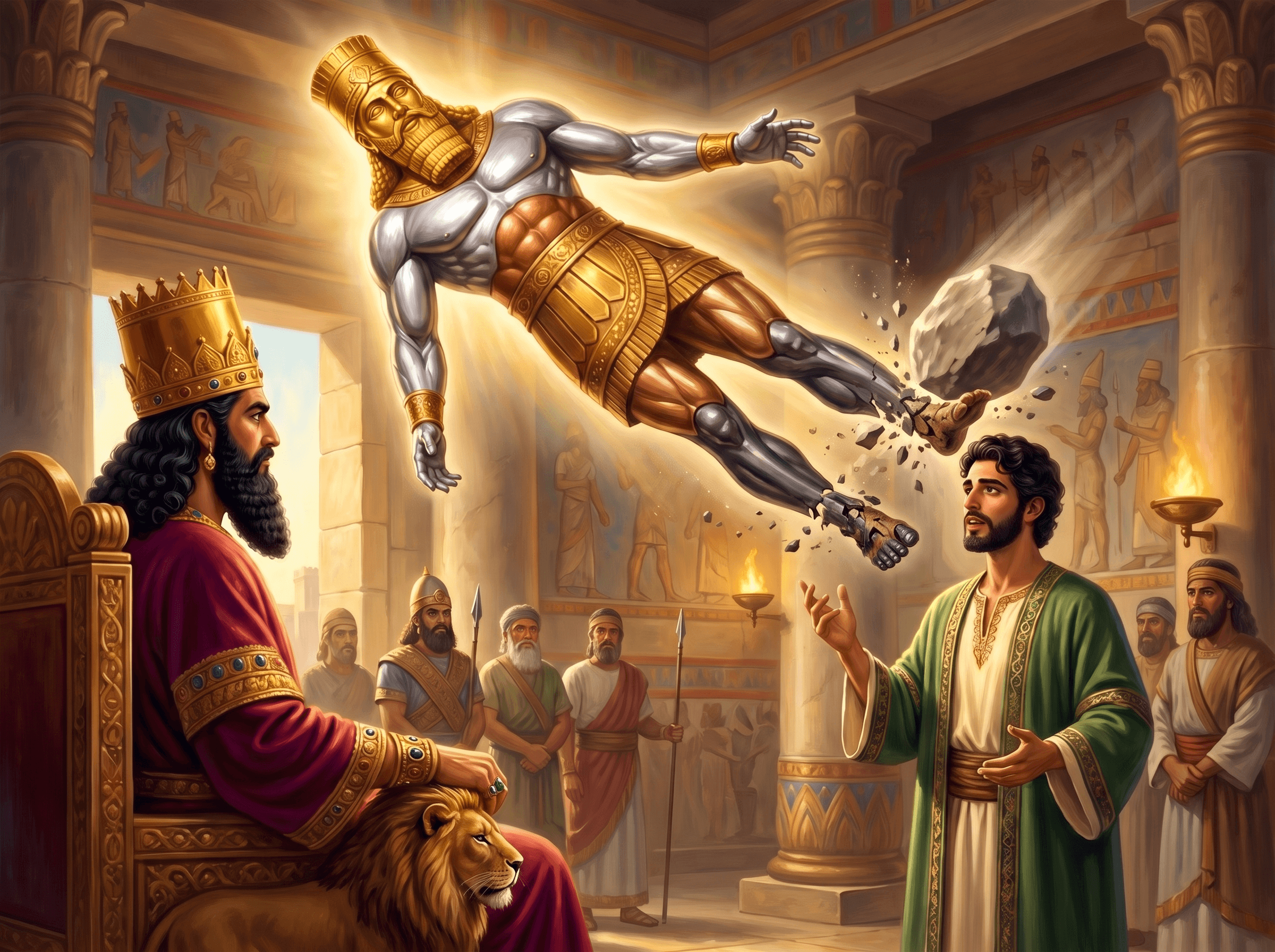
Illustrated scene from Daniel's story: The King's Dream (Daniel 2:1–49)
Meet the people of the Bible
Follow their lives in order, with illustrated scenes and Bible passages that tell their stories.
 Daniel

Photo: Diego Delso, via Wikimedia Commons. License: CC BY-SA 3.0. Source. Location: Tell es-Sultan, Jericho, West Bank. Resized for the web.
Explore the places of the Bible
See where biblical events happened, why each place matters, and what archaeology helps us understand.
Jericho
The city of palm trees, whose walls fell in Joshua's day.
Get full access with one subscription
Explore the people and places of the Bible. Read summaries of every book, with images and clear explanations covering every chapter. Access all these features and our Bible study tools with one subscription.
See PlansAsk AI about Daniel 2:9
Ask a question about this verse and get a clear answer, with Bible references you can read for yourself.
Every Bible book, explained chapter by chapter
Explore summaries of every book of the Bible, with images and easy-to-understand explanations covering every chapter.
Keep studying Daniel 2:9
Related Bible verses
Related topics
At a Glance — the Book of Daniel
- Author
- Daniel the prophet
- Written
- Around 530 BC
- Genre
- Prophecy and apocalyptic
- Original Audience
- Exiled Jews and future generations
Frequently Asked Questions
Quick, clear answers about this verse
What does Daniel 2:9 reveal about King Nebuchadnezzar's character?
Daniel 2:9 shows King Nebuchadnezzar as a ruler who values truth and is deeply frustrated by deceit. His demand for both the dream and its interpretation reflects his desperation for clarity and his distrust of his advisors. This moment highlights his authoritative nature and the high stakes of leadership, where failure to provide answers can lead to severe consequences.
Why did Nebuchadnezzar demand to know his dream?
Nebuchadnezzar demanded to know his dream because he believed that if his wise men could not reveal the dream itself, it indicated they were lying and untrustworthy. By asking for the dream, he aimed to test their abilities and ensure they were genuinely capable of interpreting it. This demand underscores the king's need for certainty in a time of personal turmoil.
What lessons can we learn from Nebuchadnezzar's challenge to his wise men?
Nebuchadnezzar's challenge teaches us the importance of honesty and integrity in communication. It also illustrates the pressure leaders face when seeking answers. In our own lives, we can learn to prioritize open communication and trust, especially when navigating uncertainty. Seeking the truth, even in difficult situations, is essential for making informed decisions.
How does Daniel 2:9 relate to the theme of deception?
In Daniel 2:9, the theme of deception is central as Nebuchadnezzar accuses his wise men of preparing 'lying and corrupt words.' This accusation highlights the tension between truth and falsehood, emphasizing the consequences of deceit. The king's insistence on knowing the dream serves as a critique of those who manipulate information for personal gain, reinforcing the value of honesty.
Daily Verse — straight to your inbox
A verse and a 2-sentence plain-English explanation, every morning. Free. Unsubscribe anytime.