Old Testament
Daniel 4:27
Read the Bible in clear, modern English—easy to understand, faithful to the meaning, and written for everyday readers.
Therefore, O king, please accept my advice: break off your sins by practicing righteousness, and your iniquities by showing mercy to the poor; it may lead to a lengthening of your tranquility.
Compare translations
Wherefore, O king, let my counsel be acceptable unto thee, and break off thy sins by righteousness, and thine iniquities by shewing mercy to the poor; if it may be a lengthening of thy tranquillity.
What Daniel 4:27 means
Plain-English insight for readers
In this verse, Daniel is advising the king to change his ways. He urges him to stop doing wrong and start doing what is right. Practicing righteousness means living a life that reflects fairness and justice. Additionally, showing mercy to those in need is crucial. By helping the poor, the king can demonstrate compassion and kindness. Daniel suggests that if the king follows this advice, it could lead to a more peaceful and stable life. This message highlights the importance of personal responsibility and the impact of our actions on our well-being. It’s a reminder that our choices can lead to positive changes, not just for ourselves but for others as well. Ultimately, embracing righteousness and mercy can transform our lives and the lives of those around us, fostering a sense of community and harmony. The king's response to this counsel could determine his future and the peace of his kingdom, emphasizing the power of good deeds in shaping our destiny and relationships.
How to apply Daniel 4:27 to your life
Consider how your actions affect those around you. Look for opportunities to show kindness and help those in need. Reflect on areas in your life where you can make positive changes. Small acts of mercy can lead to greater peace in your life and community. Embrace the challenge to live righteously every day, making a difference one step at a time.
Curated for this public verse page. Daniel Summary
Learn the Bible through its people and places
Get to know the people in Scripture through illustrated stories, and explore the places where they lived and traveled.
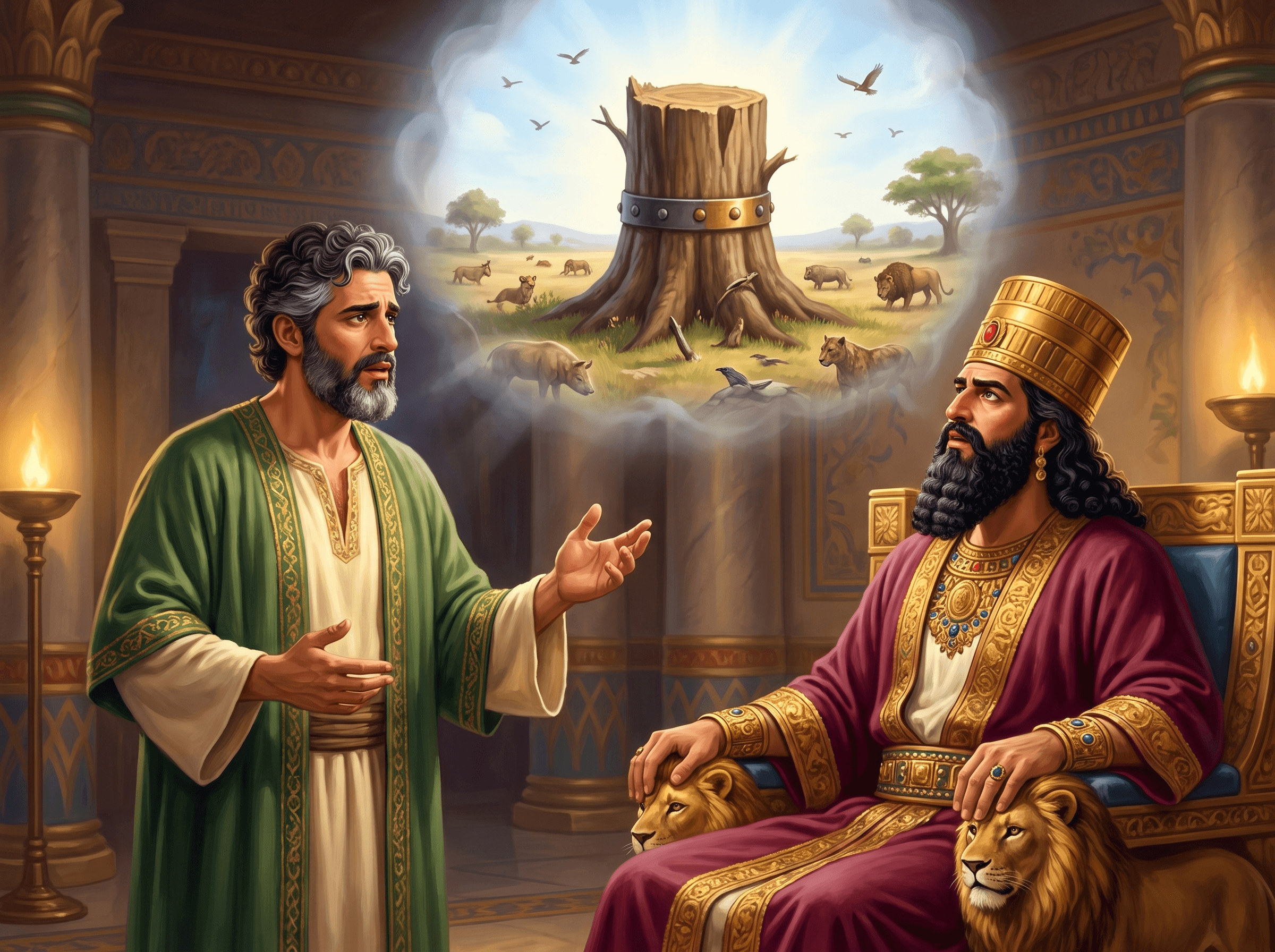
Illustrated scene from Daniel's story: The Great Tree (Daniel 4:1–37)
Meet the people of the Bible
Follow their lives in order, with illustrated scenes and Bible passages that tell their stories.
 Daniel

Photo: Deror Avi, via Wikimedia Commons. License: CC BY-SA 4.0. Source. Location: Tel Shiloh archaeological site, West Bank. Resized for the web.
Explore the places of the Bible
See where biblical events happened, why each place matters, and what archaeology helps us understand.
Shiloh
Where Israel set up the tabernacle, and where God called the boy Samuel.
Get full access with one subscription
Explore the people and places of the Bible. Read summaries of every book, with images and clear explanations covering every chapter. Access all these features and our Bible study tools with one subscription.
See PlansAsk AI about Daniel 4:27
Ask a question about this verse and get a clear answer, with Bible references you can read for yourself.
Every Bible book, explained chapter by chapter
Explore summaries of every book of the Bible, with images and easy-to-understand explanations covering every chapter.
Keep studying Daniel 4:27
Related Bible verses
Key themes
Related topics
At a Glance — the Book of Daniel
- Author
- Daniel the prophet
- Written
- Around 530 BC
- Genre
- Prophecy and apocalyptic
- Original Audience
- Exiled Jews and future generations
Frequently Asked Questions
Quick, clear answers about this verse
What does Daniel 4:27 teach about personal responsibility?
Daniel 4:27 emphasizes the importance of personal responsibility by urging the king to take action against his sins. It highlights that individuals have the power to change their behavior and make choices that lead to righteousness and mercy. This verse serves as a reminder that our actions directly impact our lives and the lives of others, encouraging us to reflect on how we can improve ourselves and contribute positively to our communities.
How can I practice righteousness according to Daniel 4:27?
Practicing righteousness, as suggested in Daniel 4:27, involves living a life that aligns with fairness, justice, and moral integrity. This can be achieved by making ethical decisions, treating others with respect, and standing up for what is right. Additionally, engaging in acts of kindness and helping those in need are practical ways to embody righteousness in daily life. By consistently choosing to do good, you can create a positive influence in your surroundings.
What does showing mercy to the poor mean in this verse?
Showing mercy to the poor, as mentioned in Daniel 4:27, means extending compassion and assistance to those who are less fortunate. This can involve providing financial help, offering emotional support, or volunteering time to help those in need. The verse encourages individuals, especially those in positions of power, to recognize the struggles of the poor and take action to alleviate their suffering. Such acts of mercy not only benefit the recipients but also foster a sense of community and goodwill.
What is the significance of tranquility in Daniel 4:27?
In Daniel 4:27, tranquility refers to a state of peace and stability in the king's life and reign. The verse suggests that by breaking off sins and practicing righteousness, the king may experience a lengthening of his tranquility. This implies that moral and ethical living can lead to a more harmonious existence, both personally and within the kingdom. The pursuit of peace through good deeds is a central theme, highlighting that our choices can shape our overall well-being.
Daily Verse — straight to your inbox
A verse and a 2-sentence plain-English explanation, every morning. Free. Unsubscribe anytime.