Old Testament
Deuteronomy 1:23
Read the Bible in clear, modern English—easy to understand, faithful to the meaning, and written for everyday readers.
That sounded like a good idea to me, so I chose 12 men — one from each tribe.
Compare translations
And the saying pleased me well: and I took twelve men of you, one of a tribe:
What Deuteronomy 1:23 means
Plain-English insight for readers
In this moment, the leader recognized the importance of gathering insights from different perspectives. By choosing 12 men, one from each tribe, he aimed to ensure that every voice was heard. This decision reflects a commitment to inclusivity and collaboration. It shows that when facing significant challenges, it’s wise to seek counsel from a diverse group. Each tribe had its unique experiences and strengths, which could contribute to a more comprehensive understanding of their situation. This approach not only fosters unity but also empowers individuals by valuing their input. The leader’s choice highlights the importance of teamwork and shared responsibility in decision-making. It reminds us that great ideas often come from collective wisdom rather than individual opinions. By working together, they could navigate their journey more effectively and confidently, setting a strong foundation for their future. This moment serves as a powerful reminder of the value of community and the strength found in collaboration.
How to apply Deuteronomy 1:23 to your life
When faced with important decisions, consider gathering a diverse group of people to share their insights. This can lead to better outcomes and foster a sense of belonging. Remember, collaboration can enhance your understanding and strengthen your community. Embrace the power of teamwork in your daily life for greater success and unity.
Curated for this public verse page. Deuteronomy Summary
Learn the Bible through its people and places
Get to know the people in Scripture through illustrated stories, and explore the places where they lived and traveled.
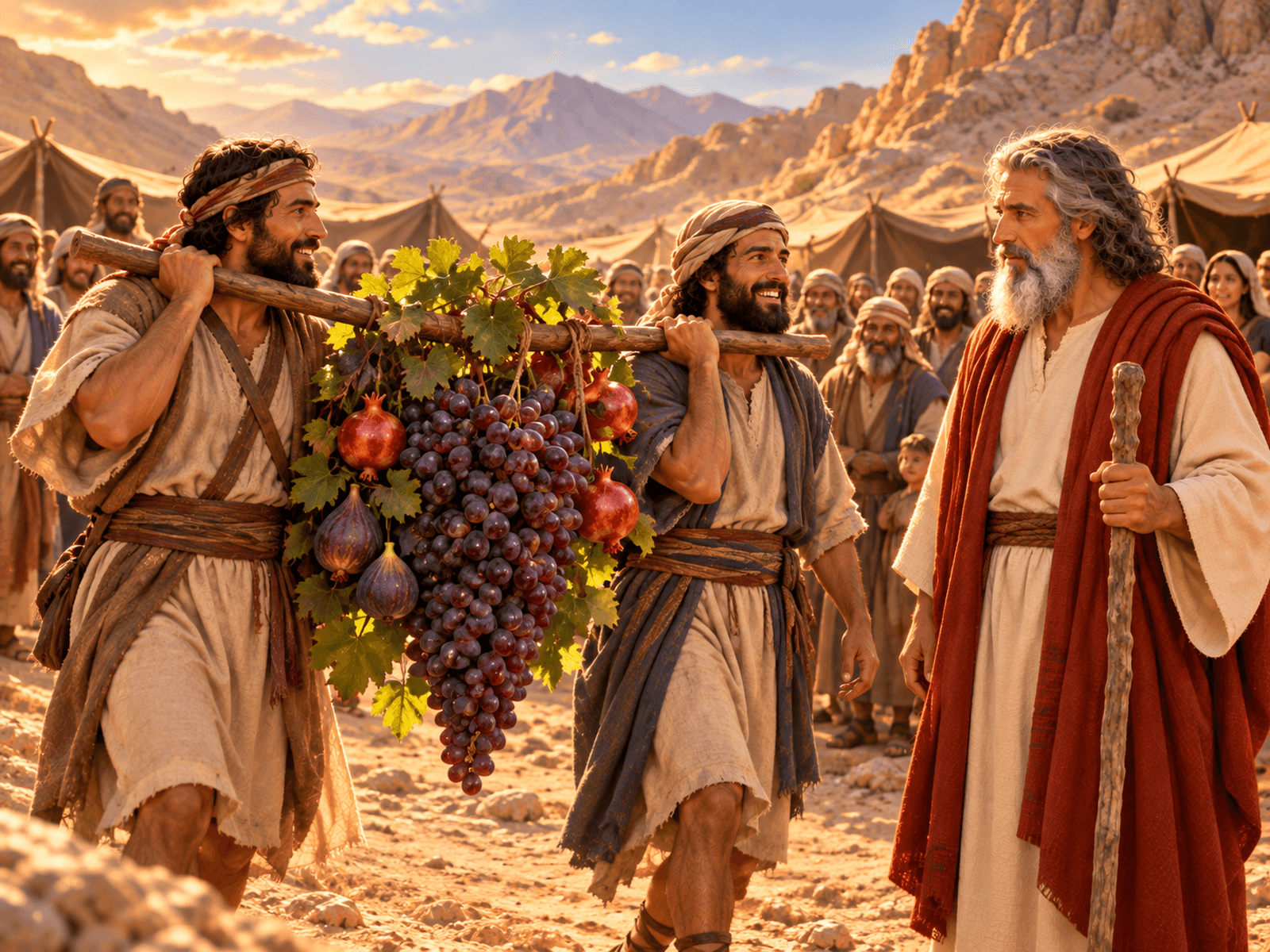
Illustrated scene from Moses's story: The Twelve Spies (Deuteronomy 1:19–25)
Meet the people of the Bible
Follow their lives in order, with illustrated scenes and Bible passages that tell their stories.
 Moses

Photo: Diego Delso, via Wikimedia Commons. License: CC BY-SA 3.0. Source. Location: Tell es-Sultan, Jericho, West Bank. Resized for the web.
Explore the places of the Bible
See where biblical events happened, why each place matters, and what archaeology helps us understand.
Jericho
The city of palm trees, whose walls fell in Joshua's day.
Get full access with one subscription
Explore the people and places of the Bible. Read summaries of every book, with images and clear explanations covering every chapter. Access all these features and our Bible study tools with one subscription.
See PlansAsk AI about Deuteronomy 1:23
Ask a question about this verse and get a clear answer, with Bible references you can read for yourself.
Every Bible book, explained chapter by chapter
Explore summaries of every book of the Bible, with images and easy-to-understand explanations covering every chapter.
Keep studying Deuteronomy 1:23
Related Bible verses
Key themes
Related topics
At a Glance — the Book of Deuteronomy
- Author
- Traditionally attributed to Moses
- Written
- Around 1400 BC
- Genre
- Law (Pentateuch)
- Original Audience
- The Israelites about to enter the Promised Land
Frequently Asked Questions
Quick, clear answers about this verse
What does Deuteronomy 1:23 teach about leadership?
Deuteronomy 1:23 illustrates the importance of inclusive leadership. By selecting 12 men, one from each tribe, the leader demonstrated a commitment to gathering diverse perspectives. This approach not only fosters collaboration but also ensures that all voices are heard, which is crucial for effective decision-making. It highlights that good leaders value input from their community, recognizing that collective wisdom can lead to better outcomes.
Why did Moses choose 12 men from different tribes?
Moses chose 12 men, one from each tribe, to represent the diverse experiences and strengths of the Israelites. This decision aimed to ensure that every tribe had a voice in the exploration of the Promised Land. By including representatives from each tribe, Moses sought to foster unity and collaboration, making sure that the insights gathered would reflect the entire community's needs and concerns.
How can we apply the message of Deuteronomy 1:23 today?
The message of Deuteronomy 1:23 can be applied today by encouraging collaboration in decision-making processes. When faced with important choices, consider gathering a diverse group of individuals to share their insights and perspectives. This practice not only leads to more informed decisions but also strengthens community bonds and fosters a sense of belonging among participants.
What is the significance of inclusivity in decision-making?
Inclusivity in decision-making, as highlighted in Deuteronomy 1:23, is significant because it allows for a broader range of perspectives and ideas. When diverse voices are included, the group can benefit from varied experiences and insights, leading to more comprehensive solutions. This approach promotes unity and empowers individuals, making them feel valued and engaged in the process.
Daily Verse — straight to your inbox
A verse and a 2-sentence plain-English explanation, every morning. Free. Unsubscribe anytime.