Old Testament
Exodus 2:3
Read the Bible in clear, modern English—easy to understand, faithful to the meaning, and written for everyday readers.
When she could no longer hide him, she made an ark of bulrushes and coated it with slime and pitch. She placed the child inside and set it among the reeds by the riverbank.
Compare translations
And when she could not longer hide him, she took for him an ark of bulrushes, and daubed it with slime and with pitch, and put the child therein; and she laid it in the flags by the river’s brink.
What Exodus 2:3 means
Plain-English insight for readers
In this moment, a mother faced an impossible choice. To protect her baby from danger, she crafted a small boat from bulrushes, a type of tall grass. She carefully sealed it with a sticky substance to keep it safe and waterproof. With love and desperation, she placed her child inside and set the makeshift ark among the reeds by the riverbank. This act was not just about survival; it was a profound expression of hope and trust. She believed that somehow, her child would be safe and perhaps even find a better future. This story highlights the lengths a parent will go to protect their child, even in the face of overwhelming odds. It reminds us that love can inspire creative solutions in desperate times, and that sometimes, we must let go to allow for new possibilities to unfold. The river, a symbol of both danger and opportunity, becomes the backdrop for a remarkable journey that would change the course of history forever. Her faith in the unknown is a powerful lesson for us all.
How to apply Exodus 2:3 to your life
When faced with difficult choices, remember the power of love and creativity. Sometimes, we must take risks to protect what we cherish. Trust that even in uncertainty, there can be a path forward. Let your actions reflect your deepest values and hopes for the future. You never know what might unfold next in your journey of faith and love.
Curated for this public verse page. Exodus Summary
Learn the Bible through its people and places
Get to know the people in Scripture through illustrated stories, and explore the places where they lived and traveled.
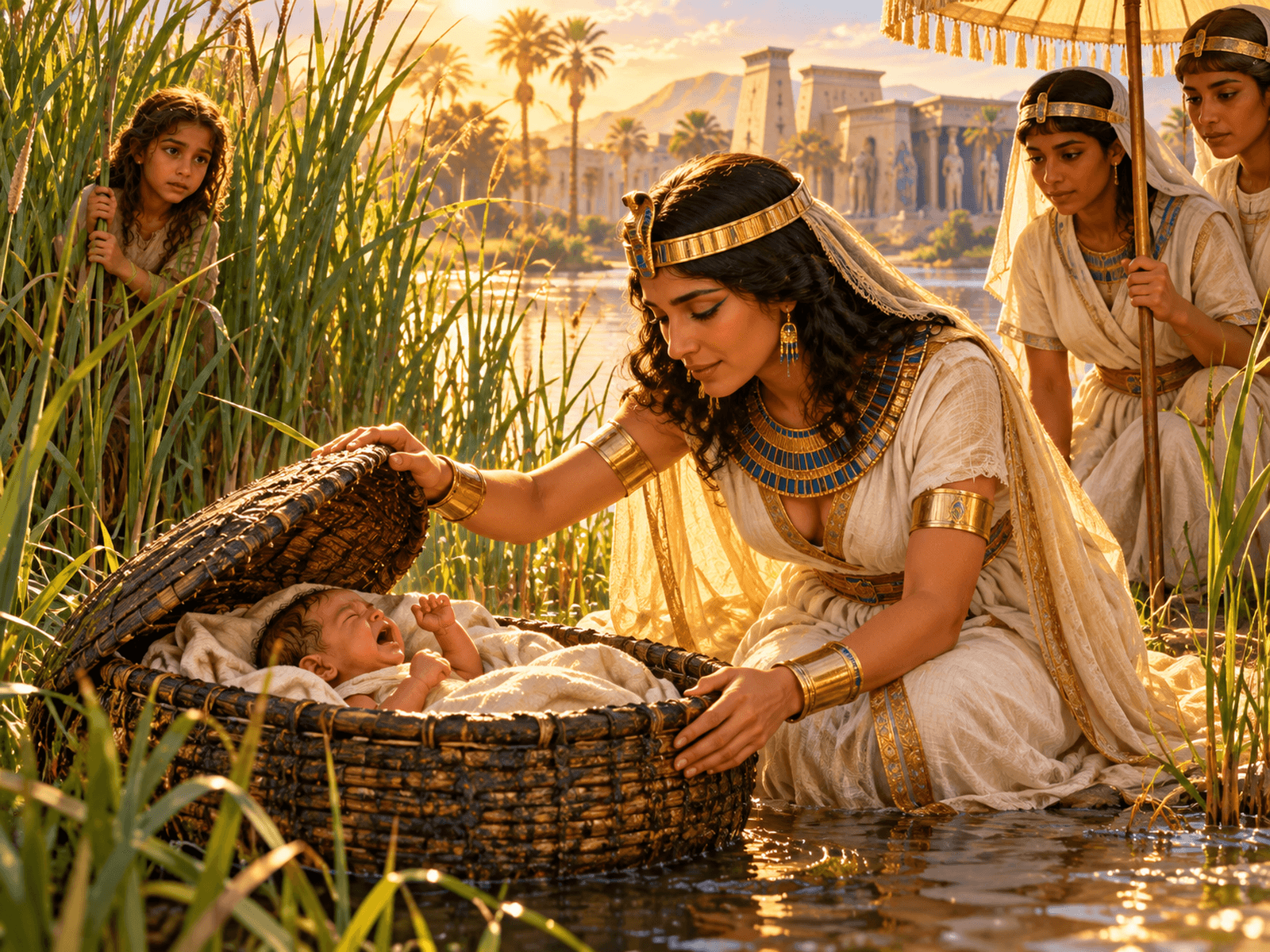
Illustrated scene from Moses's story: Moses in the Basket (Exodus 2:1–10)
Meet the people of the Bible
Follow their lives in order, with illustrated scenes and Bible passages that tell their stories.
 Moses

Photo: Diego Delso, via Wikimedia Commons. License: CC BY-SA 3.0. Source. Location: Tell es-Sultan, Jericho, West Bank. Resized for the web.
Explore the places of the Bible
See where biblical events happened, why each place matters, and what archaeology helps us understand.
Jericho
The city of palm trees, whose walls fell in Joshua's day.
Get full access with one subscription
Explore the people and places of the Bible. Read summaries of every book, with images and clear explanations covering every chapter. Access all these features and our Bible study tools with one subscription.
See PlansAsk AI about Exodus 2:3
Ask a question about this verse and get a clear answer, with Bible references you can read for yourself.
Every Bible book, explained chapter by chapter
Explore summaries of every book of the Bible, with images and easy-to-understand explanations covering every chapter.
Keep studying Exodus 2:3
Related Bible verses
At a Glance — the Book of Exodus
- Author
- Traditionally attributed to Moses
- Written
- Around 1400 BC
- Genre
- Law (Pentateuch)
- Original Audience
- The Israelites in the wilderness
Frequently Asked Questions
Quick, clear answers about this verse
What does Exodus 2:3 mean?
Exodus 2:3 describes a mother who, unable to hide her baby from danger, creates a small boat from bulrushes to protect him. This act symbolizes her love, desperation, and hope for her child's safety and future.
What is the significance of the ark in Exodus 2:3?
The ark in Exodus 2:3 represents a mother's protective instincts and her willingness to take risks for her child's safety. It also serves as a vessel of hope, illustrating the lengths parents will go to ensure their children's well-being.
What does 'bulrushes' refer to in Exodus 2:3?
'Bulrushes' in Exodus 2:3 refers to a type of tall grass commonly found near water. The mother uses these plants to construct a small boat, showcasing her resourcefulness in a desperate situation.
How does Exodus 2:3 relate to themes of trust and hope?
Exodus 2:3 illustrates trust and hope through the mother's decision to place her child in the river. Despite the risks, her actions reflect a belief that her child will find safety and a better future, emphasizing the power of faith in uncertain times.
Daily Verse — straight to your inbox
A verse and a 2-sentence plain-English explanation, every morning. Free. Unsubscribe anytime.